
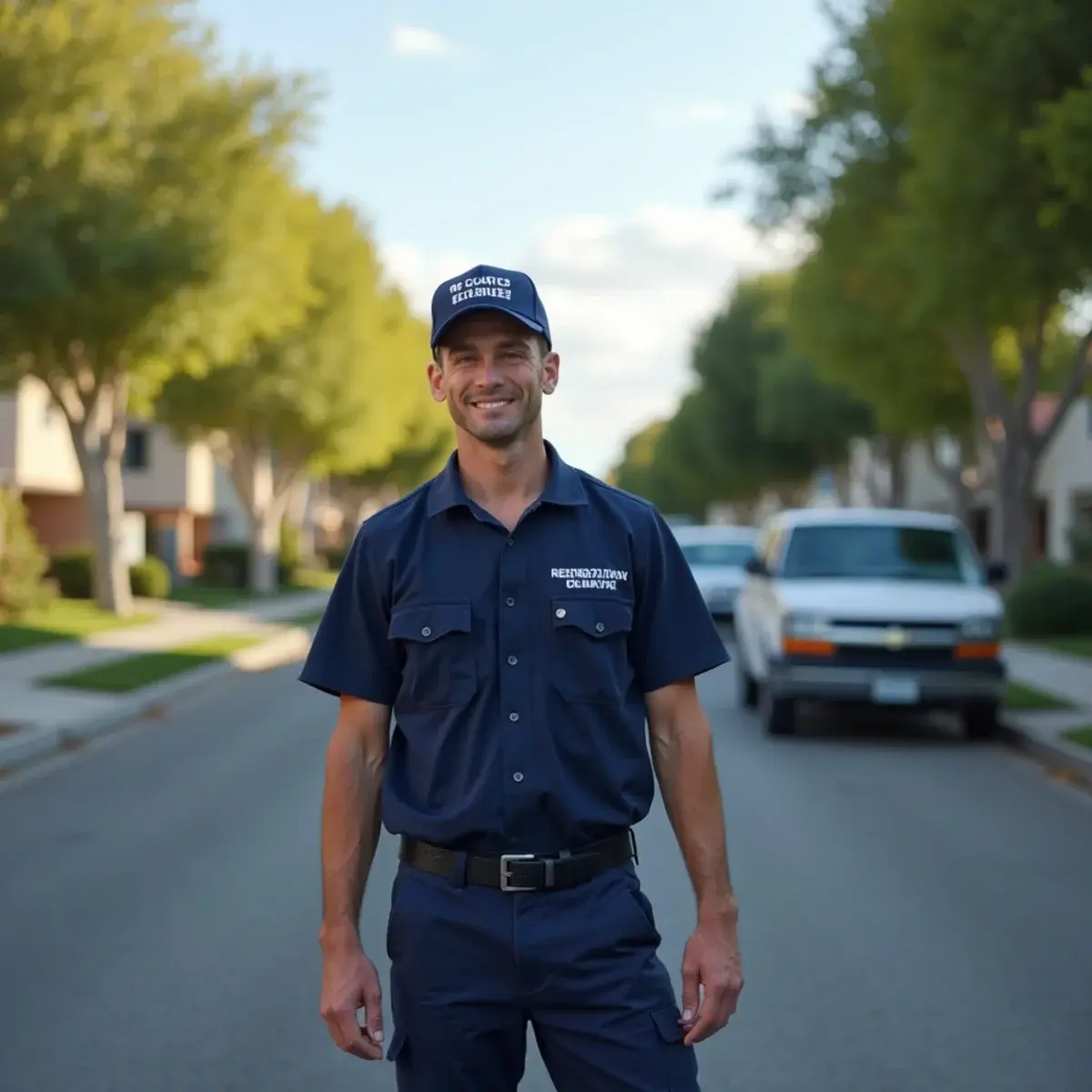
90005 · 90006 · 90010 · 90020 · 24/7 Emergency Service
Water Damage Restoration in Koreatown, CA
The densest residential neighborhood in the county — where one failure can reach more households than anywhere else we work.
- 5.0 from 3 Google reviews
- Licensed, bonded & insured
- 60-minute emergency response
24/7 emergency response
A real person answers any hour — and you get a real ETA for your address, not a number off a website. 60-minute response in Glendale.
Dry-Verified Guarantee
Equipment stays until moisture meters match your home's dry standard.
Direct insurance billing
Daily moisture logs and carrier-format estimates. Most clients pay only their deductible.
Mitigation & rebuild in-house
One company from the first gallon extracted to the last coat of paint.
Koreatown is the most densely populated neighborhood in Los Angeles County, and the density is vertical. A single block can hold more dwellings than a whole street elsewhere in the city.
The housing stock is remarkable for its age spread: 1920s and 1930s courtyard buildings and mid-rise apartment blocks sitting alongside newer high-density development, with the Wilshire corridor's commercial towers running through the middle.
For restoration that density is the whole story. A failure in one unit here doesn't affect a neighbor — it affects a column of them.
Water damage in Koreatown? Call and we'll roll.
Free assessment · 60-minute emergency response · We bill your insurance carrier directly
Free Koreatown assessment
About 22 minutes from our Glendale base. Tell us what's happening and we'll call you straight back — any hour.
Cascade losses at scale
Buildings of this era and density were built with vertically stacked kitchens and bathrooms because it's the cheapest way to run plumbing. The consequence is that a failure in a plumbing column concentrates damage into the same corner of every floor beneath it — in a six-storey building, that's six tenancies from one broken line.
Drying it means treating the column as one job rather than six. Ceiling assemblies get dried from both sides where access allows, and the wall cavities that carried water down get opened and dried rather than assumed dry because the surface looks fine.
Access is its own project. Coordinating entry to six occupied units across different schedules, languages and working hours takes real planning, and it's the difference between a five-day dry-out and a three-week one. We schedule around residents rather than expecting them to schedule around us.
Ninety-year-old cast iron
Waste plumbing in the pre-war buildings here is cast iron, and after ninety years it corrodes from the inside — horizontal runs and stack bases first.
It rarely announces itself. The typical presentation is a slow seep inside a wall or a floor assembly that runs for months, travelling between units before anyone connects a persistent musty smell to a cause. By the time there's a visible stain, the cavity has been wet a long time and there's established microbial growth in it.
In a building this dense that matters more than it would elsewhere, because the affected cavity is shared. We open and inspect rather than drying the visible surface and leaving — a stack failure dried without being found simply comes back, in someone else's unit.
Soft-story retrofits and claim complexity
A very large share of Koreatown's older apartment stock is subject to Los Angeles' mandatory soft-story seismic retrofit ordinance. Retrofit work disturbs plumbing, wall assemblies and drainage that had been undisturbed for decades, and we're regularly called to buildings where a loss surfaced during or shortly after that construction.
That's not an argument against retrofitting, which genuinely saves lives. It's a reason to have moisture readings taken before walls are closed back up, while access is easy and cheap.
On the claim side, density multiplies the parties. Building policy, individual renters policies, sometimes commercial tenants on a ground floor. We document scope separation per unit on day one with photographs, because reconstructing that months later across many tenancies and several carriers is close to impossible.
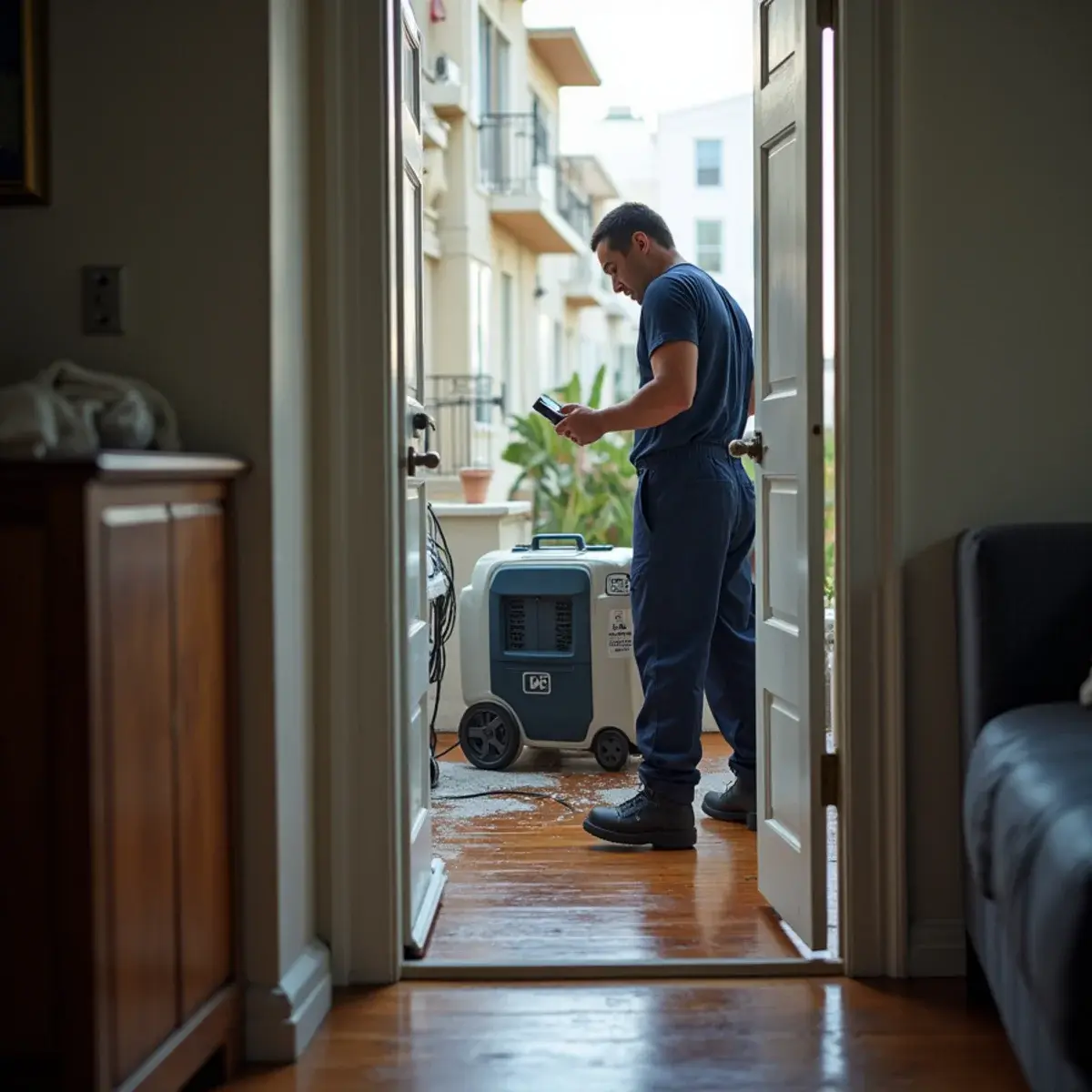
Local risk profile
What causes water damage in Koreatown
Multi-storey cascade losses
Stacked plumbing columns in dense mid-rise buildings turn one failure into six or more affected tenancies.
Corroding cast iron waste stacks
Ninety-year-old drain plumbing seeps inside shared wall cavities for months, surfacing in a different unit.
Losses surfacing during soft-story retrofits
Seismic retrofit work disturbs long-undisturbed plumbing across a large share of the older stock.
Multi-party claim complexity
Building, renters and commercial policies overlap across many tenancies in a single loss.
Most requested here
Restoration services for Koreatown properties
Commercial Water Damage Restoration
After-hours and phased drying that keeps your doors open and your tenants in their units.
Learn moreEmergency Water Extraction
Truck-mounted units that pull hundreds of gallons an hour — the single highest-impact hour of any water loss.
Learn moreMold Remediation
Contained removal under negative pressure — we fix the moisture source too, so it doesn't come back.
Learn moreSewage Backup Cleanup
Biohazard-grade cleanup and disinfection — handled correctly the first time, with the odor gone for good.
Learn moreWater Damage Repair & Reconstruction
The rebuild phase most restoration companies hand off — done in-house, so the job actually finishes.
Learn more
Around Koreatown
Landmarks and destinations we work near regularly.
- Wilshire Boulevard
- Wiltern Theatre
- Koreatown Plaza
- Lafayette Park
- Western Avenue
- Olympic Boulevard
Streets and pockets we cover
Sub-areas within Koreatown where we take calls.
- Wilshire corridor
- Western Avenue
- Vermont Avenue
- Olympic Boulevard
- Country Club Park
Why us, here
Why Koreatown residents call Drycore Restore
The densest losses we handle
Six-storey stacked plumbing means one break reaches six tenancies. Coordinating access across occupied units is genuinely half the job.
Ninety-year-old stacks in shared cavities
Cast iron seeps between units for months. Drying the visible surface without finding the stack means it returns in someone else's apartment.
Retrofit-era buildings metered first
A large share of this stock is under the soft-story ordinance. We read moisture before walls close rather than after.
What Koreatown calls sound like
Koreatown losses reach more households than anywhere else we work. Coordinating access across six occupied units is genuinely half the job, and it's what decides whether it takes a week or a month.
Verified reviews
5.0 stars from 3 Google reviews
“We had a pipe burst in our wall. Drycore came out to dry and disinfect everything for us.”
“Very responsive, accommodating and professional. I highly recommend them.”
“They responded very quickly and came out immediately.”
Local questions
Koreatown water damage FAQs
About 22 minutes from our Glendale base. We dispatch 24 hours a day, and for Koreatown we work to a 60-minute emergency response. Call +1 (201) 277-9344 and we'll give you a real ETA for your address rather than a number off a website — plus the steps to take before we arrive.
We serve 90005, 90006, 90010, 90020 and the surrounding streets. If you're not certain whether your address falls inside our range, call and ask — we'll tell you honestly rather than driving out and turning around.
Multi-storey cascade losses — Stacked plumbing columns in dense mid-rise buildings turn one failure into six or more affected tenancies. We also see corroding cast iron waste stacks regularly here.
Both. The same crew that extracts and dries also installs the new drywall, matches texture, paints, and reinstalls trim, flooring and cabinetry — so the job actually finishes instead of stalling between two contractors.
Drycore Restore
749 Portola AveGlendale, CA 91206Get Directions →+1 (201) 277-9344
Monday – Sunday · Open 24 hours a day, 7 days a week
Nearby areas we also serve
Guides relevant to this area
Soft-Story Retrofits and the Water Damage They Uncover
Opening a wall that has been closed since 1962 tells you things. Owners should plan for what the retrofit finds, not just what it costs.
Read moreCast Iron Drain Pipes: The Leak You Won't See Coming
Everyone worries about the supply side. In pre-war buildings it's the drain pipe that quietly destroys a wall over eight months.
Read more
Water damage in Koreatown? Call now.
About 22 minutes from our Glendale base. 24/7 dispatch, free on-site assessment, direct insurance billing.
Licensed, bonded & insured · We bill your insurance carrier directly · 24/7 Emergency Service