
Glendale, CA · 24/7 response
Flood & Storm Damage Cleanup in Glendale, CA
Hillside runoff, debris flow and storm intrusion handled as the contaminated-water events they actually are.
- 5.0 from 3 Google reviews
- Licensed, bonded & insured
- 60-minute emergency response
24/7 emergency response
A real person answers any hour — and you get a real ETA for your address, not a number off a website. 60-minute response in Glendale.
Dry-Verified Guarantee
Equipment stays until moisture meters match your home's dry standard.
Direct insurance billing
Daily moisture logs and carrier-format estimates. Most clients pay only their deductible.
Mitigation & rebuild in-house
One company from the first gallon extracted to the last coat of paint.
Southern California doesn't flood often, which is exactly why it goes badly when it does. A single atmospheric river can drop more rain in two days than Glendale sees in a typical quarter, and the water arrives all at once on terrain built to shed it downhill fast.
Storm water is not clean water. By the time runoff reaches your garage it has crossed streets, soil, landscaping and whatever the storm drain was already carrying, and it's classified as category 3 — contaminated. That changes the entire response: porous materials it touched come out, the area gets disinfected, and crews work in PPE.
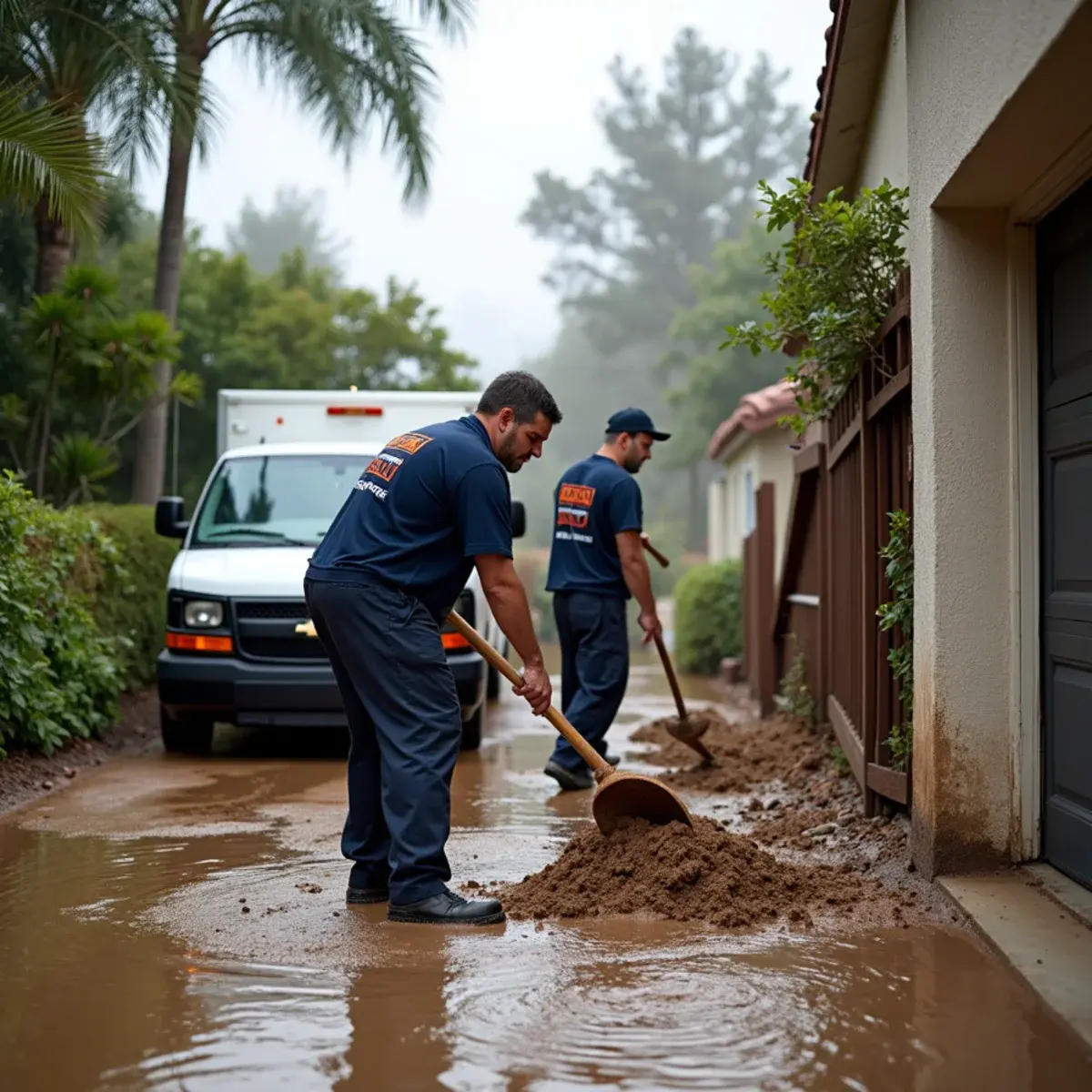
Drycore Restore handles storm losses end to end: pumping out volume, removing mud and debris, disinfecting, drying the structure, and rebuilding. We also assess how the water got in, because on a hillside lot the second storm is usually only a few weeks behind the first.
Need flood & storm damage cleanup in Glendale right now?
Free assessment · 60-minute emergency response · We bill your insurance carrier directly
Free on-site assessment
Tell us what's happening and we'll dispatch a flood & storm damage cleanup crew or call you straight back.
What we're looking for
Signs and problems this service solves
Water entering at the base of an uphill wall
Hydrostatic pressure against a foundation from saturated uphill soil pushes water through cold joints and cracks. It appears as seepage low on the uphill side, often with no visible crack from inside.
Mud, silt or ash residue on floors
Sediment means the water carried soil, which means it also carried bacteria and, downslope of a burn scar, ash and debris. Cleanup is a decontamination job, not a mopping job.
Overwhelmed area drains or downspouts
Water backing up out of a yard drain during heavy rain means the drainage system's capacity was exceeded or it's clogged. Either way, water goes to the next lowest point — often a garage or crawl space.
A roof or window leak that only appears in wind-driven rain
Some intrusions only reveal themselves when rain hits at an angle. If you get water at a window head or ceiling only in certain storms, the flashing or the seal is the failure point.
Standing water in a crawl space after a storm
Crawl spaces that pond water hold humidity against your floor framing for weeks and are the leading cause of subfloor rot and crawl space mold in the foothills.
A garage floor that floods repeatedly
Recurring intrusion is a grading or drainage problem, not bad luck. We document the entry path so it can be corrected before next winter.
Scope of work
What flood & storm damage cleanup includes
Hazard assessment before entry
Storm losses combine contaminated water, live electrical and sometimes compromised structure. Power to affected areas is isolated and the site is assessed before anyone starts working — this is not a formality on a flooded hillside garage.
Solids-handling pumps and mud removal
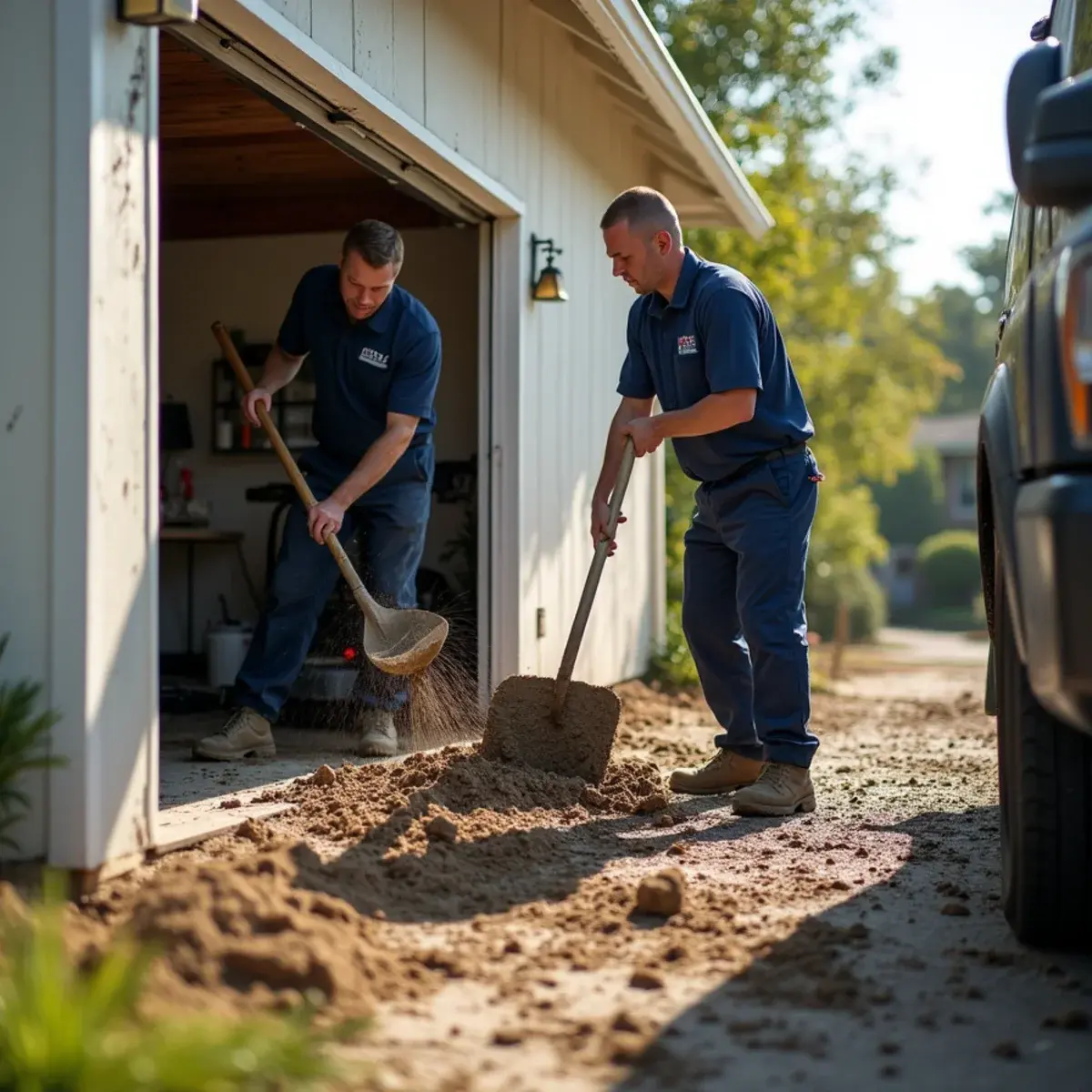
Trash pumps that pass silt and debris, then the physically heavy part: shovelling and hauling mud, rock and vegetation. No restoration work is possible until the material is out, and it is the step most companies underestimate.
Category 3 removal to a defined line
Carpet, pad, insulation, drywall to a marked height above the water line, particleboard cabinetry and affected contents cut out, bagged and disposed of as contaminated waste. Nothing porous that mud reached gets dried and kept.
Pressure cleaning and hospital-grade disinfection
Every remaining surface cleaned and treated with an EPA-registered disinfectant matched to the contamination level, including concrete slabs that absorbed sediment-laden water.
Structural drying of what stayed
Only after the space is clean. Concrete and framing that absorbed water during the event get metered and dried to standard like any other loss.
Documentation of how water entered
Entry point, timing relative to the storm and water clarity, photographed and recorded — because that is what lets a drainage contractor design a fix, and what separates a covered wind-driven-rain claim from an excluded surface-flood one.
How it works
Our flood & storm damage cleanup process
- 1
Safety and hazard assessment
Storm losses involve contaminated water, potential electrical hazards and sometimes compromised structure. We assess before entry and isolate power to affected areas.
- 2
Bulk water and debris removal
Trash pumps that pass solids handle silt-laden water. Mud, vegetation and debris are shoveled and hauled — this is the physically heavy part of a storm job and it comes first.
- 3
Removal of contaminated porous materials
Carpet, pad, insulation and drywall that took on category 3 water are cut out to a line above the water mark and disposed of. Drying contaminated porous material in place is not an option under any standard.
- 4
Cleaning and disinfection
Every remaining surface is pressure-cleaned or hand-cleaned and treated with an EPA-registered disinfectant appropriate to the contamination level.
- 5
Structural drying
Once the space is clean, standard drying begins — air movers, dehumidification, daily readings — with extra attention to concrete and framing that absorbed water during the event.
- 6
Repair and intrusion prevention
We rebuild what was removed, and we document how water entered so you can address it: regrading, a French drain, a sump system, better downspout discharge or sealing a foundation cold joint.
Burn scars, debris flow and why Glendale floods differently
When a wildfire burns through the Verdugo or San Gabriel foothills, it doesn't just remove vegetation — the heat can bake a water-repellent layer into the top few inches of soil. Ground that used to absorb rainfall starts shedding it almost like pavement, and the runoff picks up loose ash, soil and rock on the way down. That's a debris flow, and it can happen during a storm that would have been unremarkable before the fire.
Los Angeles County treats the first few winters after a foothill fire as elevated-risk seasons for exactly this reason. If your property is downslope of a recent burn area, the practical implications are concrete: clear your area drains before the season, keep sandbags and K-rail options in mind, know your evacuation route, and understand that any water that reaches your home in that scenario is heavily contaminated.
We plan those jobs accordingly. Crews arrive with pumps rated to pass solids, disposal is handled as contaminated debris, and we don't attempt to save porous materials that mud reached.
What standard homeowners insurance will and won't do here
This is where storm losses catch people out. A standard California homeowners policy covers water that falls from the sky and enters through a sudden opening — wind tears shingles off, rain comes through the roof, that's typically covered. It does not cover surface water that flows across the ground and into your home. That's flood, and flood is a separate policy through the NFIP or a private carrier.
The distinction matters enormously on a hillside lot, where the same storm can produce both. We document the intrusion point with photographs and measurements at the time of loss, because reconstructing that argument weeks later with a skeptical adjuster is much harder. If any part of your loss came through the building envelope rather than across the ground, that part deserves to be claimed.
If you're in or below a foothill area and don't carry flood coverage, it's worth a conversation with your agent before winter. Policies typically carry a waiting period before they take effect, so buying one during a storm forecast doesn't help.
Honest cost drivers
What determines the price of this work
Contamination level
Category 3 water requires PPE, containment, regulated disposal and disinfection. That's a materially different cost structure than a clean-water loss of identical size.
Volume of mud and debris
Sediment removal is labor and haul-away. A debris flow that deposited several inches of mud in a garage is a multi-day removal job before restoration even starts.
How much material has to be removed
Storm losses generally involve more demolition than clean-water losses because contaminated porous materials can't be dried and saved.
Site access on hillside properties
Long hose runs, stair access, narrow canyon streets and limited truck parking all extend labor hours on foothill jobs.
Insurance coverage gaps
Rising water from outside a home is generally excluded from standard homeowners policies and covered only under separate flood insurance. Wind-driven rain through a storm-damaged roof is often covered. Which one your loss is affects your out-of-pocket cost more than anything else, so we document the entry path precisely.
Get a free, measured estimate — not a phone guess
Free assessment · 60-minute emergency response · We bill your insurance carrier directly
Why us for this
Why Glendale calls Drycore Restore for flood & storm damage cleanup
We arrive equipped for mud, not just water
Standard extractors clog instantly on silt. Solids-handling pumps and a plan for hauling debris ride on the first truck, because a crew that has to leave and come back loses the day.
We understand burn-scar hydrology here
Below the Verdugos, the San Gabriels and the canyons above La Crescenta, Tujunga and Glendora, a post-fire winter turns an ordinary storm into a debris flow. We plan those responses differently rather than treating them as bigger rain.
We document the coverage question at the time of loss
Rain through a wind-damaged roof is usually covered; surface water across the ground usually is not. Reconstructing that argument weeks later with a sceptical adjuster is far harder than photographing it while the water line is still on the wall.
Storm-season triage you can plan around
During major events we prioritise by severity and exposure and tell you honestly where you are in the queue, rather than promising an arrival time the whole city is also being promised.
Questions
Flood & Storm Damage Cleanup FAQs
Yes. Runoff carries bacteria, sewage overflow, pesticides, automotive fluids and — near burn areas — ash and heavy metals. It's classified as grossly contaminated water. Cleanup requires protective equipment, proper disinfection and correct disposal of contaminated materials.
Yes. Debris flow cleanup is a regular part of foothill storm response for us. We pump silt-laden water with solids-handling pumps and remove mud, rock and vegetation before any restoration work begins.
Usually. Repeat intrusion almost always comes down to grading, drainage capacity or a missing barrier at the entry point. We document the path water takes during the loss, which gives whoever does the drainage work a real target instead of a guess.
The same day. Contaminated water becomes more dangerous the longer it sits, and mold can begin within 24 to 48 hours. We prioritize dispatch during storm events and work through the night when volume demands it.
It depends entirely on how the water got in. Rain entering through an opening created by a covered peril — wind removing tile, a limb puncturing the deck — is generally covered including the interior damage. Surface water flowing across the ground into your home is flood, which standard California policies exclude and which needs separate flood coverage. We photograph and measure the intrusion point at the time of loss precisely because that distinction decides the claim.
Related restoration services
Emergency Water Extraction
Truck-mounted units that pull hundreds of gallons an hour — the single highest-impact hour of any water loss.
Read moreCrawl Space & Basement Water Removal
The part of the house nobody looks at — and the most common source of whole-home humidity and floor rot.
Read moreSewage Backup Cleanup
Biohazard-grade cleanup and disinfection — handled correctly the first time, with the odor gone for good.
Read more
Further reading from our crews
Preparing Your Glendale Home for the Rainy Season
Southern California gets most of its rain in a handful of storms. The work that protects your house is done in October, not during the atmospheric river.
Read moreHillside Drainage and Foundation Protection in Glendale
Water on a slope moves through the ground, not just across it. That's why perfect grading and clean gutters still leave some hillside homes wet every winter.
Read more
Flood & Storm Damage Cleanup across our full service area
We provide this service throughout Glendale and the surrounding foothill communities. Choose your city or neighborhood for local detail.
- Glendale
- Montrose
- La Crescenta
- Verdugo Woodlands
- Rossmoyne
- Adams Hill
- Chevy Chase Canyon
- Sparr Heights
- Burbank
- Pasadena
- La Cañada Flintridge
- Eagle Rock
- Atwater Village
- Tujunga
- Sunland
- Altadena
- South Pasadena
- Silver Lake
- North Hollywood
- Toluca Lake
- Shadow Hills
- Lake View Terrace
- Sylmar
- San Fernando
- Sierra Madre
- Monrovia
- Duarte
- Azusa
- Glendora
- San Dimas
- La Verne
- Claremont
- Sun Valley
- Studio City
- Valley Village
- Sherman Oaks
- Van Nuys
- Panorama City
- Arleta
- Pacoima
- Mission Hills
- North Hills
- Encino
- Reseda
- Northridge
- Granada Hills
- Tarzana
- Winnetka
- Canoga Park
- Woodland Hills
- Chatsworth
- Glassell Park
- Cypress Park
- Highland Park
- Mount Washington
- Los Feliz
- Echo Park
- Lincoln Heights
- El Sereno
- Boyle Heights
- East Los Angeles
- Hollywood
- Hollywood Hills
- Downtown Los Angeles
- Koreatown
- Westlake
- Pico-Union
- Mid-Wilshire
Need flood & storm damage cleanup in Glendale?
Call +1 (201) 277-9344 for 24/7 dispatch, or request a free on-site assessment. Licensed, bonded & insured · We bill your insurance carrier directly.
Licensed, bonded & insured · We bill your insurance carrier directly · 24/7 Emergency Service