
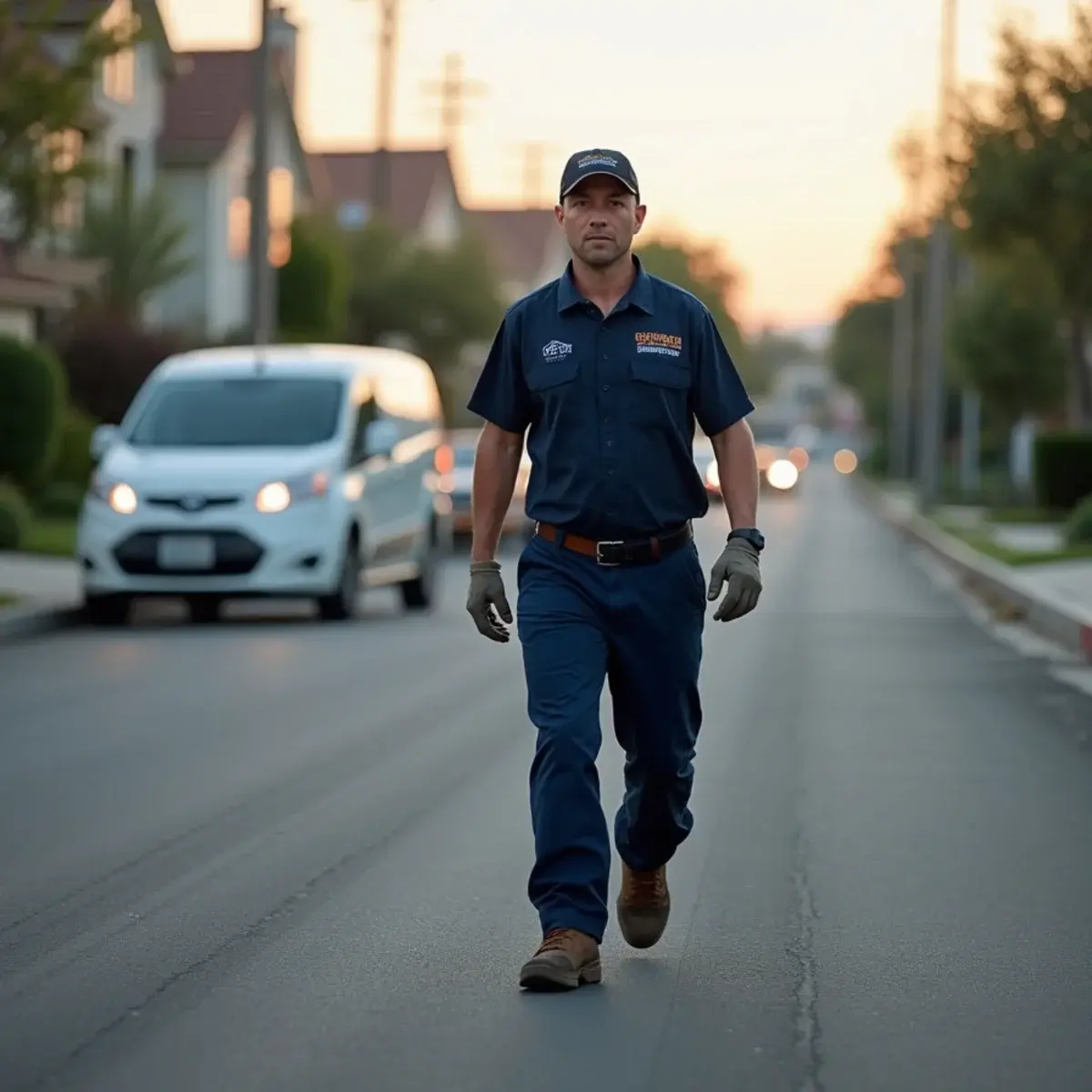
91016 · 24/7 Emergency Service
Water Damage Restoration in Monrovia, CA
One of the largest concentrations of pre-1940 housing in the San Gabriel Valley, sitting under a canyon that has burned.
- 5.0 from 3 Google reviews
- Licensed, bonded & insured
- 90-minute response target
24/7 emergency response
A real person answers any hour — and you get a real ETA for your address, not a number off a website. 60-minute response in Glendale.
Dry-Verified Guarantee
Equipment stays until moisture meters match your home's dry standard.
Direct insurance billing
Daily moisture logs and carrier-format estimates. Most clients pay only their deductible.
Mitigation & rebuild in-house
One company from the first gallon extracted to the last coat of paint.
Monrovia has an unusually well-preserved historic core. The blocks around Old Town and south of Foothill hold one of the densest concentrations of Victorian, Craftsman and early California housing in the San Gabriel Valley, much of it protected and much of it still carrying original materials.
North of Foothill the city climbs hard into the foothills, and the character changes completely — steeper lots, canyon roads and properties sitting directly below Monrovia Canyon and the Sawpit drainage.
Those two halves need different things from a restoration company. The historic south needs patience and materials knowledge. The northern hillside needs storm-response equipment and an understanding of what comes down a burned canyon.
Water damage in Monrovia? Call and we'll roll.
Free assessment · 90-minute response target · We bill your insurance carrier directly
Free Monrovia assessment
About 35 minutes from our Glendale base. Tell us what's happening and we'll call you straight back — any hour.
Sawpit Canyon, debris basins and the burn cycle
Monrovia Canyon and the Sawpit drainage sit directly above the northern half of the city, and the debris basin at the canyon mouth exists because this ground has a documented history of receiving a great deal of material very quickly.
The 2020 Bobcat Fire burned an enormous area of the front range above the foothill cities, and the winters that follow a burn of that size are the ones that produce debris flow rather than ordinary runoff. County agencies treat the first several seasons after a foothill fire as elevated risk for exactly this reason.
What that means practically for a Monrovia homeowner above Foothill: clear your area drains and culverts before the season, check that landscaping hasn't redirected flow toward the house, keep loose material off the lot, and treat storm warnings as serious rather than routine. And know that anything that reaches your home in that scenario is grossly contaminated.
Restoring homes where the finish is the asset
In much of Monrovia's historic housing the value is in the details — quarter-sawn oak, box-beam ceilings, original windows, hand-applied plaster texture. A restoration approach that treats those as demolition line items destroys value no insurance settlement replaces.
So we work differently. Trim comes off carefully, labelled, and goes back on. Plaster gets dried longer and measured deeper, with key integrity assessed before a wall is called salvageable. Original oak flooring gets mat drying and a light refinish rather than replacement. Where something genuinely can't be saved we look for salvage or millwork matching rather than substituting a modern profile.
It's slower than gutting a room, and it costs less. It also means the repair is an inconspicuous patch rather than a room that reads as new in a house that isn't.
The plumbing that comes with 1900s housing
Homes of this age were plumbed in galvanized steel, and a meaningful number still have it somewhere in the system — often the branches were replaced during a remodel while original vertical runs stayed. Those are the lines that fail, inside walls nobody wants to open.
This is where thermal imaging earns its cost. Locating the break precisely means opening a specific twelve-inch section rather than exploring a wall carrying original plaster and period trim. Every square foot we don't open is a square foot we don't have to recreate.
The other era-specific problem is bathrooms. Original tiled showers were built on mud beds without waterproofing membranes, because membranes weren't standard practice yet. Once the grout starts letting water through — and after a century it does — the wall behind stays permanently damp. We find more hidden growth behind original Monrovia bathrooms than almost anywhere else we work.
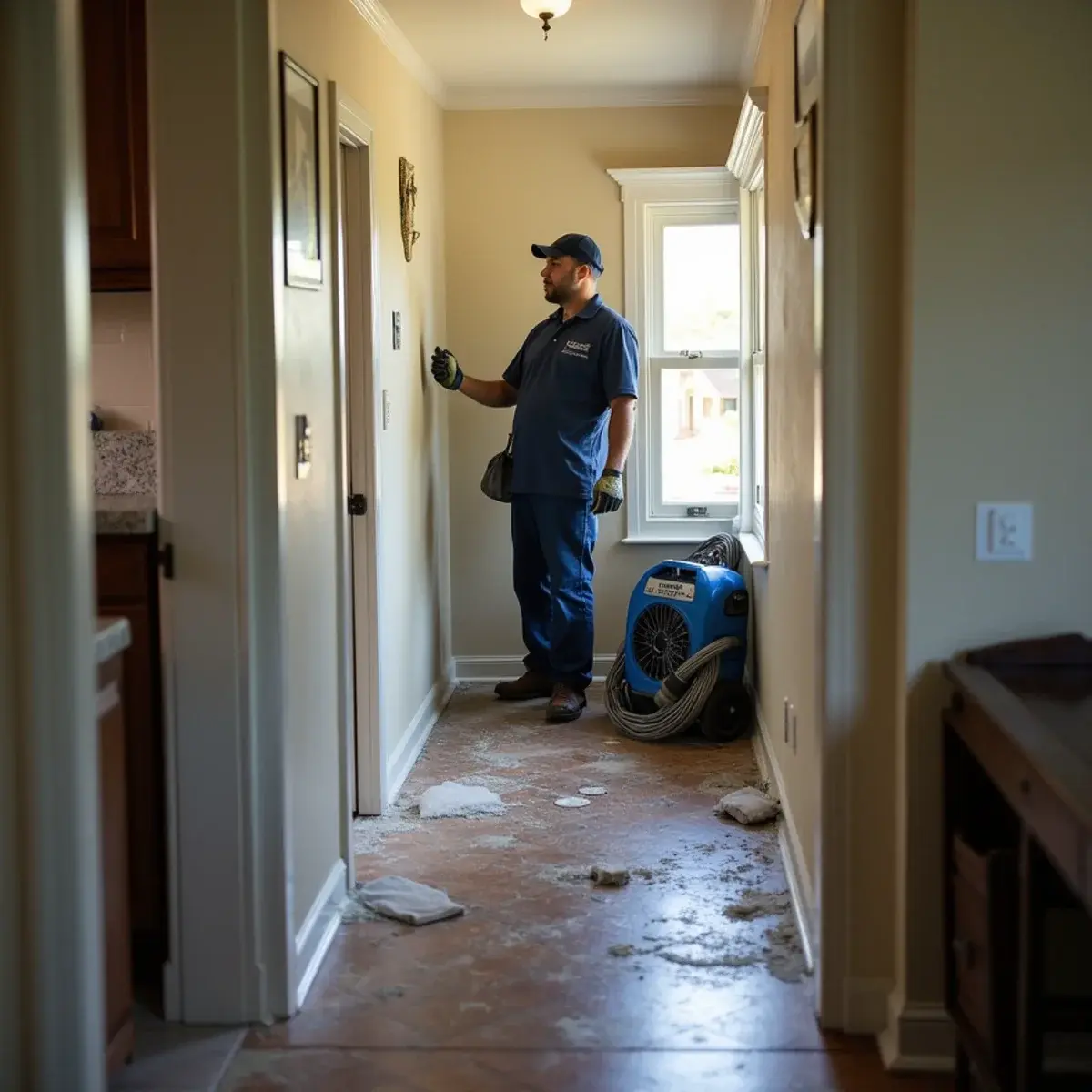
Local risk profile
What causes water damage in Monrovia
Post-fire debris flow from Sawpit and Monrovia Canyon
Burned front-range slopes above the city shed water and sediment for several winters after each major fire.
Original galvanized plumbing in historic homes
Pre-1940 supply lines fail inside walls carrying plaster and millwork that cannot be reproduced.
Un-membraned original tile bathrooms
Century-old mud-bed shower installations hold moisture in wall cavities and feed hidden growth for decades.
Steep northern hillside lots
Properties above Foothill take both surface runoff and delayed subsurface flow against foundations.
Most requested here
Restoration services for Monrovia properties
Water Damage Restoration
Full-service recovery from the first gallon extracted to the last coat of paint — one crew, one invoice, one point of contact.
Learn moreStructural Drying & Dehumidification
Metered, logged drying that ends when the meters say dry — not when the calendar says it's been three days.
Learn moreMold Remediation
Contained removal under negative pressure — we fix the moisture source too, so it doesn't come back.
Learn moreFlood & Storm Damage Cleanup
Hillside runoff, debris flow and storm intrusion handled as the contaminated-water events they actually are.
Learn moreWater Damage Repair & Reconstruction
The rebuild phase most restoration companies hand off — done in-house, so the job actually finishes.
Learn more
Around Monrovia
Landmarks and destinations we work near regularly.
- Old Town Monrovia
- Myrtle Avenue
- Monrovia Canyon Park
- Library Park
- Aztec Hotel
- Sawpit Canyon
Streets and pockets we cover
Sub-areas within Monrovia where we take calls.
- Old Town
- Myrtle Avenue
- North Monrovia
- Mayflower Village border
- Foothill Boulevard corridor
Why us, here
Why Monrovia residents call Drycore Restore
Built for century-old housing
One of the densest concentrations of pre-1940 housing in the valley. Plaster, original galvanized and un-membraned tile bathrooms are the norm here.
We plan for the Sawpit burn cycle
Sawpit and Monrovia Canyon sit above the northern half, and the front range has burned. Post-fire winters bring sediment, not just rain.
Honest 90-minute window
This is outside our 60-minute radius and we say so — a 90-minute window, honestly stated, rather than a promise the first dispatch would expose.
What Monrovia calls sound like
Monrovia owners call us because we treat original plaster, trim and hardwood as things worth saving rather than as demolition line items — and because we know what comes down Sawpit after a fire year.
Verified reviews
5.0 stars from 3 Google reviews
“We had a pipe burst in our wall. Drycore came out to dry and disinfect everything for us.”
“Very responsive, accommodating and professional. I highly recommend them.”
“They responded very quickly and came out immediately.”
Local questions
Monrovia water damage FAQs
About 35 minutes from our Glendale base. We dispatch 24 hours a day, and for Monrovia we work to a 90-minute response target. Call +1 (201) 277-9344 and we'll give you a real ETA for your address rather than a number off a website — plus the steps to take before we arrive.
We serve 91016 and the surrounding streets. If you're not certain whether your address falls inside our range, call and ask — we'll tell you honestly rather than driving out and turning around.
Post-fire debris flow from Sawpit and Monrovia Canyon — Burned front-range slopes above the city shed water and sediment for several winters after each major fire. We also see original galvanized plumbing in historic homes regularly here.
Both. The same crew that extracts and dries also installs the new drywall, matches texture, paints, and reinstalls trim, flooring and cabinetry — so the job actually finishes instead of stalling between two contractors.
Drycore Restore
749 Portola AveGlendale, CA 91206Get Directions →+1 (201) 277-9344
Monday – Sunday · Open 24 hours a day, 7 days a week
Nearby areas we also serve
Guides relevant to this area
The Water Damage an Earthquake Causes (And How To Reduce It)
After a significant quake, far more Los Angeles homes are damaged by their own plumbing than by structural failure.
Read moreWhy the Smell Comes Back (And How Odor Is Actually Removed)
If the smell returns on warm days, nothing was removed — something was covered. Odor is a material problem, not an air problem.
Read moreWet Documents and Electronics: What Can Still Be Saved
Two rules, both counterintuitive, both time-critical: freeze the paper, and don't turn the electronics on.
Read more
Water damage in Monrovia? Call now.
About 35 minutes from our Glendale base. 24/7 dispatch, free on-site assessment, direct insurance billing.
Licensed, bonded & insured · We bill your insurance carrier directly · 24/7 Emergency Service