
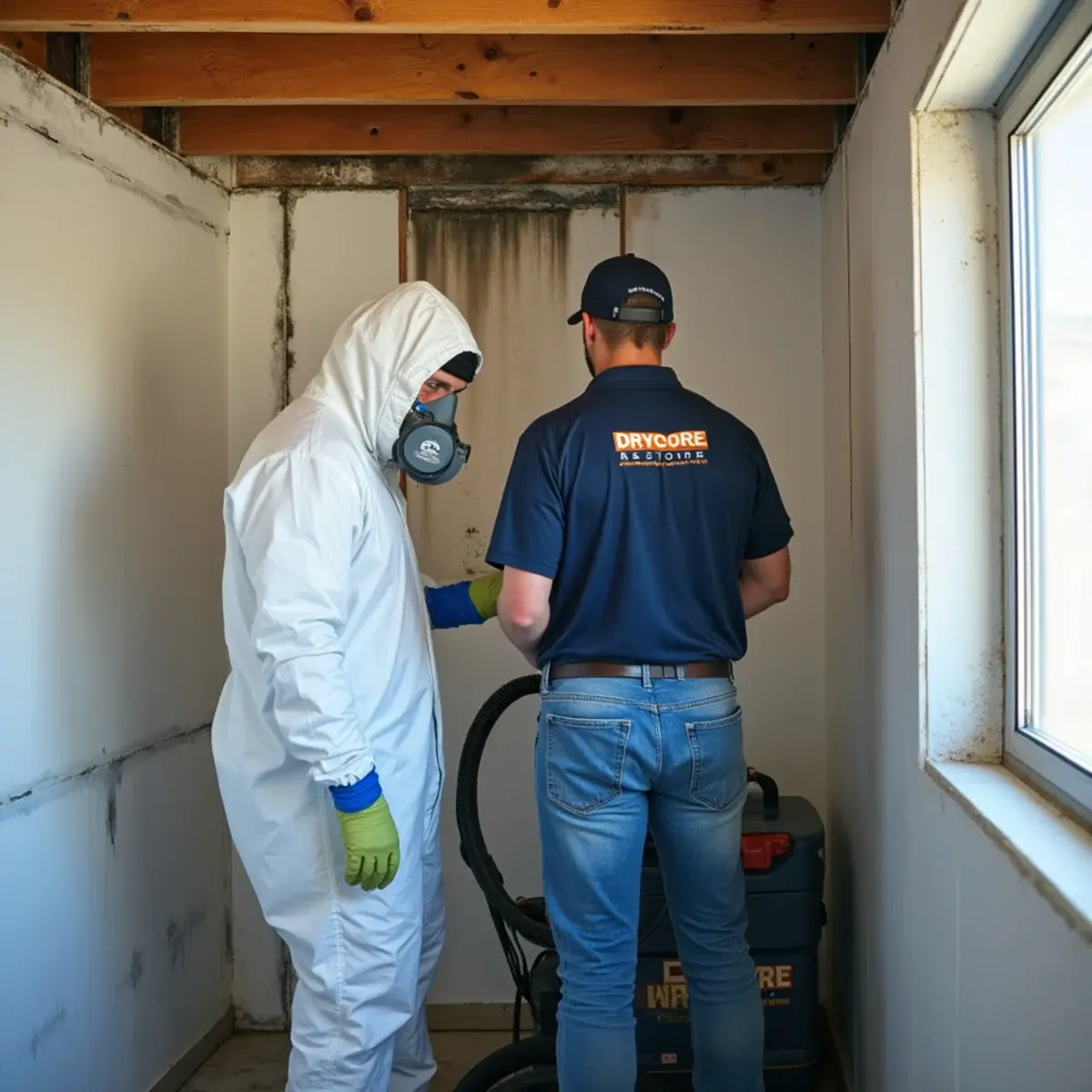
Glendale, CA · 24/7 response
Mold Remediation in Glendale, CA
Contained removal under negative pressure — we fix the moisture source too, so it doesn't come back.
- 5.0 from 3 Google reviews
- Licensed, bonded & insured
- 60-minute emergency response
24/7 emergency response
A real person answers any hour — and you get a real ETA for your address, not a number off a website. 60-minute response in Glendale.
Dry-Verified Guarantee
Equipment stays until moisture meters match your home's dry standard.
Direct insurance billing
Daily moisture logs and carrier-format estimates. Most clients pay only their deductible.
Mitigation & rebuild in-house
One company from the first gallon extracted to the last coat of paint.
Mold is not a mystery. It needs three things — a food source, a moderate temperature and moisture — and in a house the first two are always present. Moisture is the only variable, which is why every legitimate mold job starts with finding and fixing the water, not with spraying something on a wall.
Drycore Restore remediates under the IICRC S520 standard: contain the work area, put it under negative pressure, remove affected porous materials, HEPA-vacuum and wipe everything else, and verify the result. We don't fog a room and call it finished, and we don't quote a remediation before we know where the water is coming from.
Glendale sees mold in specific places: under-sink cabinets, behind shower walls in older tile installations, in crawl spaces on the shaded north sides of hillside lots, and in any room where a leak got dried by opening a window rather than by a meter.
Need mold remediation in Glendale right now?
Free assessment · 60-minute emergency response · We bill your insurance carrier directly
Free on-site assessment
Tell us what's happening and we'll dispatch a mold remediation crew or call you straight back.
What we're looking for
Signs and problems this service solves
A persistent earthy or musty odor
Microbial volatile organic compounds are detectable well below the level where growth is visible. If a closet, cabinet or room consistently smells musty, there is active growth somewhere in it.
Discoloration on drywall, wood or grout
Black, green, gray or white fuzzy or streaked patches. Color doesn't reliably tell you the species and it doesn't change the remediation approach — containment and removal are the same regardless.
Symptoms that improve when you leave the house
Congestion, itchy eyes, headaches or asthma flare-ups that ease at work or on vacation and return at home are a common early signal, particularly for children and anyone immunocompromised.
Warping, bubbling or soft spots on a wall
Deformation means the material took on water. Where drywall is soft to the touch, growth on the back side is close to a certainty.
Growth returning after you cleaned it
Surface cleaning removes the visible colony but not the moisture that fed it or the growth inside the material. Recurrence in the same spot means the source was never addressed.
A past leak that was never professionally dried
The single most common origin story we hear. Someone put fans on it, the surface dried, and the framing behind stayed wet for weeks.
Scope of work
What mold remediation includes
Moisture source identification before any quote
We do not price a remediation until we can explain where the water came from. Meters and thermal imaging find it; if we cannot account for the moisture, remediating is treating a symptom and it will return.
Sealed containment with a decontamination chamber where needed
Poly barriers sealing the work area, HVAC registers sealed so the system cannot distribute spores, and an airlock entry on jobs where you have to walk through the containment to reach the rest of the house.
HEPA-filtered negative air, ducted outside
This is the part that actually prevents cross-contamination — air flows into the containment and never out of it. Plastic sheeting without a ducted negative air machine achieves very little, and it is the step most often skipped.
Removal of affected porous materials, bagged inside containment
Drywall, insulation, carpet, pad and ceiling tile cut out and bagged before they leave the work area. Semi-porous framing is HEPA-vacuumed, abraded where needed and treated rather than removed.
HEPA vacuuming, damp wiping and post-removal air scrubbing
Every surface inside containment, then scrubbers left running after removal to clear residual airborne particulate rather than releasing it the moment the barrier comes down.
Independent clearance arranged, then rebuild
On jobs of consequence we recommend post-remediation verification by a hygienist we did not hire. Once cleared, we rebuild what came out.
How it works
Our mold remediation process
- 1
Inspection and moisture source identification
We inspect visually and with moisture meters and thermal imaging, and we find the water. If we can't explain where the moisture came from, we're not ready to remediate.
- 2
Containment
The work area is sealed with poly barriers and, where needed, a decontamination chamber. HVAC registers in the area get sealed so the system can't distribute spores through the house.
- 3
Negative air pressure
HEPA-filtered negative air machines exhaust outside, so air flows into the containment and never out of it. This is what actually prevents cross-contamination during removal.
- 4
Removal of affected materials
Porous materials with growth — drywall, insulation, carpet, pad, ceiling tile — are cut out and bagged inside the containment. Semi-porous framing is HEPA-vacuumed and, where necessary, abraded and treated rather than removed.
- 5
Cleaning and air filtration
Every surface in the containment gets HEPA vacuuming and damp wiping with an appropriate antimicrobial. Air scrubbers continue running after removal to clear residual airborne particulate.
- 6
Verification, then rebuild
We recommend independent post-remediation verification by a third-party hygienist on larger jobs so the clearance isn't graded by the same company that did the work. Once cleared, we rebuild.
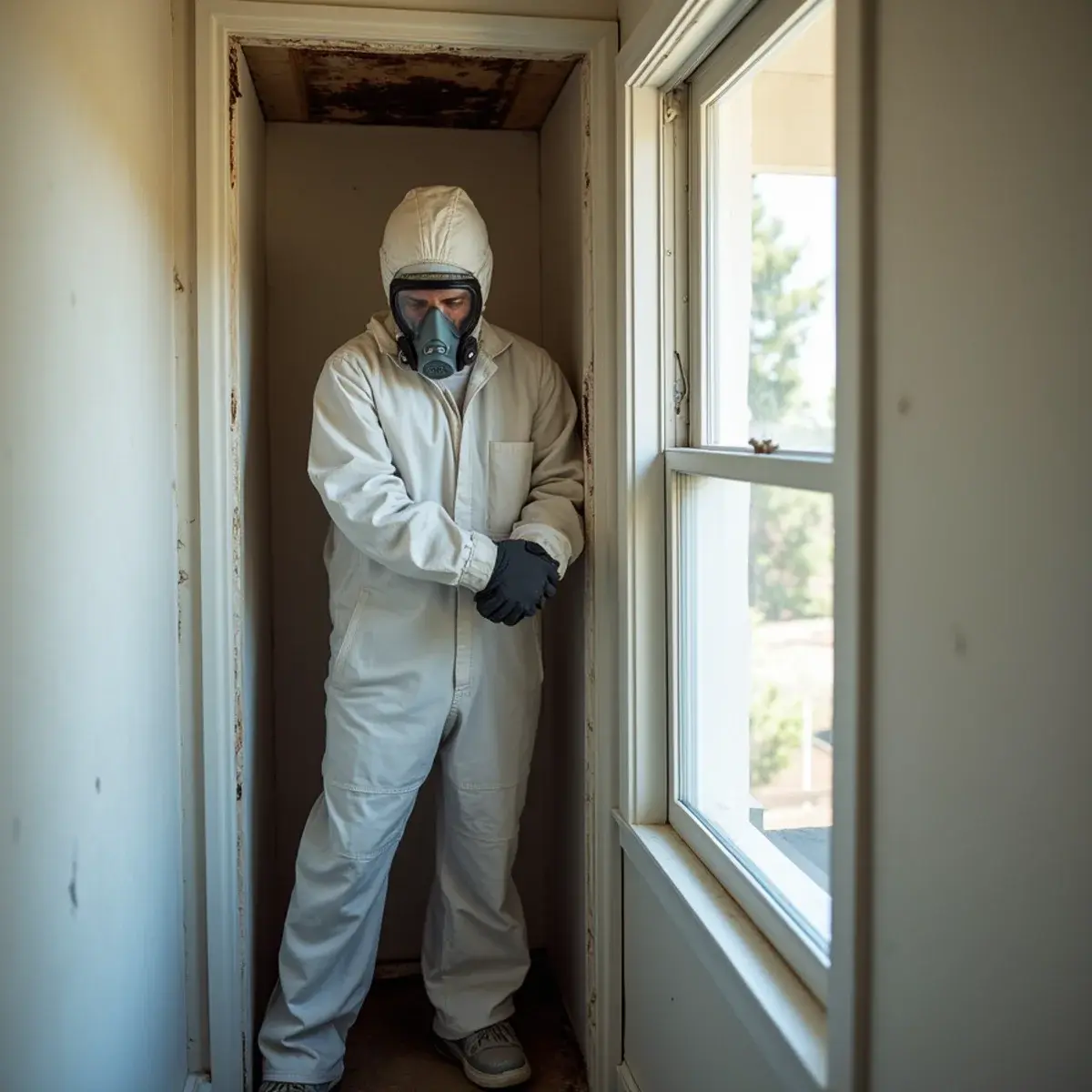
The honest truth about "black mold"
Stachybotrys chartarum — the species people mean when they say black mold — gets more attention than the evidence supports, and the fixation on it causes real harm. It leads homeowners to demand species testing that doesn't change the remediation plan, and to ignore other growth because it isn't the right color.
Under the standards we work to, the response to indoor mold growth is the same regardless of species: contain it, remove it safely, correct the moisture. What testing genuinely helps with is establishing whether a suspected problem exists at all, defining the boundary of an area you can't see into, and verifying afterward that the work succeeded. Those are good reasons to test. "Tell me what species it is so I know how scared to be" is not.
We also want to be straightforward about a conflict of interest: any company that both tests and remediates has a financial reason to find a problem. That's exactly why we recommend independent testing on jobs of consequence, and why we're happy to work alongside a hygienist we didn't hire.
Where mold hides in Glendale homes
Crawl spaces on the north and shaded sides of hillside lots stay cool and damp long after a rain, especially where a previous owner covered the vents or where landscaping regraded runoff toward the foundation. We find more crawl space growth in the Verdugo foothills than anywhere else in the city.
Older tiled showers are the second hot spot. Pre-1970s installations often used a mud bed with no modern waterproofing membrane, and once the grout starts letting water through, the wall behind stays permanently damp. Growth there is usually discovered during a bathroom remodel, not before.
The third is the wall behind a refrigerator or dishwasher with a slow supply line drip. It's a small volume of water, it never puddles anywhere visible, and it feeds growth for months or years. If you're pulling an appliance for any reason, look behind it.
Honest cost drivers
What determines the price of this work
Size of the affected area
A contained under-sink cabinet is a small, fixed-scope job. Growth spanning multiple wall cavities or a whole crawl space requires far more containment, labor and disposal.
Containment complexity
An isolated room is simple. Remediating a space you have to walk through to reach the rest of the house requires an airlock chamber and controlled entry, which takes longer to build and maintain.
What has to be removed
Drywall and insulation are cheap to replace. Custom cabinetry, tile assemblies and hardwood are not, and they drive the reconstruction side of the estimate.
Fixing the moisture source
A remediation that doesn't include plumbing repair, drainage correction or ventilation improvement is a temporary measure. That corrective work is part of the real cost of the job.
Third-party testing
Pre-testing and post-remediation clearance by an independent hygienist adds cost and is worth it on any significant job, especially if you may sell the property.
Get a free, measured estimate — not a phone guess
Free assessment · 60-minute emergency response · We bill your insurance carrier directly
Why us for this
Why Glendale calls Drycore Restore for mold remediation
We tell you about our own conflict of interest
Any company that both tests and remediates has a financial reason to find a problem. That applies to us. It is why we push for independent verification on significant jobs rather than grading our own homework.
We will not remediate without explaining the water
A remediation that does not include fixing the moisture source is a temporary measure sold at a permanent price. If we cannot identify where the water came from, we say so before quoting.
Species testing does not change our scope, and we say so
Under IICRC S520 the response is the same regardless of what the lab calls it. We will not sell you a test whose only function is to tell you how frightened to be.
Contained work that lets you stay in the house
Proper containment and negative pressure keep the job isolated, so most clients stay put. We recommend relocating only where the work is in a primary bedroom or someone in the household has asthma or a compromised immune system.
Questions
Mold Remediation FAQs
Given the right conditions, colonization can begin in 24 to 48 hours and visible growth typically appears within a few days to a week. That window is the entire reason emergency drying matters — dry the structure inside it and there is nothing to remediate.
On a hard non-porous surface like tile, cleaning is reasonable. On drywall, wood or anything porous, bleach is mostly water — it lightens the surface stain while adding moisture to the material and leaving the growth inside intact. That's why it seems to work and then comes back.
Sometimes, and it depends on the cause. When mold results directly from a covered sudden loss like a burst pipe, most California policies provide limited mold coverage — often capped at a specific dollar amount. Mold from long-term seepage, deferred maintenance or humidity is generally excluded. We document the timeline carefully because that's what determines the outcome.
Usually not. Proper containment and negative air pressure keep the work isolated. We do recommend relocating during larger jobs, jobs in a primary bedroom, or when anyone in the household has asthma, allergies or a compromised immune system.
Visual inspection plus independent post-remediation verification. A hygienist samples the air and surfaces inside the cleared containment and compares them to an outdoor baseline. Passing that comparison — not our word for it — is what clearance means.
Related restoration services
Structural Drying & Dehumidification
Metered, logged drying that ends when the meters say dry — not when the calendar says it's been three days.
Read moreCrawl Space & Basement Water Removal
The part of the house nobody looks at — and the most common source of whole-home humidity and floor rot.
Read moreWater Damage Restoration
Full-service recovery from the first gallon extracted to the last coat of paint — one crew, one invoice, one point of contact.
Read more
Further reading from our crews
How Fast Does Mold Grow After Water Damage?
The 24-to-48-hour figure gets repeated constantly. Here's what it actually means, where growth starts first, and why drying speed is the whole prevention strategy.
Read moreHidden Water Damage: The Signs Most Homeowners Miss
The expensive water losses aren't the dramatic ones. They're the slow ones nobody noticed for eight months — and they announce themselves in small ways first.
Read more
Mold Remediation across our full service area
We provide this service throughout Glendale and the surrounding foothill communities. Choose your city or neighborhood for local detail.
- Glendale
- Montrose
- La Crescenta
- Verdugo Woodlands
- Rossmoyne
- Adams Hill
- Chevy Chase Canyon
- Sparr Heights
- Burbank
- Pasadena
- La Cañada Flintridge
- Eagle Rock
- Atwater Village
- Tujunga
- Sunland
- Altadena
- South Pasadena
- Silver Lake
- North Hollywood
- Toluca Lake
- Shadow Hills
- Lake View Terrace
- Sylmar
- San Fernando
- Sierra Madre
- Monrovia
- Duarte
- Azusa
- Glendora
- San Dimas
- La Verne
- Claremont
- Sun Valley
- Studio City
- Valley Village
- Sherman Oaks
- Van Nuys
- Panorama City
- Arleta
- Pacoima
- Mission Hills
- North Hills
- Encino
- Reseda
- Northridge
- Granada Hills
- Tarzana
- Winnetka
- Canoga Park
- Woodland Hills
- Chatsworth
- Glassell Park
- Cypress Park
- Highland Park
- Mount Washington
- Los Feliz
- Echo Park
- Lincoln Heights
- El Sereno
- Boyle Heights
- East Los Angeles
- Hollywood
- Hollywood Hills
- Downtown Los Angeles
- Koreatown
- Westlake
- Pico-Union
- Mid-Wilshire
Need mold remediation in Glendale?
Call +1 (201) 277-9344 for 24/7 dispatch, or request a free on-site assessment. Licensed, bonded & insured · We bill your insurance carrier directly.
Licensed, bonded & insured · We bill your insurance carrier directly · 24/7 Emergency Service