Hidden Water Damage: The Signs Most Homeowners Miss
The expensive water losses aren't the dramatic ones. They're the slow ones nobody noticed for eight months — and they announce themselves in small ways first.
A burst pipe is loud, obvious and gets dealt with immediately. The losses that end up costing the most are the quiet ones — a supply line weeping behind a refrigerator, a shower pan leaking into a floor cavity, a slab leak running for two months before anyone notices a warm patch.
These all announce themselves before the damage becomes structural. Here's what to watch for.
Dealing with this right now? We answer 24/7.
Free assessment · 60-minute emergency response · We bill your insurance carrier directly
Your nose is the best early detector you own
A persistent musty or earthy smell is the most reliable early sign of hidden moisture, and it appears long before anything is visible. Microbial growth produces volatile organic compounds that are detectable at concentrations far below the point where you'd see a spot.
Pay attention to smells that are localized — strongest in a specific closet, cabinet, room or at floor level. That localization is diagnostic. Whole-house mustiness that's worse in humid weather often points to a crawl space, which we cover in our guide to crawl space moisture problems in Glendale homes.
Trust it even if you find nothing. If a bathroom vanity cabinet has smelled damp for months and looks fine, the smell is right and your eyes are missing something.
Visual signs on walls, ceilings and floors
Paint that's bubbling, blistering or peeling in a specific patch means moisture behind the paint film pushing it off the substrate. It shows up before staining does.
Discoloration with a defined edge — a ring or a tide line — indicates repeated wetting and drying rather than a single event. If the ring is growing week over week, the source is active.
Baseboards separating from the wall, or trim that's swollen at the bottom edge, means the bottom plate and the lower drywall took on water and wicked it upward.
Floors tell you a lot. Hardwood that's cupped means the underside is wetter than the top. Tile that sounds hollow when tapped, or grout that's cracked in a line, suggests water under the tile bed. Vinyl or laminate lifting at the edges means moisture in the substrate.
Nail pops and drywall seams becoming visible are subtler indicators — the framing behind moved as it took on and released moisture.
Call +1 (201) 277-9344 — 24/7 in Glendale
Free assessment · 60-minute emergency response · We bill your insurance carrier directly
Signs that aren't visual at all
A water bill that increased without a change in household usage is one of the strongest indicators of a hidden leak, and it's the one most people dismiss. A few thousand extra gallons a month with the same routine means water is going somewhere.
Test it directly: turn off every fixture and appliance in the house, then look at your water meter. If the dial or the low-flow indicator is moving, water is leaving the system somewhere it shouldn't be.
A warm spot on a floor is close to definitive for a hot-water slab leak. Our page on slab leak detection covers how these are located without breaking concrete on a guess.
Reduced water pressure across the house, and the sound of running water with everything off, both point the same direction.
The places hidden leaks actually happen
Some locations account for a wildly disproportionate share of hidden water damage:
- Behind the refrigerator, where a plastic ice maker supply line cracks and drips against the wall for years.
- Under the kitchen sink at the drain connection and the angle stops — check the cabinet floor for staining or softness.
- Behind and beneath the dishwasher, where door seals and drain connections fail slowly.
- In the wall behind a shower, particularly in pre-1970 tile installations built without a waterproofing membrane.
- At the toilet flange, where a failed wax ring leaks onto the subfloor with every flush.
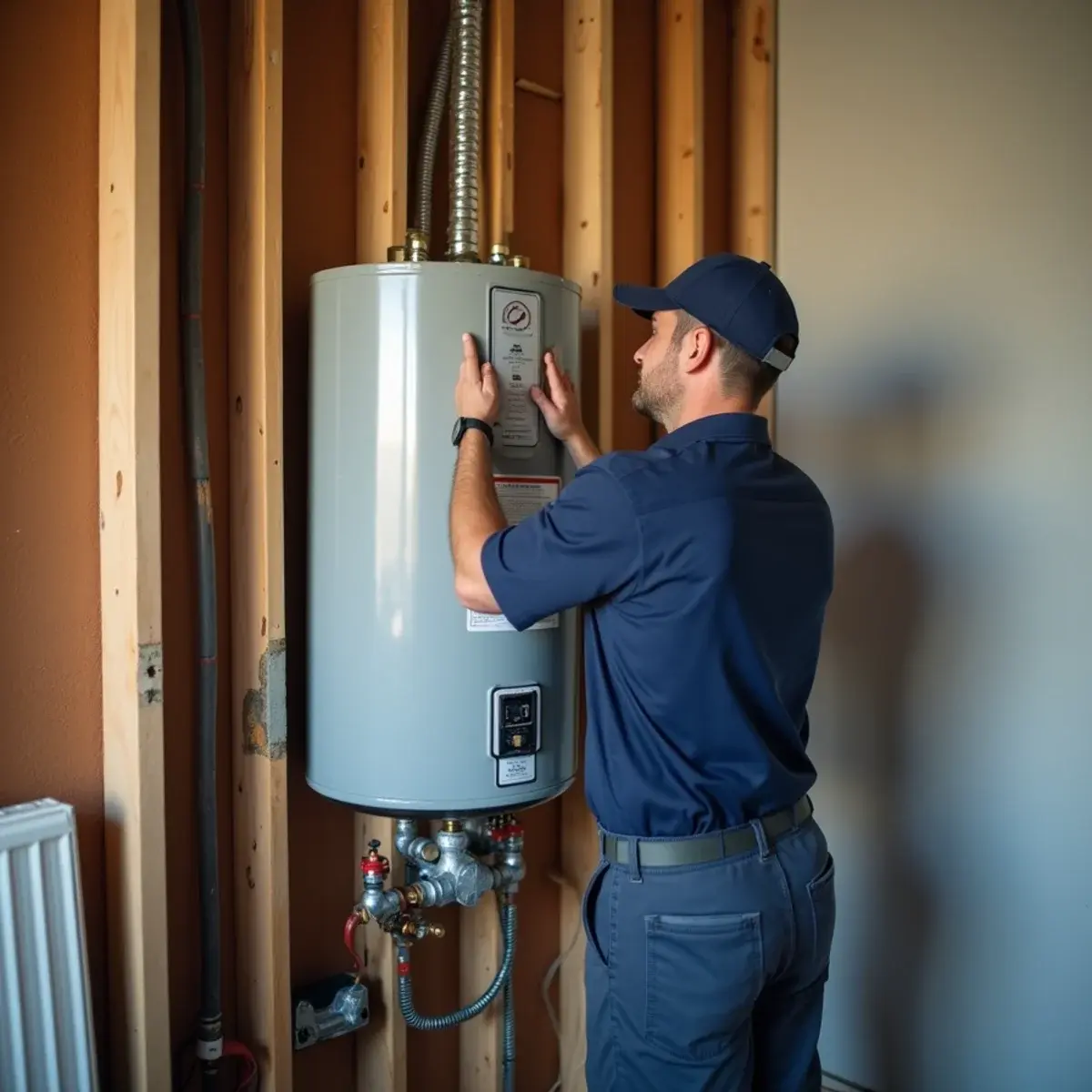
- Around the water heater, where a weeping tank signals imminent failure.
- In the attic at roof penetrations, where flashing failures show up on the ceiling well away from the entry point.
- In the crawl space, where a plumbing leak or ground moisture affects the floor structure above.
How professionals find what you can't
Non-penetrating moisture meters scan large surface areas quickly to identify suspect zones without damaging anything. Penetrating pin meters then confirm actual moisture content in framing and subfloor at specific points.
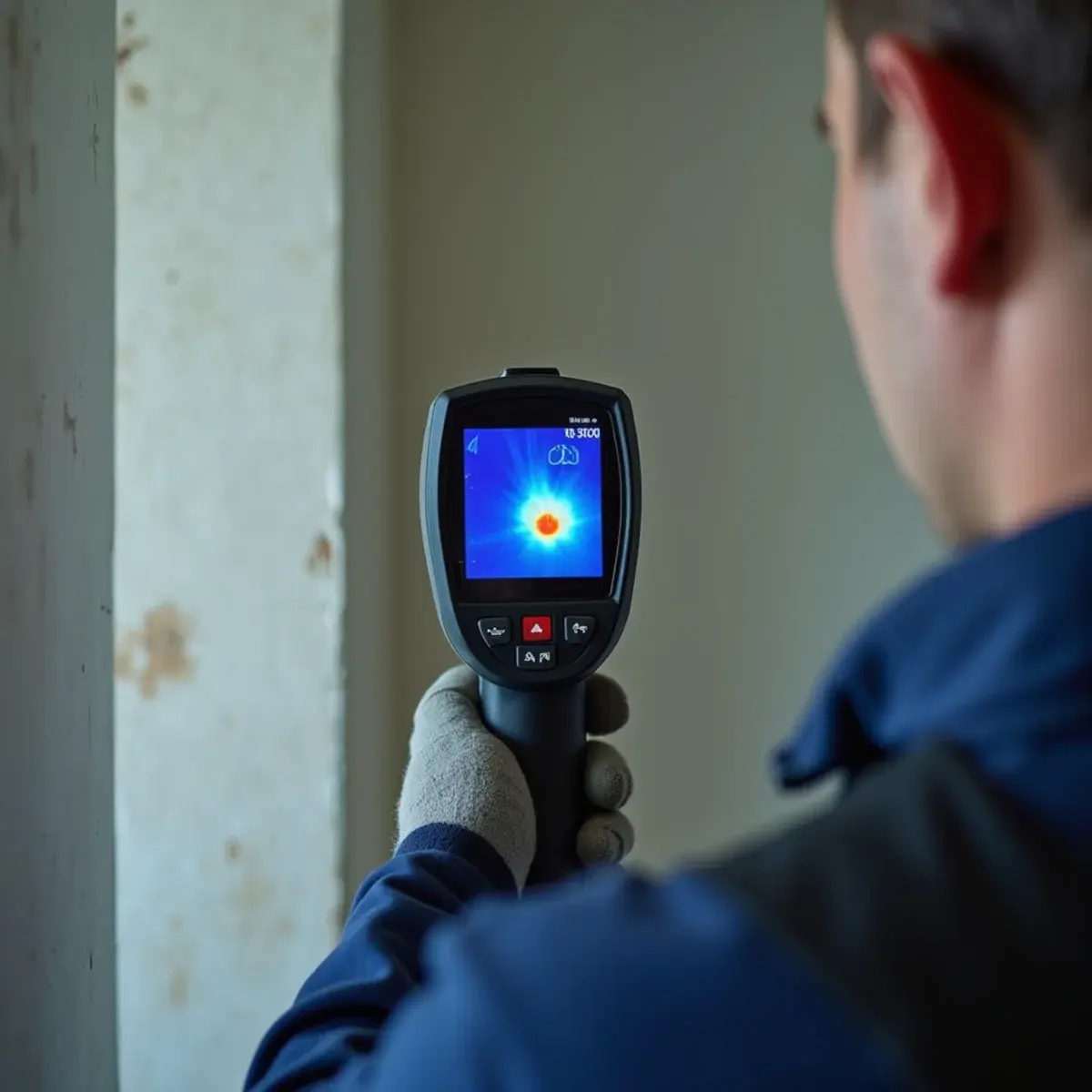
Thermal imaging cameras read surface temperature. Evaporating water cools a surface, so wet areas inside a wall show as a distinct cool region, and hot-water leaks show as a warm plume. It doesn't see water directly — it sees the thermal signature water creates, which is why it's used alongside meters rather than instead of them.
For under-slab and in-wall pressurized leaks, acoustic listening equipment amplifies the sound of water escaping through concrete or drywall to a specific point.
It takes under an hour to survey a house with this equipment, and we do it free across Glendale and surrounding communities. Given what a hidden leak costs by the time it's obvious, there's not much reason to wonder.
A twice-yearly walkthrough that takes fifteen minutes
Twice a year — a good habit is when the clocks change — do a deliberate loop. Open the cabinet under every sink and feel the floor of it. Look behind the toilet and at the base. Pull the refrigerator out far enough to see the wall behind it. Check the water heater pan and the area around the base. Look at ceilings on the top floor for any staining. Step into the garage and look at the wall shared with the house.
Then check your water meter with everything off. That's the whole routine, and it catches most slow leaks well before they become structural.
Frequently asked questions
A consumer pin meter can tell you whether a spot is wet, which is genuinely useful for checking a suspicion. What it can't do is map an affected area, distinguish surface moisture from deep saturation, or establish a dry standard for the material. It's a reasonable screening tool, not a diagnostic one.
A drip you'd describe as minor can run into thousands of gallons a month. But the water cost is trivial compared to the structural damage — the same leak has been feeding mold in an enclosed cavity that whole time.
Possibly not — a dry historic stain from a resolved leak is common. What matters is whether it's active. A moisture meter reading on that spot answers it definitively in about thirty seconds.
The bottom line
Hidden water damage is expensive precisely because it's hidden, but it isn't silent. A smell, a stain with a growing edge, a swollen baseboard or an unexplained water bill are all the house telling you something.
If you've noticed one of these and want a definitive answer, Drycore Restore does free moisture inspections across Glendale and the surrounding communities. Call +1 (201) 277-9344.
Related services
- Slab Leak Detection & Repair Support in Glendale
- Mold Remediation in Glendale
- Water Damage Restoration in Glendale