
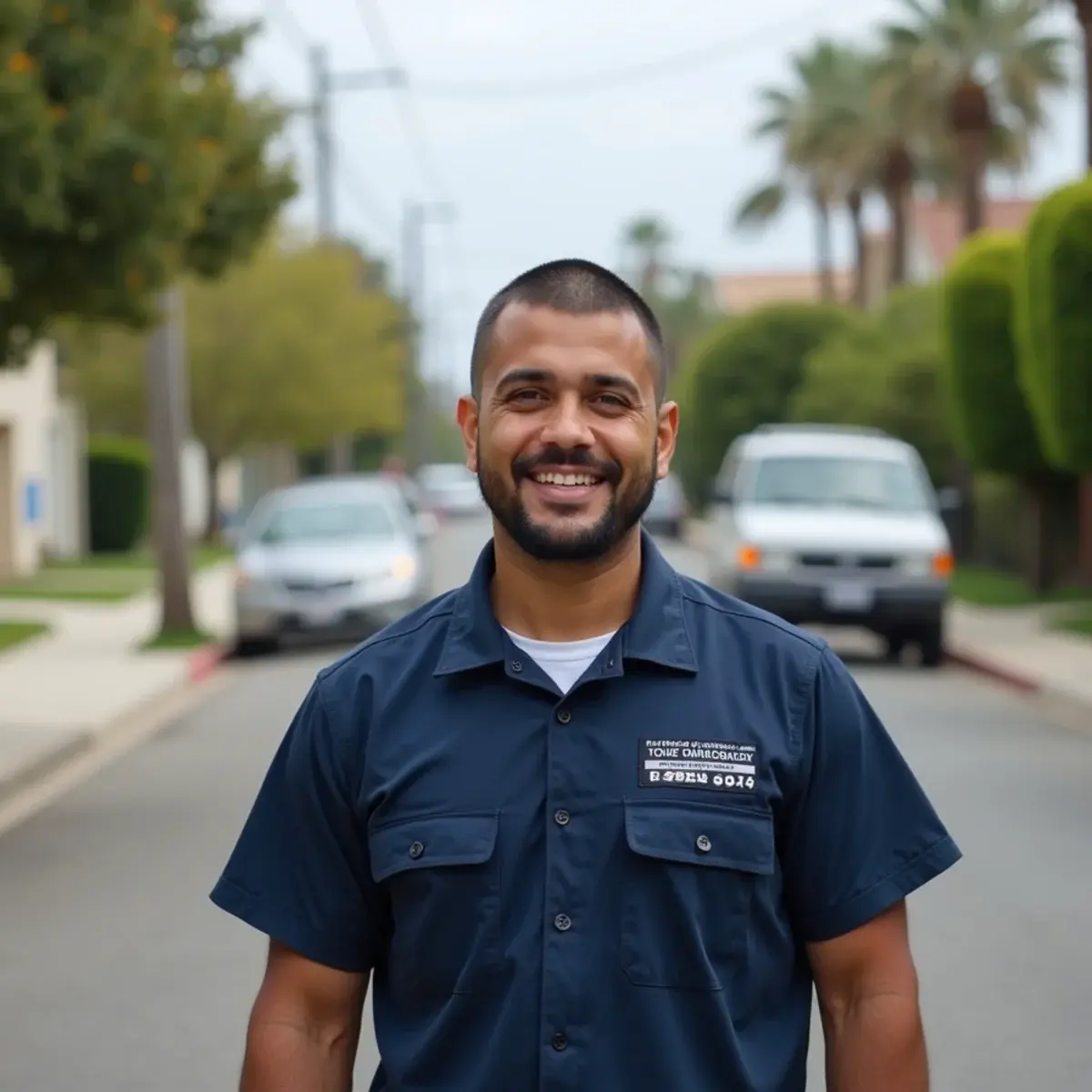
90019 · 90036 · 90010 · 24/7 Emergency Service
Water Damage Restoration in Mid-Wilshire, CA
Miracle Mile offices, Art Deco apartment buildings and period single-family — plus ground that seeps tar.
- 5.0 from 3 Google reviews
- Licensed, bonded & insured
- 60-minute emergency response
24/7 emergency response
A real person answers any hour — and you get a real ETA for your address, not a number off a website. 60-minute response in Glendale.
Dry-Verified Guarantee
Equipment stays until moisture meters match your home's dry standard.
Direct insurance billing
Daily moisture logs and carrier-format estimates. Most clients pay only their deductible.
Mitigation & rebuild in-house
One company from the first gallon extracted to the last coat of paint.
Mid-Wilshire runs along the Miracle Mile corridor, with commercial office towers on Wilshire itself, a substantial stock of 1920s and 1930s Art Deco and Spanish apartment buildings on the side streets, and period single-family housing toward the Hancock Park side.
Three building types, three sets of requirements. The offices need after-hours work and business interruption documentation. The apartment buildings carry century-old cast iron. The houses carry original plaster and millwork worth protecting.
There's also a piece of local geology here that genuinely affects restoration work and that nobody expects.
Water damage in Mid-Wilshire? Call and we'll roll.
Free assessment · 60-minute emergency response · We bill your insurance carrier directly
Free Mid-Wilshire assessment
About 25 minutes from our Glendale base. Tell us what's happening and we'll call you straight back — any hour.
The tar seep zone
The La Brea Tar Pits are not an isolated curiosity — they're the visible part of an active petroleum seep field that extends under a substantial area of this neighborhood. Natural asphalt and methane migrate up through the soil across the Miracle Mile district, which is why buildings here are sometimes constructed with methane mitigation systems beneath the slab.
For a water loss that has a specific and unusual implication. Where a building has a sub-slab methane barrier or venting system, opening or drilling the slab is not a routine decision, and drying approaches that involve penetrating the floor need to account for it.
It also means a persistent odor in a below-grade space isn't automatically microbial. We check rather than assume, because treating a petroleum or methane odor as a mold problem wastes money and misses something that matters more.
Art Deco apartment buildings and cast iron
The side-street apartment stock here is largely from the 1920s and 1930s and shares the failure mode common to Central LA buildings of that age: cast iron waste stacks that corrode from the inside after ninety-odd years.
The failure is a slow seep inside a wall or a floor assembly, not a break. It runs for months, travelling between units, producing a musty smell long before anything visible appears — and in a building with stacked kitchens and bathrooms, it surfaces in a different unit from the one where it started.
Many of these buildings are also subject to the soft-story seismic retrofit ordinance, and that work disturbs plumbing untouched for decades. We're regularly called to buildings where a loss surfaced during or shortly after retrofit construction, which is a reason to take moisture readings before walls close back up.
Miracle Mile commercial and period homes
The Wilshire office towers bring high-rise losses where water travels vertically through pipe chases and shafts, affecting floors with no connection to the failure except being below it. We meter floor by floor rather than working from whichever tenant called first.
Business interruption and extra expense coverage exist in most commercial policies and go badly underused. We provide the restoration timeline and daily logs that support the claim; the financial side is your accountant's.
On the residential side toward Hancock Park, the housing carries original plaster, millwork and hardwood. Plaster dries slower than drywall and fails by losing its keys, so we measure deeper and tap the field before calling a wall salvageable — and replace in kind where it has to come out, because substituting drywall changes wall thickness and shows against original casing permanently.
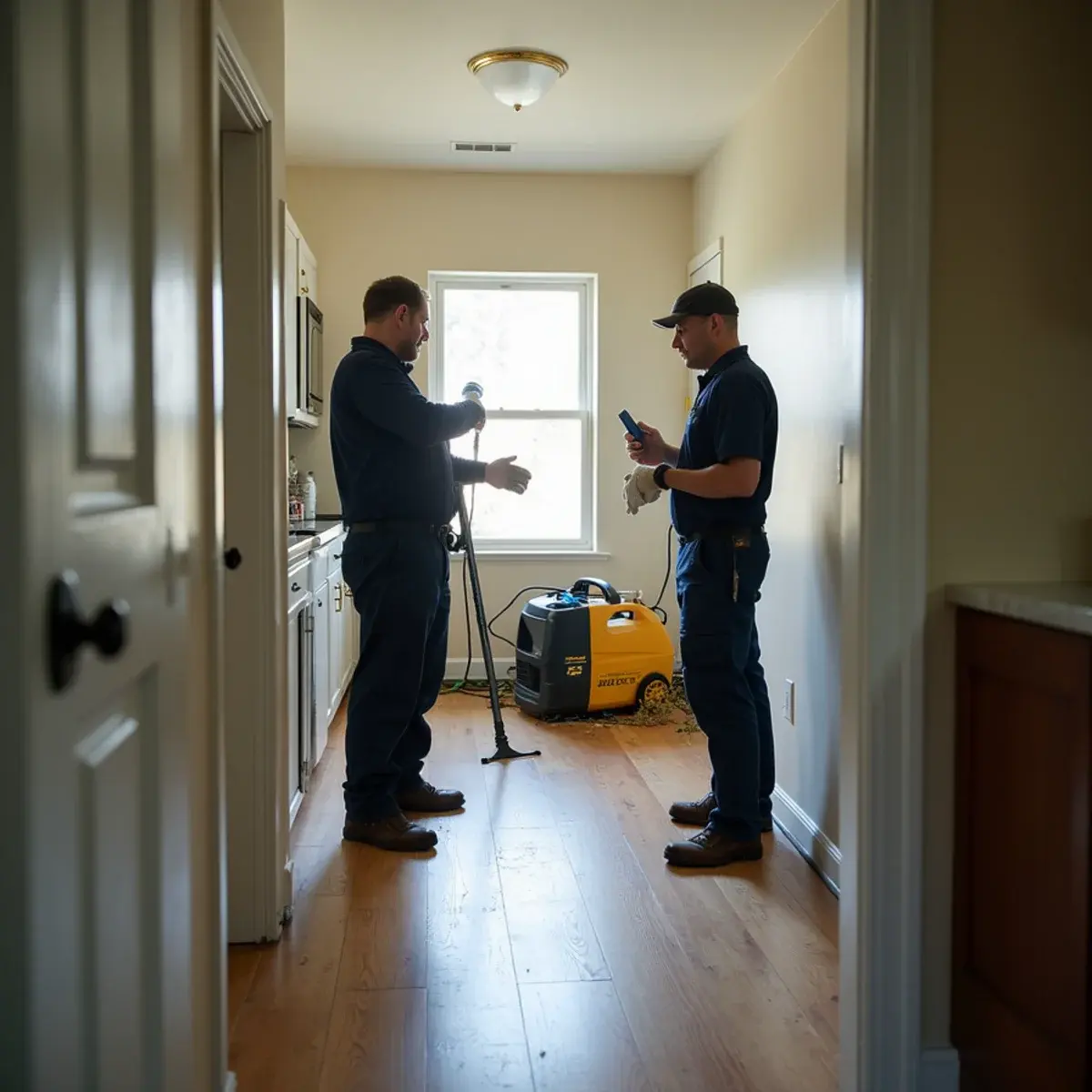
Local risk profile
What causes water damage in Mid-Wilshire
Active tar and methane seep zone
Sub-slab methane barriers and venting systems mean penetrating a floor is not a routine drying decision here.
Corroding cast iron in Art Deco buildings
Ninety-year-old waste stacks seep inside shared walls for months, surfacing in a different unit than the source.
Vertical travel in Wilshire office towers
High-rise losses reach floors with no connection to the failure except being below it.
Original plaster and millwork in period homes
Historic finishes toward Hancock Park need in-kind repair rather than drywall substitution.
Most requested here
Restoration services for Mid-Wilshire properties
Commercial Water Damage Restoration
After-hours and phased drying that keeps your doors open and your tenants in their units.
Learn moreMold Remediation
Contained removal under negative pressure — we fix the moisture source too, so it doesn't come back.
Learn moreStructural Drying & Dehumidification
Metered, logged drying that ends when the meters say dry — not when the calendar says it's been three days.
Learn moreWater Damage Repair & Reconstruction
The rebuild phase most restoration companies hand off — done in-house, so the job actually finishes.
Learn moreEmergency Water Extraction
Truck-mounted units that pull hundreds of gallons an hour — the single highest-impact hour of any water loss.
Learn more
Around Mid-Wilshire
Landmarks and destinations we work near regularly.
- Miracle Mile
- La Brea Tar Pits
- LACMA
- Wilshire Boulevard
- Petersen Automotive Museum
- Hancock Park border
Streets and pockets we cover
Sub-areas within Mid-Wilshire where we take calls.
- Miracle Mile
- Wilshire corridor
- Park La Brea border
- Windsor Square border
- La Brea Avenue
Why us, here
Why Mid-Wilshire residents call Drycore Restore
The one place we check before drilling a floor
Mid-Wilshire sits on an active tar seep field and some buildings carry sub-slab methane systems. Penetrating a slab here is a decision, not a routine step.
Art Deco buildings hide cast iron leaks
Side-street 1920s and 1930s stock seeps inside shared walls for months and surfaces in a different unit than the source.
Wilshire towers travel vertically
High-rise losses reach floors unconnected to the failure. We meter floor by floor rather than trusting complaints.
What Mid-Wilshire calls sound like
Mid-Wilshire sits on an active tar seep field, and some buildings have methane systems under the slab. It's the one neighborhood where we check before drilling a floor.
Verified reviews
5.0 stars from 3 Google reviews
“We had a pipe burst in our wall. Drycore came out to dry and disinfect everything for us.”
“Very responsive, accommodating and professional. I highly recommend them.”
“They responded very quickly and came out immediately.”
Local questions
Mid-Wilshire water damage FAQs
About 25 minutes from our Glendale base. We dispatch 24 hours a day, and for Mid-Wilshire we work to a 60-minute emergency response. Call +1 (201) 277-9344 and we'll give you a real ETA for your address rather than a number off a website — plus the steps to take before we arrive.
We serve 90019, 90036, 90010 and the surrounding streets. If you're not certain whether your address falls inside our range, call and ask — we'll tell you honestly rather than driving out and turning around.
Active tar and methane seep zone — Sub-slab methane barriers and venting systems mean penetrating a floor is not a routine drying decision here. We also see corroding cast iron in art deco buildings regularly here.
Both. The same crew that extracts and dries also installs the new drywall, matches texture, paints, and reinstalls trim, flooring and cabinetry — so the job actually finishes instead of stalling between two contractors.
Drycore Restore
749 Portola AveGlendale, CA 91206Get Directions →+1 (201) 277-9344
Monday – Sunday · Open 24 hours a day, 7 days a week
Nearby areas we also serve
Guides relevant to this area
The Water Damage an Earthquake Causes (And How To Reduce It)
After a significant quake, far more Los Angeles homes are damaged by their own plumbing than by structural failure.
Read moreWhy the Smell Comes Back (And How Odor Is Actually Removed)
If the smell returns on warm days, nothing was removed — something was covered. Odor is a material problem, not an air problem.
Read moreWet Documents and Electronics: What Can Still Be Saved
Two rules, both counterintuitive, both time-critical: freeze the paper, and don't turn the electronics on.
Read more
Water damage in Mid-Wilshire? Call now.
About 25 minutes from our Glendale base. 24/7 dispatch, free on-site assessment, direct insurance billing.
Licensed, bonded & insured · We bill your insurance carrier directly · 24/7 Emergency Service