
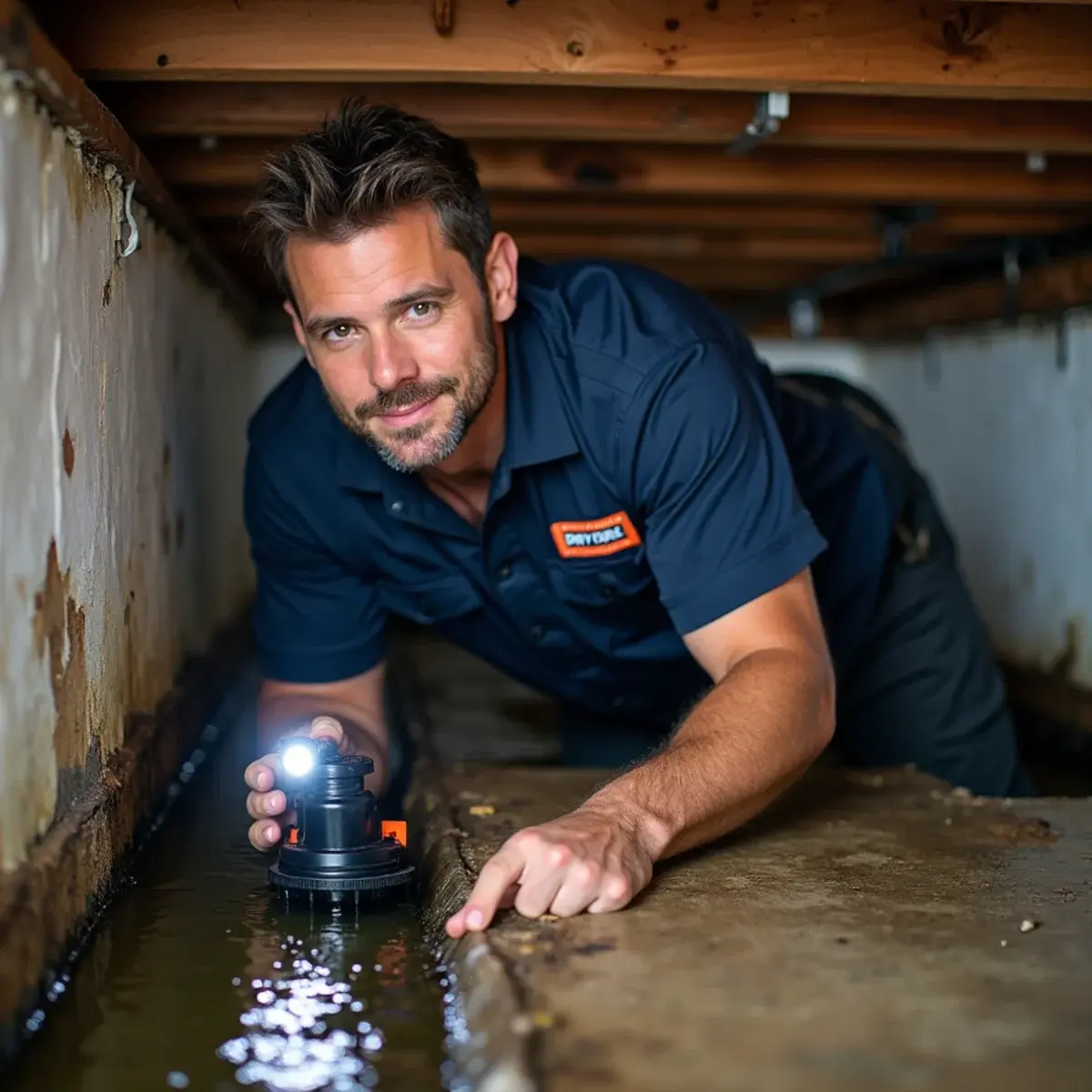
Glendale, CA · 24/7 response
Crawl Space & Basement Water Removal in Glendale, CA
The part of the house nobody looks at — and the most common source of whole-home humidity and floor rot.
- 5.0 from 3 Google reviews
- Licensed, bonded & insured
- 60-minute emergency response
24/7 emergency response
A real person answers any hour — and you get a real ETA for your address, not a number off a website. 60-minute response in Glendale.
Dry-Verified Guarantee
Equipment stays until moisture meters match your home's dry standard.
Direct insurance billing
Daily moisture logs and carrier-format estimates. Most clients pay only their deductible.
Mitigation & rebuild in-house
One company from the first gallon extracted to the last coat of paint.
Crawl spaces are out of sight and therefore out of mind, right up until the floor above them starts to feel soft or the whole house takes on a smell nobody can locate. A significant share of the air you breathe upstairs comes up through the floor from that space — the stack effect pulls it — so a wet crawl space is not a contained problem.
In Glendale's foothill neighborhoods, crawl spaces and partial basements collect water for a handful of reasons: runoff during storms, a plumbing leak under the house, poor grading directing water toward the foundation, or blocked vents that prevent the space from ever drying out between rains.
We pump the water, dry the space, treat what needs treating, and address the reason it happened — vapor barrier, drainage, ventilation or a sump system — so you're not doing this again every winter.
Need crawl space & basement water removal in Glendale right now?
Free assessment · 60-minute emergency response · We bill your insurance carrier directly
Free on-site assessment
Tell us what's happening and we'll dispatch a crawl space & basement water removal crew or call you straight back.
What we're looking for
Signs and problems this service solves
Musty odor throughout the house
If the smell is present in multiple rooms and strongest at floor level or near a vent, look down. Crawl space air rises into the living space continuously.
Soft or springy floors
Sustained moisture against a subfloor causes delamination and rot. A spot that flexes underfoot means the material below has lost structural integrity.
Standing water or saturated soil under the house
Any visible water is a problem. Even damp soil with no standing water evaporates continuously into the floor structure above.
Rusted ducts, pipes or supports
Corrosion on metal components in a crawl space is a direct record of chronic high humidity, even if you never see actual water.
Higher cooling costs and clammy indoor air
Humid air from below makes conditioned space feel warmer and forces the system to work harder. Sealing and drying a crawl space frequently improves comfort noticeably.
Efflorescence on foundation walls
White crystalline deposits on concrete or masonry mark where water has moved through the material and evaporated, leaving minerals behind. It maps your water intrusion path.
Scope of work
What crawl space & basement water removal includes
Access, assessment and source identification
We get under the house and determine which of the four causes you actually have — plumbing, surface runoff, subsurface groundwater or condensation. They look identical from the hatch and need completely different fixes.
Pumping, including where there is no low point
Submersible and trash pumps clear standing water. Where the space has no natural sump we create a temporary collection point rather than chasing water around with a wet-vac.
Removal of wet insulation and debris
Fallen batts, displaced vapour barrier, construction debris and organic material out. Groundwater intrusion is treated as contaminated and disposed of accordingly.
Low-grain drying of soil, framing and subfloor
Crawl spaces work against you — cool, still, humid. We use low-grain refrigerant or desiccant dehumidification and meter all three surfaces, because drying the air while the soil keeps evaporating achieves nothing.
Structural inspection of joists and girders
We check for existing rot and fungal growth on framing while we are under there and flag anything needing an engineer, rather than drying over a problem you cannot see.
Prevention that stops the repeat
Heavy vapour barrier overlapped and run up the foundation wall, insulation replacement, ventilation correction, and where the water is recurring groundwater, a sump with discharge routed well clear of the foundation.
How it works
Our crawl space & basement water removal process
- 1
Access and assessment
We get under the house, document conditions, and identify the source — plumbing, groundwater, surface runoff or condensation. Those four require completely different fixes.
- 2
Water removal
Submersible and trash pumps clear standing water. Where the space has no natural low point, we create a temporary sump to collect and pump from.
- 3
Debris and contaminated material removal
Wet insulation, fallen vapor barrier, construction debris and organic material come out. Groundwater intrusion is treated as contaminated and disposed of accordingly.
- 4
Structural drying
Crawl spaces need low-grain refrigerant or desiccant dehumidification because the ambient conditions under a house work against you. We dry the soil surface, the framing and the subfloor, and we measure all three.
- 5
Treatment and inspection
Framing and subfloor get antimicrobial treatment. We inspect for existing rot or fungal growth on joists and girders and flag anything that needs structural attention.
- 6
Prevention
New vapor barrier over the soil, insulation replacement, ventilation correction, and — where the water is groundwater or recurring runoff — a permanent sump pump with a discharge line routed well away from the foundation.
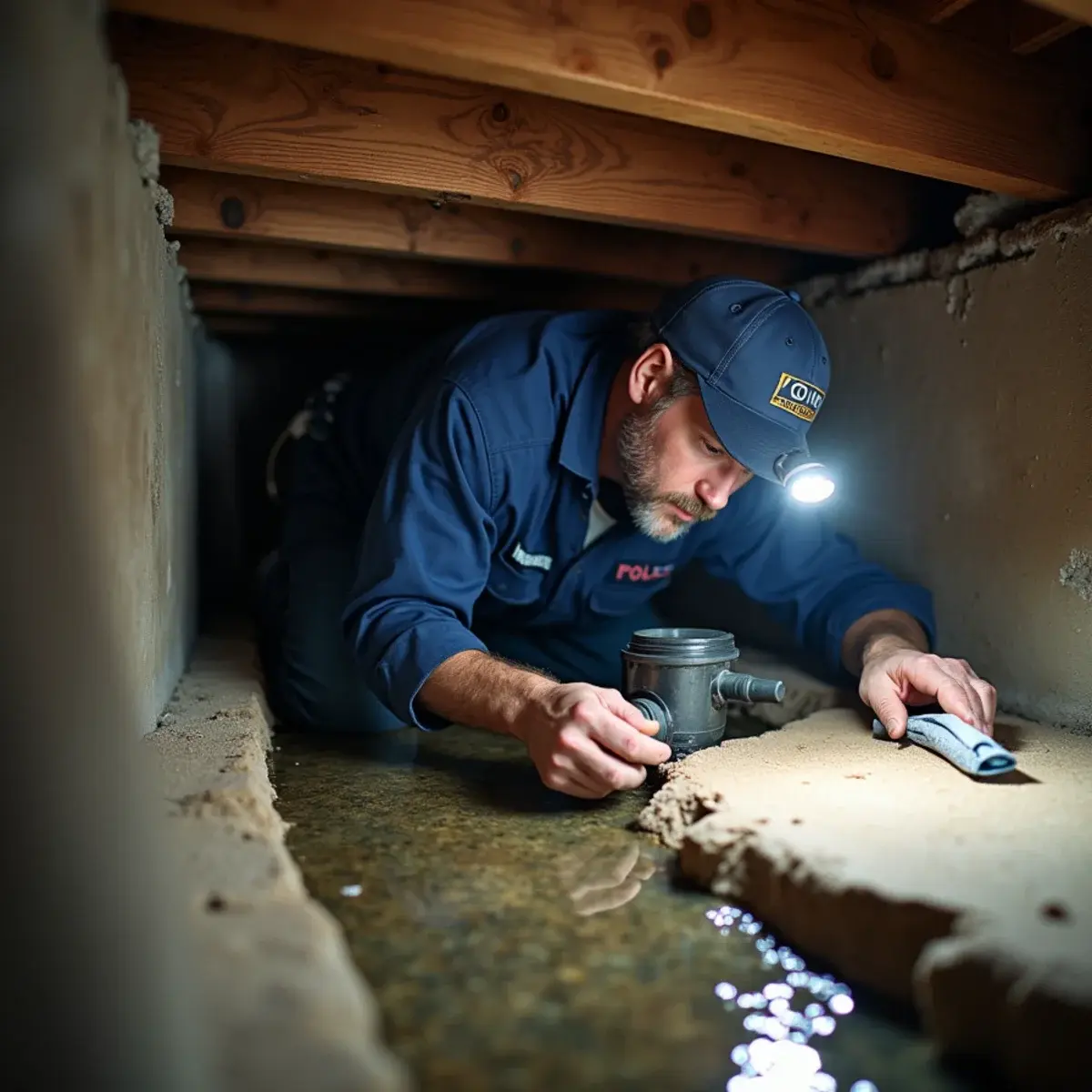
Why hillside lots get wet crawl spaces
Water moves downhill through soil, not just across it. On a sloped lot, rainfall that lands uphill percolates into the ground and travels laterally until it hits something less permeable — frequently your foundation. The uphill side of the crawl space is where it shows up, and it can appear days after the rain stopped as the subsurface flow works its way down.
Landscaping choices make this considerably better or worse. Planters built against a foundation, irrigation lines running along the uphill wall, hardscape that channels water toward the house instead of around it, and area drains that were never cleaned all concentrate water exactly where you don't want it. We look at all of it, because pumping out a crawl space that will refill next month isn't a service worth paying for.
The fix is usually a combination: correct the grade so surface water leaves, intercept subsurface flow with a French drain on the uphill side, and give whatever still gets in a sump to leave through.
Vapor barriers, vents and what actually works
A crawl space with bare soil is evaporating water into your house continuously — a surprising volume of it, even in soil that looks dry. A properly installed vapor barrier, meaning heavy poly overlapped at seams and run up the foundation wall rather than a thin sheet loosely laid down, stops that at the source and is one of the highest-value small improvements available to a Glendale homeowner.
Ventilation is more nuanced than the old rule of thumb suggests. Vents help when outdoor air is drier than crawl space air, which in our climate is true much of the year. They actively hurt during humid conditions, when you're pulling moist air into a cool space where it condenses on ducts and framing. If a crawl space has a chronic humidity problem, sealing the vents and conditioning the space with a dedicated dehumidifier often outperforms trying to vent it.
What doesn't work: covering the vents with cardboard in winter, laying plastic sheeting with no attention to seams, or running a household dehumidifier that isn't rated for low-grain conditions.
Honest cost drivers
What determines the price of this work
Clearance and accessibility
An 18-inch crawl space costs more to work in than a 40-inch one, simply because every task takes longer. Tight access also limits which equipment can be brought in.
Square footage
Vapor barrier, drying equipment and treatment all scale with the footprint of the space.
Water source
A one-time plumbing leak is a straightforward dry-out. Recurring groundwater or surface intrusion needs a drainage solution, and that's a larger project.
Existing damage
If joists or a girder have rotted, structural repair is required before anything else, and that's carpentry rather than restoration.
Prevention scope
A vapor barrier is inexpensive. A full encapsulation with sealed vents, a dedicated dehumidifier and a sump system is a meaningful investment — one that's justified on a hillside property with a history of intrusion and not necessary on a dry valley-floor lot.
Get a free, measured estimate — not a phone guess
Free assessment · 60-minute emergency response · We bill your insurance carrier directly
Why us for this
Why Glendale calls Drycore Restore for crawl space & basement water removal
We fix the cause or we tell you we cannot
Pumping out a crawl space that will refill next month is not a service worth paying for. We document the intrusion path so drainage work has a target, and we say plainly when the answer is a French drain rather than another dry-out.
We know why hillside crawl spaces flood on clear days
Subsurface flow arrives a day or more after the rain stops. Homeowners who have perfect gutters and clean area drains still get water because they solved surface runoff and left the lateral movement untouched.
We will tell you if you do not need a sump
Most valley-floor properties do not. Recurring intrusion on a Verdugo Woodlands or Adams Hill slope is a different story. Selling a sump to a house that does not need one is easy and we would rather not.
The connection to the air you breathe
Rising air pulls replacement air in from the lowest opening, so crawl space conditions are indoor air quality conditions. We treat a musty whole-house smell as a crawl space investigation rather than an air freshener problem.
Questions
Crawl Space & Basement Water Removal FAQs
Substantially. Warm air rising through a building draws replacement air in from the lowest point, which in a raised-foundation home is the crawl space. Odor, humidity and mold spores travel that path continuously. Fixing a crawl space frequently resolves a whole-house smell that nobody could locate.
Warning signs from inside are musty smell, unexplained high indoor humidity, soft floor areas, and cold or damp floors over a specific part of the house. We do free crawl space inspections in Glendale, so you don't have to crawl under there yourself to find out.
Only if water is arriving faster than the space can shed it, which on Glendale's valley floor is often not the case. Recurring intrusion on a hillside lot is a different story, and a sump with a properly routed discharge line is usually the right permanent answer there. We'll tell you honestly if you don't need one.
Frequently, through sistering new lumber alongside the damaged member or replacing a section. Severe rot in a girder or multiple joists is structural work that needs an engineer's involvement. We'll identify it and tell you which category you're in.
It depends on your conditions, and the old rule of thumb is not reliable in this climate. Vents help when outdoor air is drier than crawl space air, which is true much of the year here — and actively hurt during humid spells, when you pull moist air into a cool space where it condenses on ducts and framing. A space with chronic humidity, visible condensation or a history of standing water is usually better sealed and conditioned with a dedicated low-grain dehumidifier. We measure before recommending either.
Related restoration services
Flood & Storm Damage Cleanup
Hillside runoff, debris flow and storm intrusion handled as the contaminated-water events they actually are.
Read moreMold Remediation
Contained removal under negative pressure — we fix the moisture source too, so it doesn't come back.
Read moreStructural Drying & Dehumidification
Metered, logged drying that ends when the meters say dry — not when the calendar says it's been three days.
Read more
Further reading from our crews
Hillside Drainage and Foundation Protection in Glendale
Water on a slope moves through the ground, not just across it. That's why perfect grading and clean gutters still leave some hillside homes wet every winter.
Read moreCrawl Space Moisture Problems in Glendale Homes
A large share of the air you breathe upstairs comes up through the floor. That makes a damp crawl space a whole-house problem, not a hidden one.
Read more
Crawl Space & Basement Water Removal across our full service area
We provide this service throughout Glendale and the surrounding foothill communities. Choose your city or neighborhood for local detail.
- Glendale
- Montrose
- La Crescenta
- Verdugo Woodlands
- Rossmoyne
- Adams Hill
- Chevy Chase Canyon
- Sparr Heights
- Burbank
- Pasadena
- La Cañada Flintridge
- Eagle Rock
- Atwater Village
- Tujunga
- Sunland
- Altadena
- South Pasadena
- Silver Lake
- North Hollywood
- Toluca Lake
- Shadow Hills
- Lake View Terrace
- Sylmar
- San Fernando
- Sierra Madre
- Monrovia
- Duarte
- Azusa
- Glendora
- San Dimas
- La Verne
- Claremont
- Sun Valley
- Studio City
- Valley Village
- Sherman Oaks
- Van Nuys
- Panorama City
- Arleta
- Pacoima
- Mission Hills
- North Hills
- Encino
- Reseda
- Northridge
- Granada Hills
- Tarzana
- Winnetka
- Canoga Park
- Woodland Hills
- Chatsworth
- Glassell Park
- Cypress Park
- Highland Park
- Mount Washington
- Los Feliz
- Echo Park
- Lincoln Heights
- El Sereno
- Boyle Heights
- East Los Angeles
- Hollywood
- Hollywood Hills
- Downtown Los Angeles
- Koreatown
- Westlake
- Pico-Union
- Mid-Wilshire
Need crawl space & basement water removal in Glendale?
Call +1 (201) 277-9344 for 24/7 dispatch, or request a free on-site assessment. Licensed, bonded & insured · We bill your insurance carrier directly.
Licensed, bonded & insured · We bill your insurance carrier directly · 24/7 Emergency Service