Preparing Your Glendale Home for the Rainy Season
Southern California gets most of its rain in a handful of storms. The work that protects your house is done in October, not during the atmospheric river.
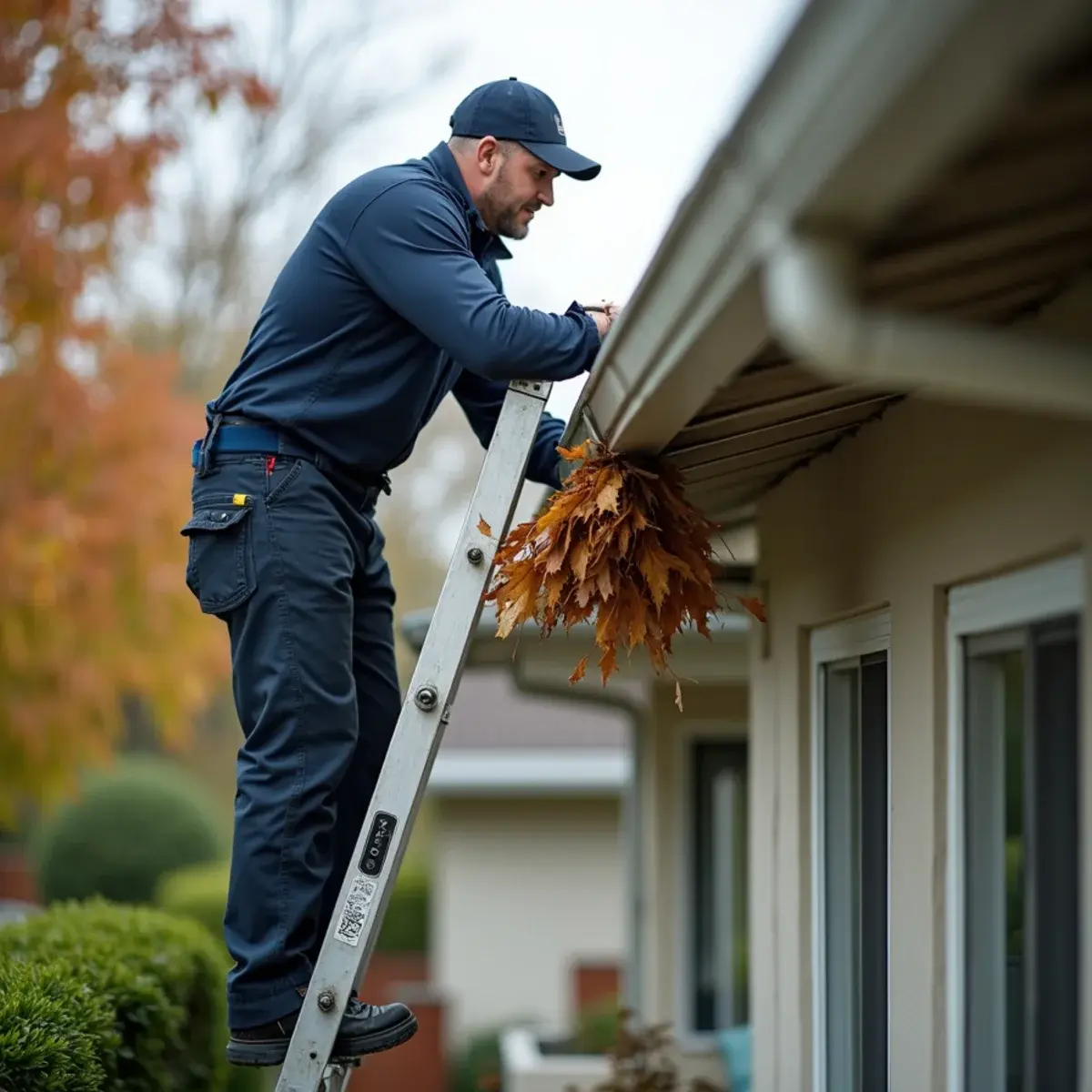
Glendale gets most of its annual rainfall in a small number of large storms, which creates a specific problem: drainage systems sit idle for eight months, fill with leaves and debris, and then get asked to handle an enormous volume all at once.
Nearly every storm loss we respond to traces back to something that could have been checked in an hour in the fall. Here's the list, in the order that matters.
Dealing with this right now? We answer 24/7.
Free assessment · 60-minute emergency response · We bill your insurance carrier directly
Gutters and downspouts — and where the water goes after
Clear the gutters. That part everyone knows. The part people skip is following the water after it leaves the downspout.
A downspout that discharges at the base of a foundation is actively creating the problem you're trying to prevent — it concentrates roof runoff exactly where you least want it. Extensions or splash blocks that carry water at least several feet away from the structure, ideally onto a surface that drains away, are a genuinely high-value ten-dollar fix.
Also check that downspouts connected to underground drain lines are actually flowing. Run a hose into them. If water backs up at the top, the line is blocked and the downspout is effectively discharging at the foundation.
Area drains and yard drainage
Every area drain, catch basin and channel drain on the property needs to be cleared and tested. Pull the grate, remove the debris, and run a hose to confirm it flows. A blocked area drain during a storm becomes a small pond that finds its way into a garage or a crawl space.
Look at grading while you're out there. The ground should slope away from the foundation for the first several feet. Over years, settling, landscaping and hardscape projects frequently reverse that, and water then pools against the house.
If you're on a hillside lot, this matters considerably more. Our detailed look at hillside drainage and foundation protection in Glendale covers what to do about subsurface flow, which grading alone doesn't address.
Call +1 (201) 277-9344 — 24/7 in Glendale
Free assessment · 60-minute emergency response · We bill your insurance carrier directly
The roof, before you need it
You don't need to climb up. A visual inspection from the ground with binoculars catches most problems: displaced or cracked tile, lifted shingles, damaged flashing at chimneys and skylights, debris accumulated in valleys.
Pay particular attention if you have a tile roof. Tile is essentially permanent, which creates false confidence — but the underlayment beneath it is what actually keeps water out, and that has a service life measured in decades. A forty-year-old tile roof with original underlayment will leak.
Check the attic too. Look for staining on the underside of the roof deck, daylight visible at penetrations, or compressed and darkened insulation. Our list of roof leak warning signs to catch before the rainy season goes through this in more detail.
Windows, doors and the building envelope
Wind-driven rain finds gaps that vertical rain never touches. Check the caulking at window and door perimeters and re-seal anything cracked or missing. Look at the weatherstripping on exterior doors, particularly the sweep at the bottom.
Check the flashing above windows and doors if it's visible, and look for gaps where different exterior materials meet — stucco to trim, siding to foundation. Those transitions are the usual entry points.
For homes with skylights, the perimeter flashing is the most common failure and it's worth a specific look.
Crawl spaces, garages and below-grade areas
If you have a crawl space, look at it before the season starts. Check the vapor barrier if there is one, make sure the vents are clear, and note the condition of the soil. Standing water or damp soil in October means you'll have a problem in January.
Garages on the downhill side of a lot are the most common place water enters a Glendale property. Check the threshold at the garage door, look at how the driveway slopes, and see whether there's a drain at the low point that's actually clear.
Move anything valuable off garage and crawl space floors onto shelving. It's a five-minute job that saves the contents claim.
If you're below a burn scar
This is the one that deserves genuinely different treatment. After a fire in the foothills, burned slopes shed water instead of absorbing it, and the runoff carries ash, soil and rock. County agencies treat the first several winters after a foothill fire as elevated-risk seasons.
If your property is downslope of a recent burn area — which affects parts of La Crescenta, Tujunga, Sunland and the canyon neighborhoods — treat storm warnings as serious rather than routine. Know your sandbag source before the forecast, keep the yard clear of loose material that becomes debris, understand your evacuation route, and be aware that anything that reaches your home in that scenario is grossly contaminated. Our flood and storm damage cleanup work in those areas is handled as contaminated-water response for exactly that reason.
The short version
If you do only five things before the first storm:
- Clear gutters and extend downspouts well away from the foundation.
- Clear and test every area drain on the property.
- Check the grade immediately around the house and correct anything sloping toward it.
- Look at the roof from the ground and the attic from inside.
- Get contents off garage and crawl space floors.
Frequently asked questions
October is ideal — after the trees have dropped their first debris and before the first significant storms. If it's already December and you haven't, do it anyway; most of our storm season falls in January and February.
Most valley-floor properties don't. If you're on a hillside lot, at the mouth of a drainage, or downslope of a burn area, they're worth having on hand before you need them. The City of Glendale and LA County make them available at fire stations during the season.
No. Recurring intrusion is a grading, drainage or barrier problem with a fixable cause. During a loss we document the path water takes, which gives whoever does the drainage correction an actual target rather than a guess.
The bottom line
None of this is complicated and most of it is free. The reason storm losses happen is that the work is easy to postpone when the sky has been clear for six months.
If a storm does get ahead of you, Drycore Restore responds 24/7 across Glendale and the foothill communities with equipment built for sediment-laden water. Call +1 (201) 277-9344.
Related services
- Flood & Storm Damage Cleanup in Glendale
- Crawl Space & Basement Water Removal in Glendale
- 24/7 Emergency Board-Up & Tarping in Glendale