Preventing Burst Pipes in Older Glendale Homes
If your Glendale home was built before 1960 and hasn't been repiped, a supply line failure isn't a possibility. It's a schedule you don't have access to.
Glendale has a lot of beautiful old housing, and a lot of it is still running on plumbing that was installed when Coolidge was president. That plumbing has a service life, and for galvanized steel we are well past the end of it.
This is what fails, how to tell where you stand, and what's worth doing about it before rather than after.
Dealing with this right now? We answer 24/7.
Free assessment · 60-minute emergency response · We bill your insurance carrier directly
Know your plumbing era
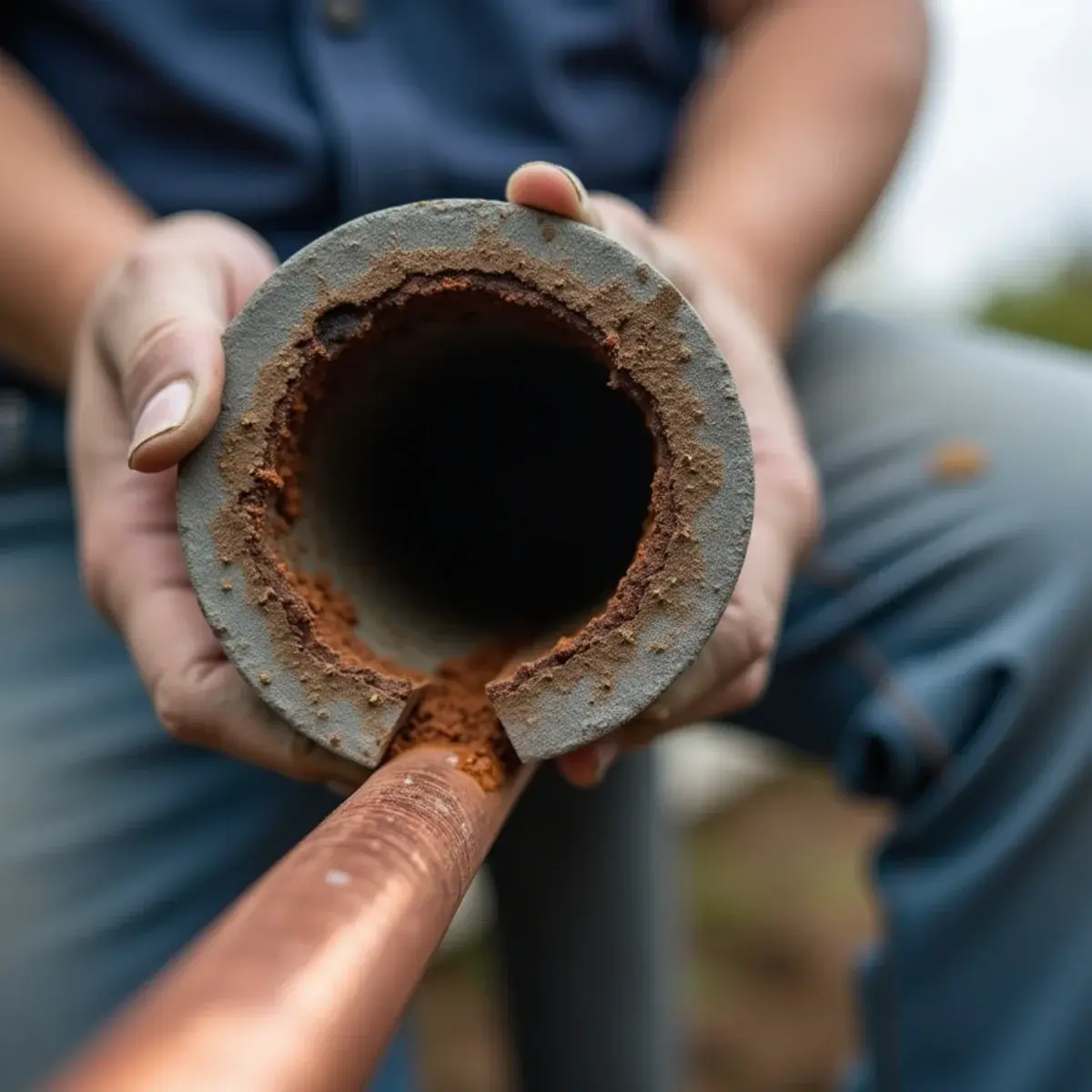
Pre-1960: galvanized steel. Zinc coating on the interior wears away, the steel beneath corrodes, and mineral scale builds until the interior diameter is a fraction of what it was. The pipe looks fine from outside right up until a threaded joint fails. This describes a large share of housing in Adams Hill, Citrus Grove, Vine Street and the older parts of the city.
1960s–1990s: copper. Much longer-lived, but vulnerable to pinhole leaks from water chemistry and, where run through a slab, to abrasion failures. Copper in a slab is the source of the slab leak epidemic in postwar tracts.
1978–1995 in some homes: polybutylene, a gray plastic pipe with a well-documented failure history. If you have gray plastic supply lines with crimped fittings, get them evaluated.
1990s onward: PEX and modern copper. Genuinely good systems. The remaining vulnerabilities are at fittings and at appliance connections.
- Pre-1960 — galvanized steel. Corrodes internally until a threaded joint fails without warning. Common across Adams Hill, Citrus Grove and Vine Street.
- 1960s–1990s — copper. Long-lived, but vulnerable to pinhole corrosion and, where run through a slab, to abrasion failures.
- 1978–1995 — polybutylene in some homes. Grey plastic pipe with crimped fittings and a documented failure history. Worth having evaluated.
- 1990s onward — PEX and modern copper. Genuinely good systems; the remaining weak points are fittings and appliance connections.
How to tell if your galvanized pipe is failing
Rust-colored or brown water on the first draw in the morning, clearing after it runs. That discoloration is the inside of your pipes.
Water pressure that has declined gradually over the years, particularly noticeable when two fixtures run at once. That's scale narrowing the bore.
Visible corrosion, flaking or scaling at any exposed pipe connection — check under sinks, at the water heater and in the garage.
Any exposed threaded joint showing rust staining. Threads are the thinnest part of the pipe and where failures start.
A house that has already had one galvanized failure. The rest of the system is the same age and the same condition.
Call +1 (201) 277-9344 — 24/7 in Glendale
Free assessment · 60-minute emergency response · We bill your insurance carrier directly
The three highest-value preventive fixes
Washing machine hoses. Standard rubber hoses are rated for a handful of years and are routinely left in service for fifteen or twenty. When one splits it delivers roughly six gallons a minute with nothing to stop it. Replace them with braided stainless, write the date on them, and shut the valves off when you travel. This is a twenty-minute job and it's the highest-return maintenance available to any homeowner.
Angle stops and supply lines at toilets and sinks. These small chrome valves are the most-ignored plumbing in the house and a huge share of overnight losses start there. If yours are original to a home more than twenty years old, replacing them is a cheap afternoon.
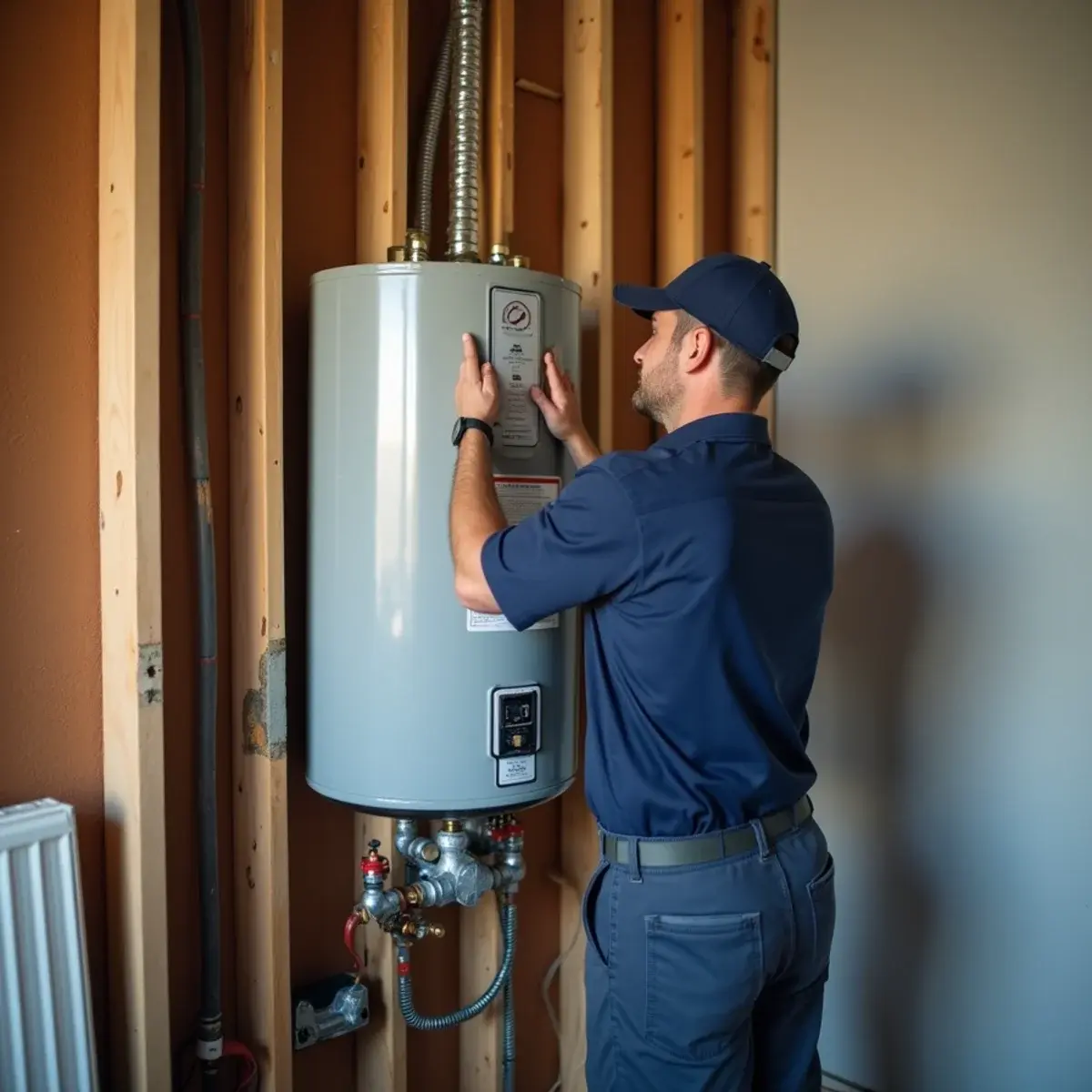
Water heater. Twelve years is a realistic service life in our water. Check the pan and the floor around it twice a year, make sure the temperature-and-pressure relief valve is piped to a drain, and if the unit sits in or above finished space, install a pan with a drain line or a leak sensor with automatic shut-off.
Repipe: when it stops being optional
A full repipe replaces all supply plumbing, typically with PEX or copper, routed through walls and attic rather than under a slab. It's a significant project — usually a week or so, with drywall patching afterward — and it's the last time you'll do it.
The economics turn in its favor when a system has demonstrated a failure pattern. One galvanized failure in a 1930s house is a warning; two means you're now spending repeatedly on emergency repairs and burst pipe water damage cleanup for a system that will keep failing.
There's also a timing argument. Doing it proactively means a planned project with a plumber you chose, at a price you compared, with walls opened deliberately. Doing it reactively means doing it with water already through your ceiling and a restoration crew on site.
If you're already doing a significant renovation, that's the moment. Walls are open, access is easy, and the incremental cost is a fraction of doing it as a standalone project.
Know where your shut-off is
This is free and it saves more money than anything else on this page. Find your main water shut-off today. In most Glendale homes it's at the street side of the property near the meter, or on an exterior wall where supply enters the house.
Turn it. Valves that haven't moved in twenty years seize, and discovering that during an emergency is exactly the wrong time. If it won't turn, have it replaced — a functioning main shut-off is the cheapest insurance in the house.
Then show everyone in the household. A teenager who knows where the valve is and turns it in the first minute saves you thousands.
Leak detection that shuts the water off for you
Point sensors under sinks, behind the refrigerator, at the water heater and in the laundry cost very little and alert you to a leak. Better versions tie into an automatic shut-off valve on the main and close it when they detect water.
Whole-home systems monitor flow at the main and shut off when they see a pattern that looks like a failure — continuous flow at 3 a.m., for example. They're more expensive and they're the closest thing to actual prevention available.
Some carriers offer premium credits for these systems. It's worth asking, because the discount over several years frequently covers the installation.
Frequently asked questions
Commonly cited service life is 40 to 60 years. Essentially all galvanized supply plumbing in Glendale homes is now beyond that. Some of it keeps working anyway, which is why homeowners assume theirs is fine — until it isn't.
A sudden failure is generally a covered peril regardless of pipe age, including the resulting damage. Note that the pipe repair itself is often excluded even when the water damage is covered, and repeated claims can affect renewal.
Yes, and it's common — many homes have had branches replaced during remodels while original vertical runs stayed. The catch is that the remaining original sections are the ones that fail, so partial repiping defers the problem rather than solving it.
The bottom line
Old plumbing doesn't get better. The choice is whether you replace it on your schedule or on its schedule, and the second option comes with a restoration bill attached.
If a line has already let go, Drycore Restore responds 24/7 across Glendale — extraction, drying, wall repair and texture matching in one company. Call +1 (201) 277-9344.
Related services
- Burst Pipe & Leak Cleanup in Glendale
- Slab Leak Detection & Repair Support in Glendale
- Water Damage Restoration in Glendale