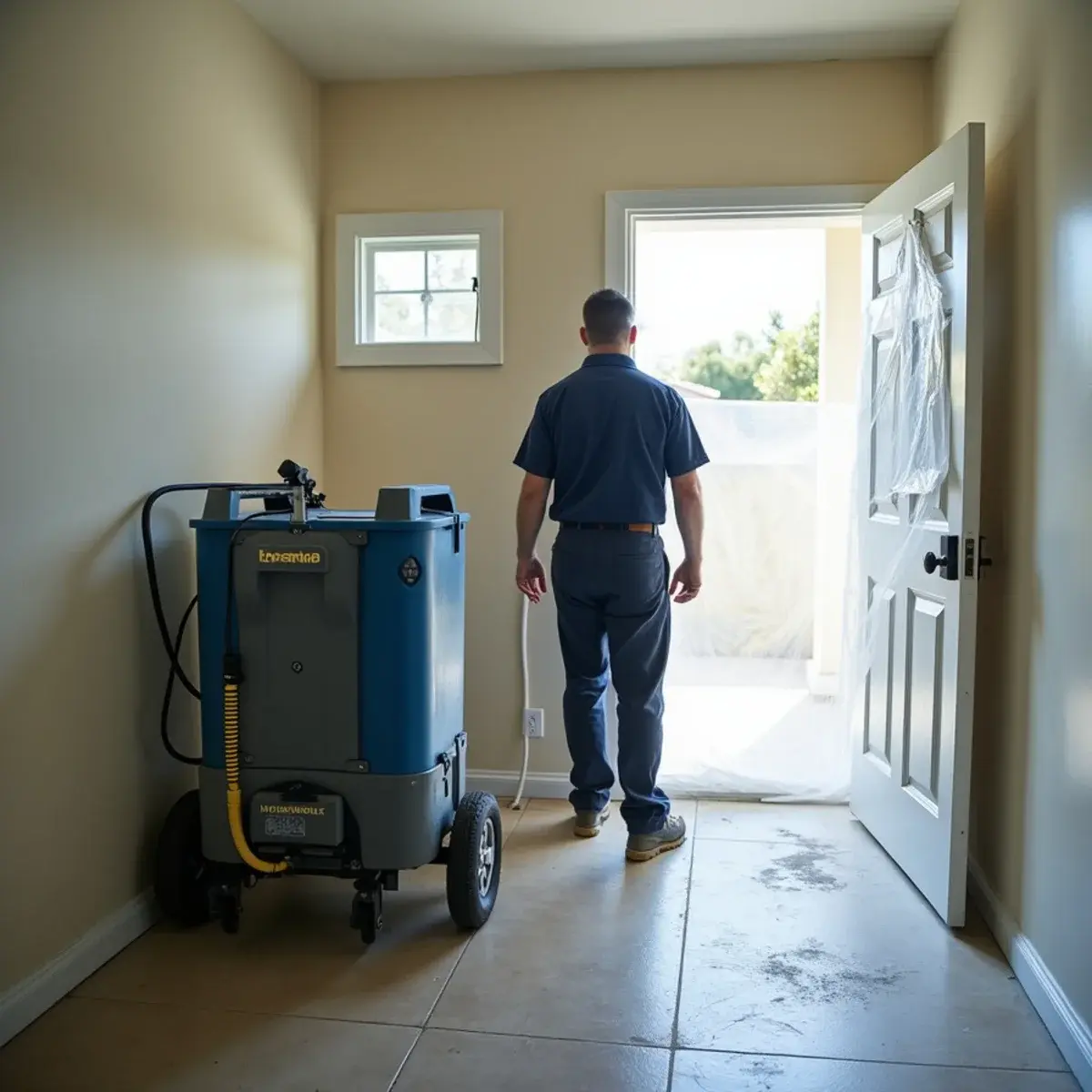
Selling a Home After Water Damage: What You Have To Disclose
Disclosing properly repaired damage is a manageable conversation. Failing to disclose it is a lawsuit that outlives the sale.

You had a water loss, it got fixed, and now you're selling. The instinct is to say as little as possible.
That instinct is expensive. California disclosure law is broad, the obligation survives the close of escrow, and undisclosed water damage is one of the most commonly litigated categories in residential real estate. Handled properly it's a paragraph and a document. Handled badly it's a claim against you two years later.
Dealing with this right now? We answer 24/7.
Free assessment · 60-minute emergency response · We bill your insurance carrier directly
What California actually requires
Sellers of residential property in California complete a Real Estate Transfer Disclosure Statement — the TDS — which asks directly about flooding, drainage and grading problems, and about known material defects affecting the property.
The standard is knowledge-based. You must disclose material facts you are aware of that affect the value or desirability of the property. You aren't required to investigate things you don't know about, but you cannot conceal what you do know, and you cannot answer a direct question falsely.
"Material" is interpreted broadly, and courts have generally read it in favor of buyers. The safe framing is: if a reasonable buyer would want to know it, disclose it.
Critically, the obligation isn't extinguished by the repair. A properly fixed problem is still a fact about the property's history that a buyer would want to know — particularly because it affects insurance claim history and, sometimes, insurability.
Why documentation is the seller's best friend
Here's the reframe that makes this easy: the document that proves you fixed it properly is also the document that protects you.
A moisture log from a professional restoration — dry standard established, daily readings, final verification that affected materials reached the standard — turns an alarming disclosure into a reassuring one. You're not saying "there was water damage." You're saying "there was a supply line failure in March, here is the restoration company's documentation showing the structure was dried to a verified standard, and here is the invoice."
That's a completely different conversation with a buyer. It also creates a clear record that you disclosed accurately and completely, which is the thing that defeats a later claim of concealment.
The corollary matters when the loss is happening: if you might ever sell the house — which is everyone — insist on getting the moisture log at the end of the job. Our article on what to expect during a restoration covers where in the process that document gets produced.
Call +1 (201) 277-9344 — 24/7 in Glendale
Free assessment · 60-minute emergency response · We bill your insurance carrier directly
What to disclose, specifically
Being complete costs you nothing and protects you substantially. Include:
- What happened and when — the cause and approximate date.
- The extent — which rooms and what materials were affected.
- Who did the work — restoration company and any plumbing or roofing contractor.
- The documentation — moisture log, final verification, invoices, and any permits pulled.
- Whether mold was found, and if so the remediation scope and any independent clearance report.
- Whether an insurance claim was filed, since claim history attaches to the property and a buyer's insurer will see it.
- Whether the underlying cause was corrected — repiped, roof replaced, drainage installed — not just the damage repaired.
- Any recurrence, even minor.
The mold question
Mold is the disclosure item sellers most want to avoid and the one where avoidance is most dangerous.
California has specific provisions around mold disclosure, and beyond the statutory framework, mold is exactly the kind of health-adjacent material fact that courts treat seriously. A buyer who discovers undisclosed mold has a strong position.
The protective move is the same as with water: independent post-remediation verification. A clearance report from an industrial hygienist who didn't perform the remediation is credible in a way that a contractor's assurance isn't, and it converts "there was mold" into "there was mold, it was remediated to standard, and here is the independent verification."
If you're mid-remediation and thinking about selling within a few years, that report is worth commissioning even if nobody is requiring it.
How to handle it in the transaction
Disclose early, in the initial disclosure package rather than in response to a buyer's inspection finding. Information volunteered reads as transparency; the same information extracted reads as concealment that didn't work.
Attach the documentation rather than referencing it. A buyer reading a moisture log alongside the disclosure has their concern addressed in the same moment it's raised.
Expect a price conversation anyway, and decide in advance where you stand. A documented, properly repaired loss shouldn't move the number much. An undocumented one will, and reasonably so.
Consider a pre-listing moisture survey if the damage was significant. Knowing your own house is clean before a buyer's inspector tells you is worth the modest cost, and a current clean survey attached to a historic disclosure is very reassuring.
Don't let an agent talk you out of disclosing. The exposure is yours, not theirs, and it survives the close.
What non-disclosure actually costs
Failure to disclose a known material defect exposes a seller to rescission of the sale, damages, and in some circumstances punitive damages. Litigation costs run well beyond the value of whatever the disclosure would have cost you in price.
The practical reality is also that these things surface. Buyers renovate. Contractors open walls. A cosmetically patched water problem behind fresh paint is exactly the sort of thing that becomes visible the first time someone puts a nail through it — and at that point the paint itself becomes evidence of concealment.
The arithmetic is straightforward. Disclosing a documented, properly repaired water event might cost you a small negotiation. Not disclosing it risks the entire transaction plus fees, years after you thought it was finished.
Frequently asked questions
Generally yes. The repair doesn't erase the history, and past water damage is the kind of fact a reasonable buyer would want — partly because of insurance claim history. Disclosing a documented repair is a far better position than a buyer discovering an undisclosed one.
You disclose what you know. If a prior seller disclosed it to you, you know about it and should pass it on. If you genuinely had no knowledge, you can't disclose what you were never told — but don't cultivate ignorance about something you've noticed.
Usually less than sellers fear, when it's documented. Buyers price uncertainty more harshly than known, verified facts. An undocumented "we had a leak once" invites the buyer to imagine the worst; a moisture log tells them exactly what happened.
There's no expiry on a material fact you know about. A significant water event from five years ago that you're aware of is still something a reasonable buyer would want to know. Keep the documentation permanently — it's a property record, not a temporary one.
The bottom line
Disclose it, attach the paperwork, and let the documentation do the reassuring. The moisture log you got at the end of the restoration is the single most valuable thing you can hand a buyer.
Drycore Restore hands every client the complete verification file, and does pre-listing moisture surveys. Call +1 (201) 277-9344.
Related services
- Water Damage Restoration in Glendale
- Mold Remediation in Glendale
- Structural Drying & Dehumidification in Glendale