How To Choose a Water Damage Restoration Company in Glendale
You're choosing a contractor under time pressure, in a panic, with no basis for comparison. Here's how to make a good decision in ten minutes.
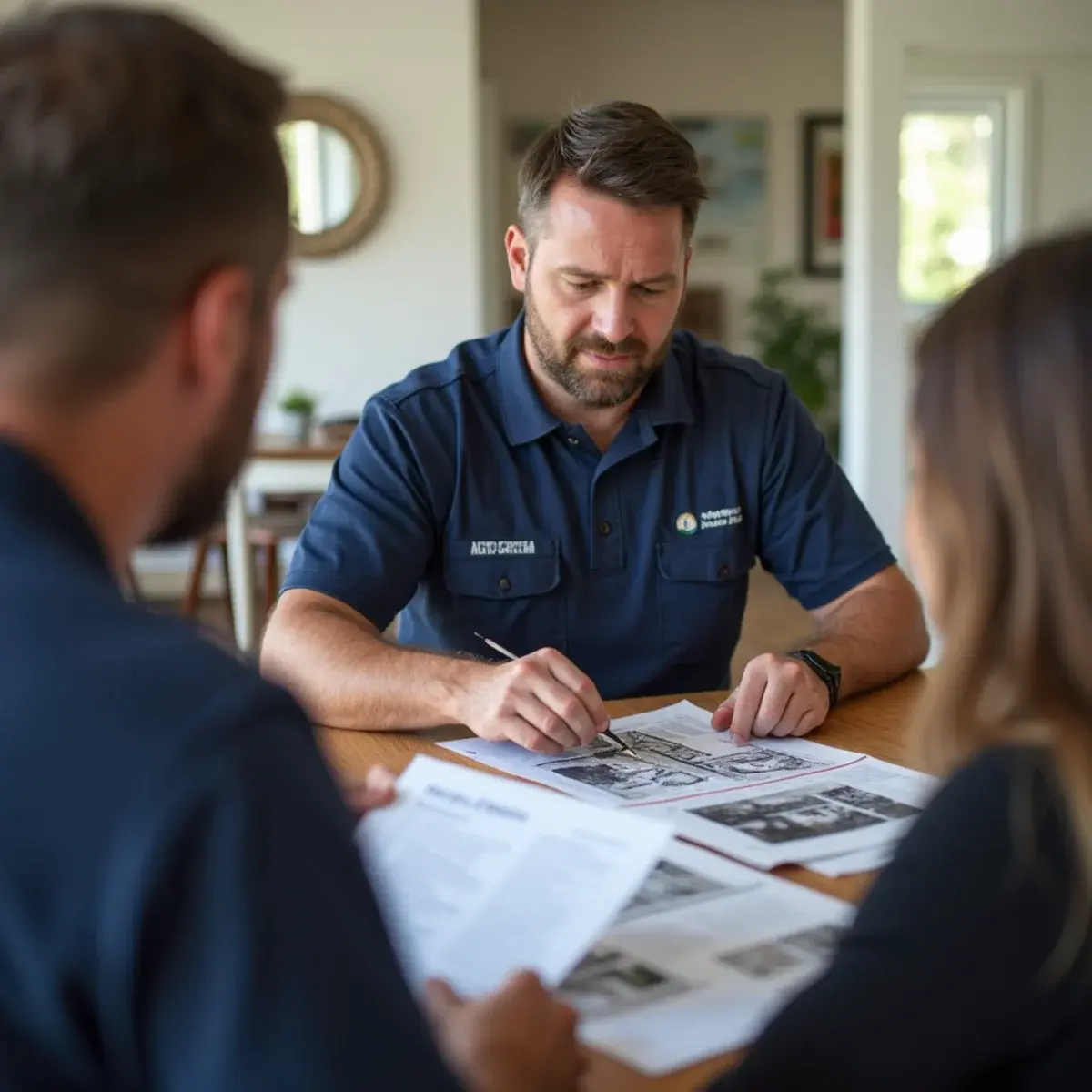
Hiring a restoration company is one of the worst buying situations most people encounter: urgent, unfamiliar, expensive, and happening while you're stressed and your house is wet.
The good news is that a handful of specific questions separate competent operators from the rest, and you can ask all of them in a few minutes on the phone.
Dealing with this right now? We answer 24/7.
Free assessment · 60-minute emergency response · We bill your insurance carrier directly
Ten questions worth asking
You don't need all ten. Three or four will tell you what you need to know:
- Do you do the reconstruction as well as the drying, or do you hand it off? Handoffs are where restoration jobs stall for months.
- How do you determine when my house is dry? The answer should involve establishing a dry standard from unaffected materials and daily meter readings — not a number of days.
- Will I receive the daily moisture readings and the final verification? Yes should be automatic.
- What category and class is my loss, and what does that mean for what has to be removed?
- Will you try to dry my hardwood, cabinets and plaster in place, or is the plan to remove them?
- Do you estimate in the line-item format insurance carriers use?
- Are you licensed, bonded and insured, and can I have the license number?
- Who is my point of contact and how do I reach them at 9 p.m.?
- Will you meet my adjuster on site?
- What's your free assessment actually include?
Red flags
Pressure to sign immediately, especially a broad authorization that doesn't specify scope. You're allowed to read what you sign, even in an emergency.
A firm price quoted over the phone before anyone has seen the property. Water hides; nobody can scope a loss they haven't measured.
Demolition as the default answer to everything. Removing material is faster and more profitable than drying it. Ask specifically what they'll attempt to save and why.
No mention of moisture readings, dry standards or documentation.
"We'll handle everything with insurance, don't worry about it" — with no explanation of scope, deductible or what you'll actually owe.
Storm chasers. After a major weather event, out-of-area companies appear with unmarked trucks and no local presence. If they can't tell you where their shop is, that's the answer.
A quote dramatically lower than others without an explanation of what's different. Compare line items, not totals.
Call +1 (201) 277-9344 — 24/7 in Glendale
Free assessment · 60-minute emergency response · We bill your insurance carrier directly
Certifications and what they're actually worth
IICRC certification is the recognized standard in this industry, and the S500 (water damage restoration) and S520 (mold remediation) documents are the reference standards professionals work to. Asking whether a company works to those standards is reasonable and the answer should be immediate.
A California contractor's license matters for the reconstruction phase, which is regulated construction work. Ask for the number and verify it — the state license board's lookup is public and takes thirty seconds.
Proof of liability insurance and workers' compensation protects you if something goes wrong on your property. Ask for a certificate.
What's worth less than people think: membership badges and logos that anyone can buy. Certifications that require testing and continuing education mean something; directory listings don't.
Why local matters more here than in most trades
Response time is the primary determinant of how much of your house survives, and response time is a function of where the trucks are. A company with a shop in Glendale reaches a Glendale address in a fraction of the time one dispatching from another county does.
Local knowledge is real too. Knowing that hillside properties above Glenoaks need equipment planning before dispatch, that pre-1960 homes in Adams Hill are on galvanized supply, that postwar Burbank tracts produce slab leaks — that changes what shows up on the first truck.
And local companies have a reputation to protect in a place where people talk. A firm that's been working in the same city for years behaves differently than one passing through after a storm.
You choose the contractor, not your insurer
This is worth stating plainly because it's widely misunderstood. In California, you select your own restoration contractor. Carriers maintain preferred vendor programs and will often recommend one, sometimes assertively. You are not obligated to use them and your coverage is unaffected if you don't.
Preferred vendors are not inherently bad — many are competent. But their relationship is with the carrier, which creates an incentive structure you should be aware of. A contractor whose next referral depends on keeping estimates low is in a different position than one you hired directly.
Take the recommendation as information, not instruction, and make your own decision.
The one thing that matters most
If you only evaluate one thing: does this company measure and document, or do they judge by eye and calendar?
Everything else follows from that. A company that establishes a dry standard, takes daily readings, adjusts equipment based on data and hands you a verification log at the end is doing the job properly. One that puts fans in a room and comes back Thursday is not, regardless of how friendly they are or what their website says.
Frequently asked questions
For the emergency mitigation phase, no — the delay costs more than any price difference. Get water extraction started immediately. You can absolutely get competing bids for the reconstruction phase afterward, when there's time to compare properly.
Read what scope you're authorizing. Signing authorization for emergency mitigation is normal and appropriate. Signing an open-ended contract that assigns your insurance benefits and authorizes unlimited work is a different thing — ask for the scope to be specified.
Sometimes, if it's cheaper for a reason you can identify — less demolition because they're drying more in place, for example. If you can't identify why it's lower, the difference is usually something that isn't included and will surface later.
The bottom line
Ask about the drying standard, the documentation, and whether they do the reconstruction. Three questions, two minutes, and you'll know most of what matters.
Drycore Restore is based on Portola Avenue in Glendale, does mitigation and reconstruction in-house, and hands every client the complete moisture log. Call +1 (201) 277-9344.
Related services
- Water Damage Restoration in Glendale
- Structural Drying & Dehumidification in Glendale
- Water Damage Repair & Reconstruction in Glendale