How Long Does Water Damage Drying Actually Take?
Three to five days covers most residential losses — but the number is a result, not a schedule. Here's what determines it and how dryness gets verified.
"How long will the fans be here?" is the second question every homeowner asks, right after cost. The short answer is three to five days for a typical residential loss. The useful answer is that the number is an outcome of physics, not a schedule someone picks.
Understanding what governs it helps you evaluate whether your job is going well — and lets you recognize the warning signs of a drying setup that isn't working.
Dealing with this right now? We answer 24/7.
Free assessment · 60-minute emergency response · We bill your insurance carrier directly
What has to happen for something to dry
Drying is evaporation plus removal. Water inside a material has to move to the surface, evaporate into the air, and then be removed from that air — otherwise the room's humidity climbs until evaporation stops.
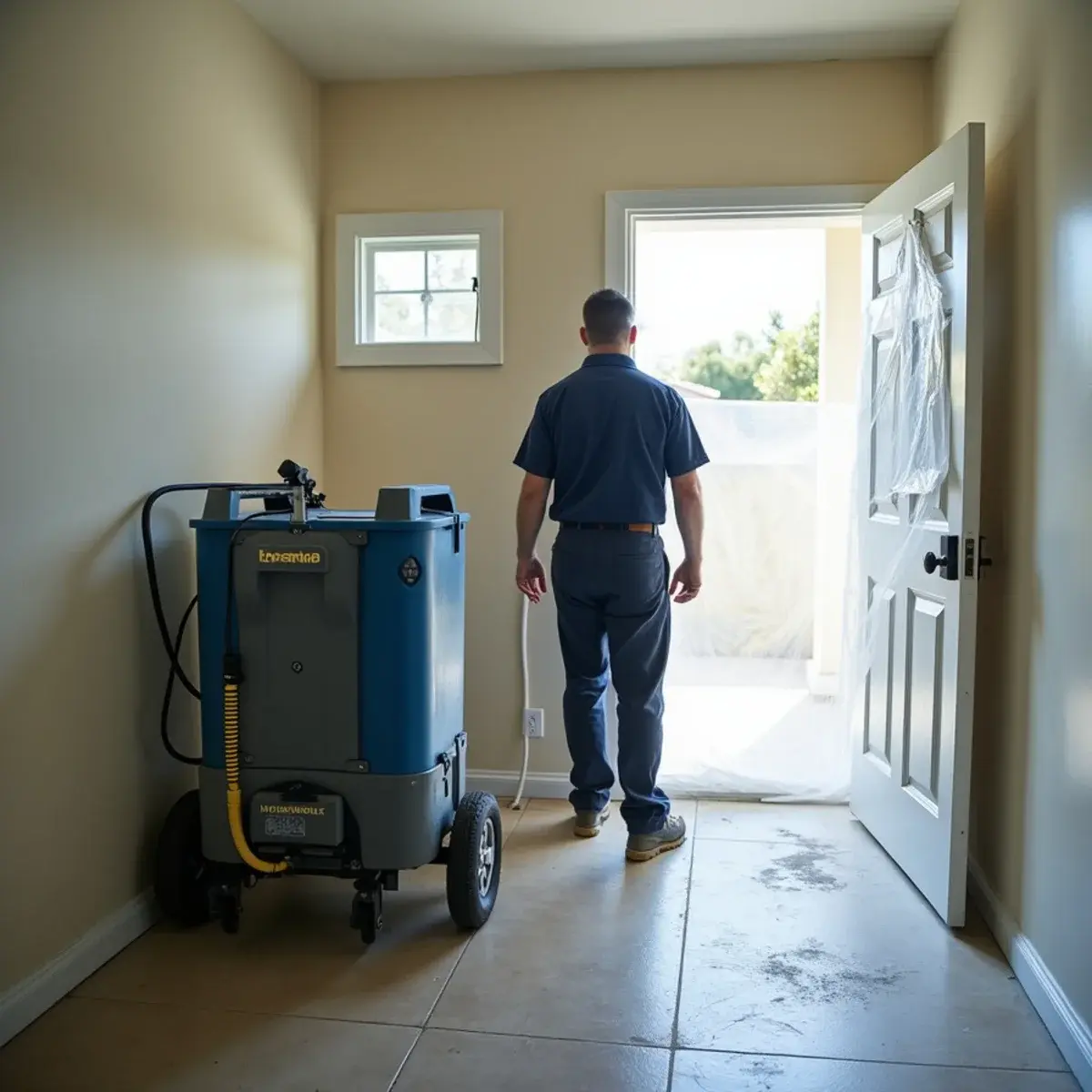
That's why the two pieces of equipment work as a pair. Air movers aimed along wet surfaces strip away the saturated boundary layer of air sitting against the material, which lets more water evaporate. Dehumidifiers physically pull that water out of the room air and exhaust dry air back into the space. Fans alone raise humidity and stall out; dehumidifiers alone dry too slowly.
This is also why box fans and open windows aren't a substitute. Our page on professional structural drying and dehumidification explains how the system is sized, but the short version is that equipment count is calculated from affected linear footage and room volume rather than estimated.
The four variables that set your timeline
Material type is the biggest one. Drywall and carpet give up moisture readily and often reach dry standard in two to three days. Plaster over lath, solid hardwood, dense cabinetry and concrete slab hold water far longer — five to ten days is normal, and slab can run longer still.
Class of loss matters next. The industry classifies losses by how much material absorbed water. A small amount of water on a tile floor is a Class 1 and dries fast. Water that saturated carpet, pad, drywall and subfloor across multiple rooms is a Class 3 or 4 and takes considerably longer with much more equipment.
Equipment adequacy is third and it's the one that goes wrong. Undersized dehumidification is the leading cause of a drying job that stalls at day five with readings that won't move. If your moisture readings stop dropping day over day, that's the signal.
Ambient conditions are last. A cool, humid week during a Glendale winter storm slows evaporation. A warm dry stretch helps. Good drying setups compensate with equipment rather than extending the schedule.
Call +1 (201) 277-9344 — 24/7 in Glendale
Free assessment · 60-minute emergency response · We bill your insurance carrier directly
How professionals know when it's actually dry
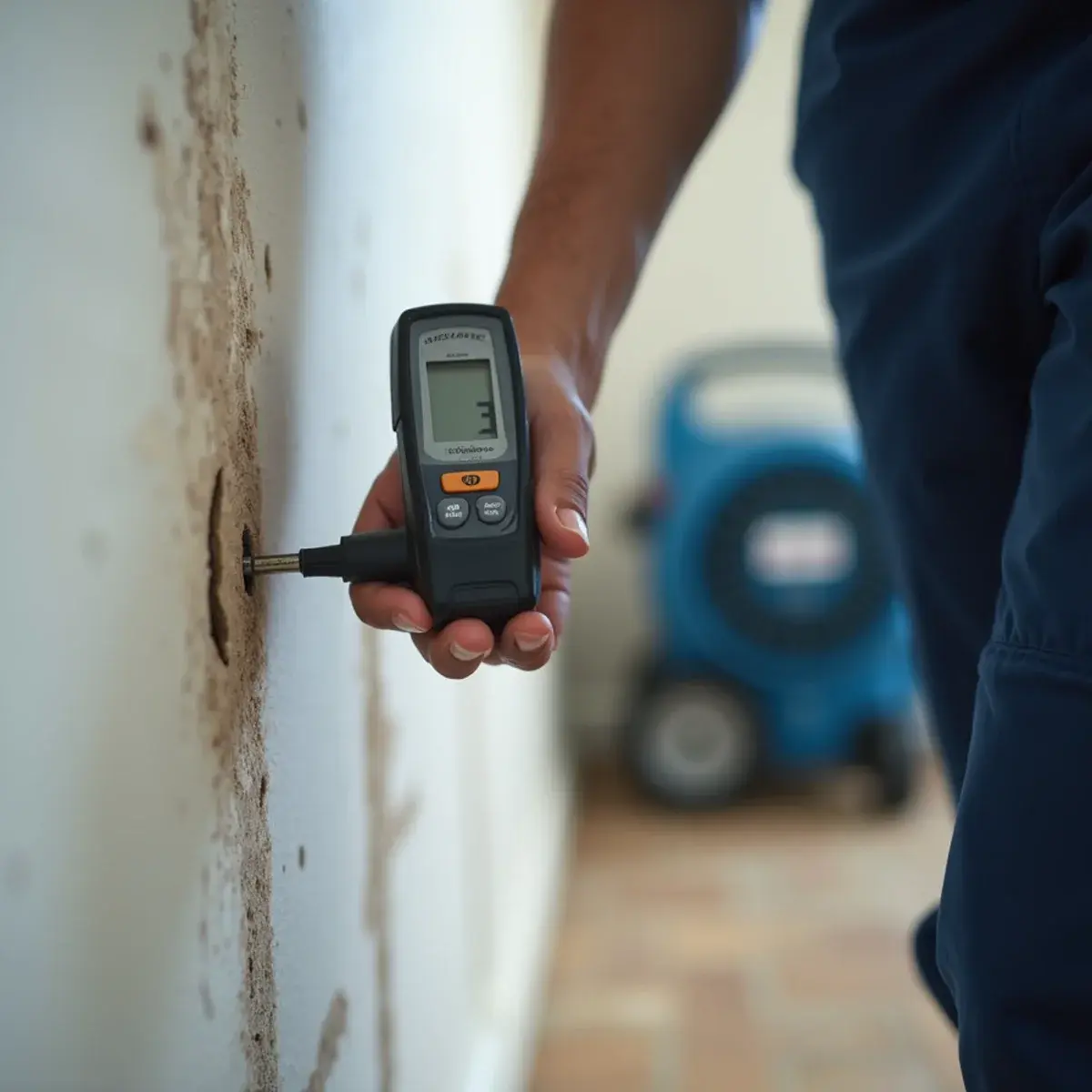
"Dry" is a measurement, not a feeling. Before drying begins we establish a dry standard by taking moisture content readings from the same materials in an unaffected part of your home. Framing in Southern California typically sits in a particular range; drywall and concrete have their own baselines. Because these vary by house and by season, we use your house rather than a generic target.
Then we take daily readings of the affected materials until they match. We also log temperature, relative humidity and grains per pound — a measure of how much water the air is actually holding — so we can tell whether the dehumidifiers are winning. When the indoor-to-outdoor differential collapses, something changed: a window got opened, a unit filled, or there's a moisture source we hadn't found.
You should receive that log at the end. It's not a formality. If a mold question arises later, or when you sell the property, it's documentary proof the structure was returned to normal moisture content under a recognized standard.
Signs your drying job is going wrong
A few things are worth watching for, whoever is doing the work:
- Nobody is taking daily readings. Drying without measurement is guessing.
- Readings have plateaued for two consecutive days with no change to the equipment setup.
- There are air movers but no dehumidifier, or one small dehumidifier for a large affected area.
- The equipment was removed on a fixed day rather than after a verification reading.
- A musty smell has developed during drying, which suggests a trapped reservoir feeding growth.
- You were told to open windows as the primary drying strategy.
Why you shouldn't turn the equipment off
This comes up on nearly every job. The noise is genuinely annoying, and switching everything off for a quiet night feels harmless. It isn't — an eight-hour gap lets moisture redistribute from wet materials back into the air and into materials that had already dried, and it commonly adds a full day.
The electricity cost is real and it's a legitimate line item on most insurance claims. We log actual equipment run hours specifically so it can be reimbursed rather than absorbed. It's also a small fraction of what remediating an incomplete dry-out costs — and how quickly mold follows water damage is the reason we're strict about it.
Then what? The reconstruction timeline
Drying finishing doesn't mean the job is over. If material was removed, reconstruction follows: insulation, drywall, texture, paint, trim, flooring, cabinetry.
A single room of drywall, texture, paint and baseboard typically takes several days to a week. Rooms involving flooring, tile or cabinetry run two to six weeks — and the driver is nearly always material lead time rather than labor. Choosing your flooring quickly is the single most effective thing a homeowner can do to shorten the rebuild.
Frequently asked questions
Warmer air holds more moisture, so moderate heat can help — but only if dehumidification capacity keeps up. Cranking the thermostat without adequate dehumidification just raises humidity and can push moisture into unaffected parts of the house. Leave the adjustment to the crew managing the readings.
Usually materials. Carpet over a wood subfloor dries far faster than hardwood over concrete, and a home with plaster walls takes longer than one with drywall. Equipment sizing and access to the wet areas also vary more between jobs than the visible damage suggests.
Yes, and it's usually the least destructive option available. Removing baseboard and drilling small ports into the wall cavity lets us dry inside the wall without cutting out drywall. The baseboard goes back on afterward and the ports are hidden behind it.
The bottom line
Three to five days is the honest expectation for most homes, with dense materials and larger losses running longer. What matters more than the number is that someone is measuring, adjusting and documenting rather than watching a calendar.
If your current job has stalled — or if you want a second set of meters on a structure someone else called dry — Drycore Restore will come out and check. Call +1 (201) 277-9344.
Related services
- Structural Drying & Dehumidification in Glendale
- Water Damage Restoration in Glendale
- Mold Remediation in Glendale