What To Do in the First Hour After Water Damage in Your Glendale Home
The decisions you make in the first sixty minutes decide whether this is a three-day dry-out or a six-week reconstruction. Here's the order to make them in.

Most people's first instinct when they find water in the house is to start mopping. It's understandable and it's the wrong first move — not because cleaning up is bad, but because there are four things that matter more and they all have a time limit.
This is the order we give people over the phone while a crew is en route, and it works whether the water came from a burst supply line, an overflowing appliance or a storm.
Dealing with this right now? We answer 24/7.
Free assessment · 60-minute emergency response · We bill your insurance carrier directly
1. Stop the water
Everything else is secondary. If the source is a fixture, close the angle stop under it — the small chrome valve on the wall. If you can't identify the source, or the valve won't turn, go to the main shut-off. In most Glendale homes that's either at the street side of the property near the meter, or on an exterior wall where the supply enters the house.
If you have never located your main shut-off, do it today, before you need it. Find it, turn it to make sure it isn't seized, and show everyone in the household where it is. This single piece of knowledge is the difference between a hundred gallons and a thousand.
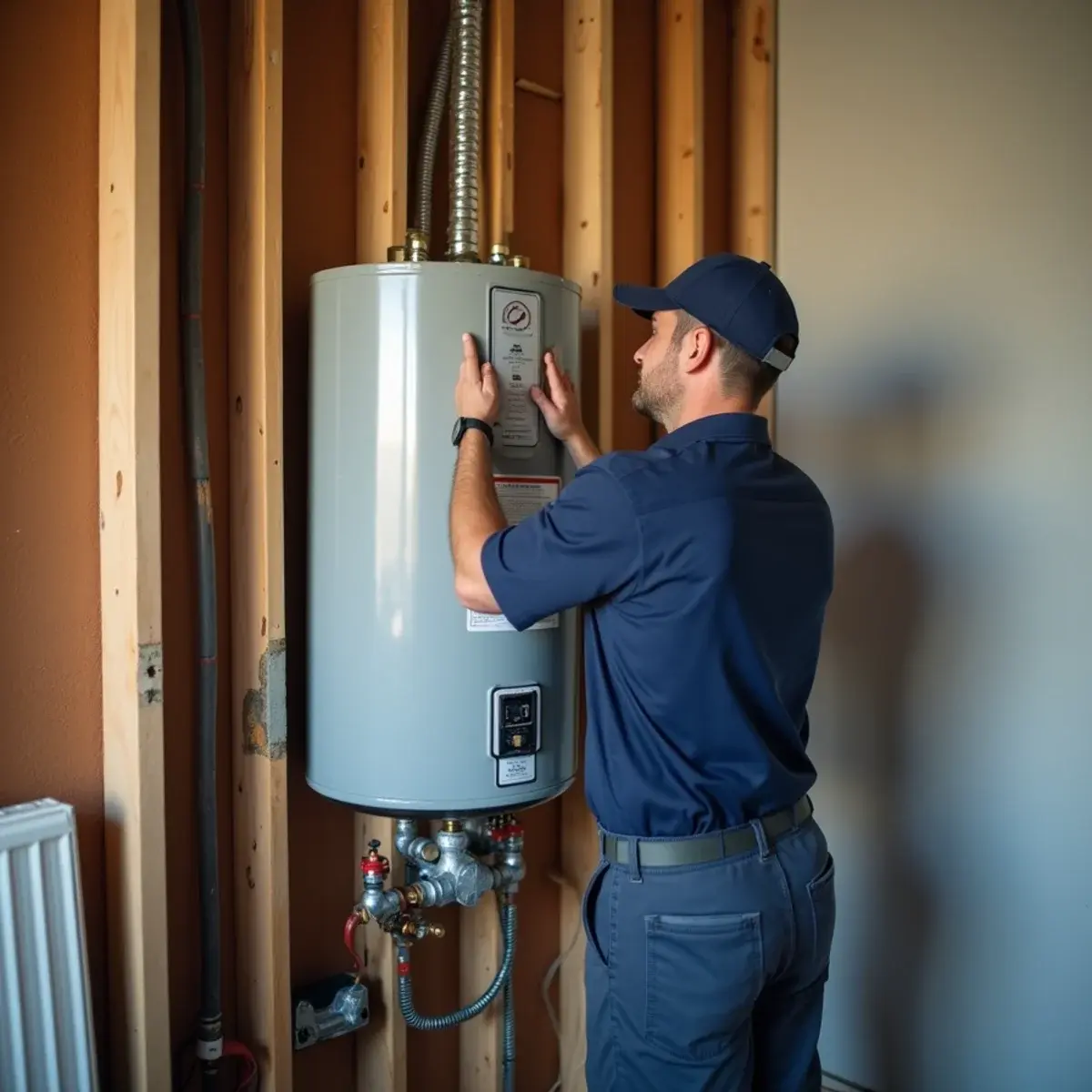
For a water heater failure, close the cold-water inlet valve on top of the tank. For a washing machine, the two valves behind it. If a supply line is spraying and you cannot reach a valve safely, leave and call the water company's emergency line along with us.
2. Make it safe
Water and electricity is the hazard that actually hurts people. If water is at or near floor-level outlets, appliances or an electrical panel, shut off power to those circuits at the breaker — and if you'd have to stand in water to reach the panel, don't. Call an electrician or the utility.
Watch your footing. Wet tile and wet hardwood are genuinely dangerous, and the floor under saturated carpet may not be what you think it is. If a ceiling is bulging or sagging, keep everyone out of that room entirely — a saturated drywall panel can release dozens of pounds of water and material without warning.
If the water came from a sewer line or a toilet backup, treat it as contaminated. Keep children and pets away, don't walk through it, and don't try to clean it with household products.
Call +1 (201) 277-9344 — 24/7 in Glendale
Free assessment · 60-minute emergency response · We bill your insurance carrier directly
3. Document everything before you touch it
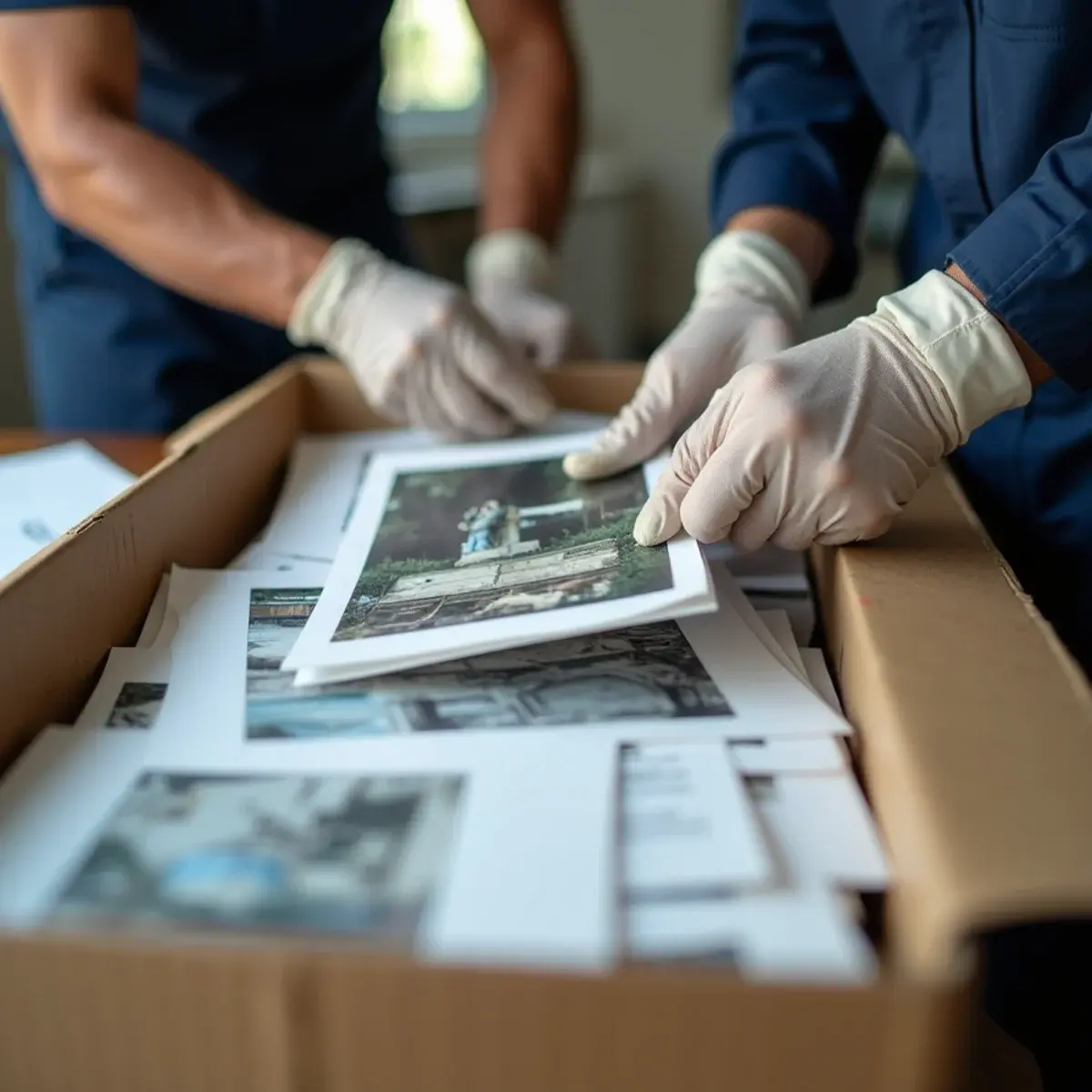
This is the step people skip and regret. Insurance adjusters make decisions based on evidence, and the photographs that carry the most weight are the ones taken before any cleanup. Shoot wide shots of each affected room, then close-ups of the source, the water line on walls and furniture, and any damaged contents.
Take video too, narrating what you're seeing and when. Note the time you discovered it. If you know roughly when the failure started — you were out from 9 to 6, say — write that down, because the duration of exposure is part of how the claim gets evaluated.
Then call your insurer to open the claim. You don't need to have a contractor selected or a scope figured out; you just need the claim number and the clock started. Our guide to documenting a water damage claim properly goes through what adjusters actually want to see.
4. Limit the spread while you wait
Now you can start moving things. Lift shoes, books, electronics, rugs and anything with a finish off the wet floor. Slide aluminum foil or plastic under furniture legs so wood stain and metal glides don't bleed into carpet — those stains are usually permanent.
Open windows if the weather is dry. Move air with fans if you have them, but understand that fans without dehumidification just relocate moisture; they're a stopgap, not a solution. Our explanation of how professional structural drying actually works covers why the two have to go together.
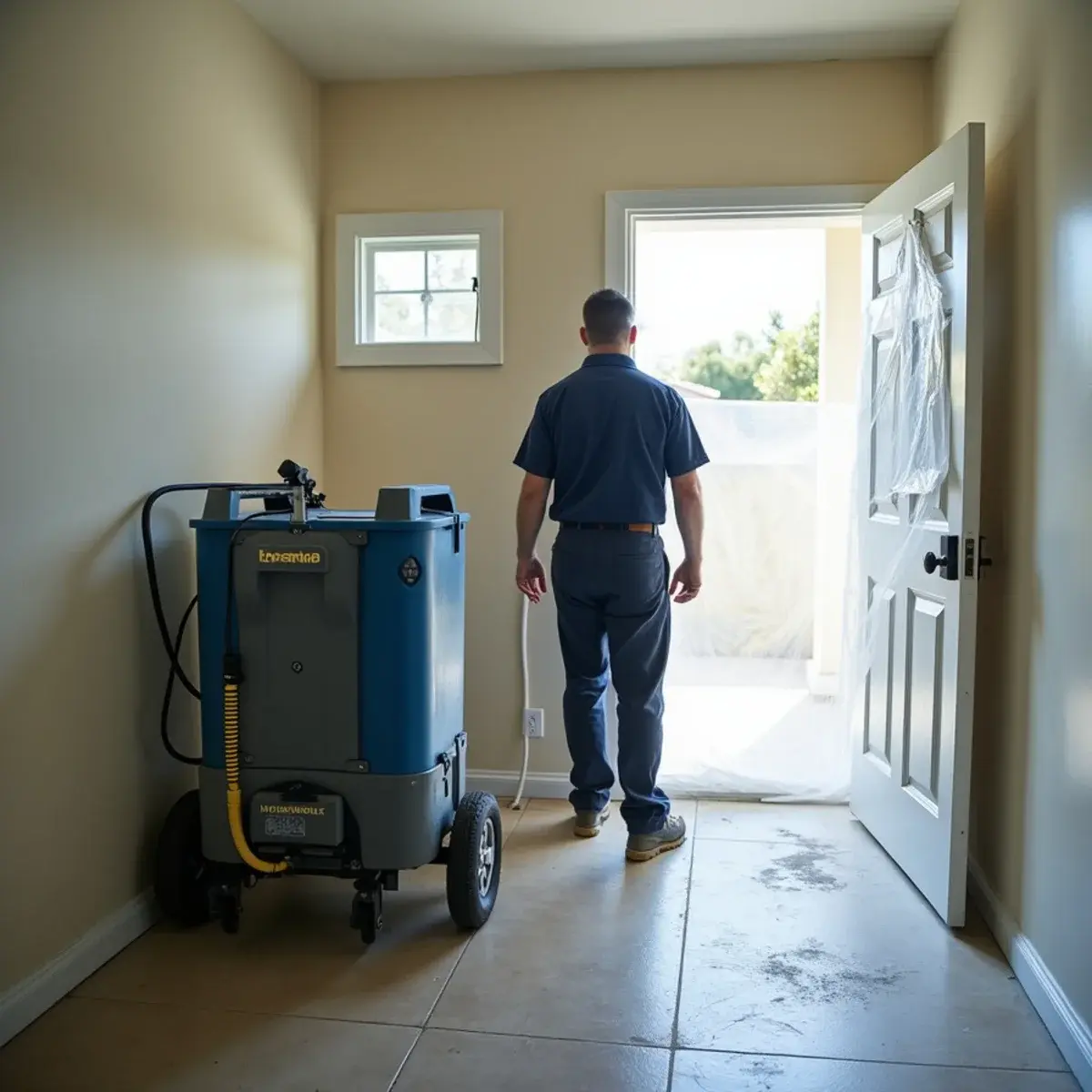
Remove standing water with a mop or towels if it's a small amount on a hard surface. For anything larger, wait — emergency water extraction with proper equipment removes hundreds of gallons an hour, and it's the single highest-impact hour of the entire job.
What not to do
A short list, all of which we see regularly and all of which make things worse:
- Don't use a household or shop vacuum on water unless it's specifically rated for wet pickup — it's an electrocution risk and it barely works.
- Don't run your central HVAC if any part of the duct system got wet. That's how a contained loss becomes a whole-house contamination problem.
- Don't pull up wall-to-wall carpet yourself. It stretches, tears at the seams and rarely goes back down properly.
- Don't puncture a sagging ceiling from below while standing under it.
- Don't start permanent repairs before the adjuster has inspected. Emergency mitigation is fine and expected; drywall and paint are not.
- Don't wait until morning because it 'doesn't look that bad.' Drywall wicks about an inch an hour and mold can begin within 24 to 48 hours.
Why the clock matters so much
The water you can see is a fraction of the problem. Within minutes it's moved into wall cavities, under cabinet toe-kicks and into the subfloor. Within hours, carpet backing begins to delaminate and hardwood starts to cup. Within 24 to 48 hours, microbial growth begins.
That timeline is why we run 24/7 dispatch out of our Portola Avenue base and target a 60-minute arrival across Glendale and the surrounding foothill communities. It's not a marketing number — it's the window in which materials can still be saved rather than replaced.
Frequently asked questions
Call the restoration company first if water is actively spreading — emergency mitigation is a covered obligation under your policy and you're not required to wait for approval to stop damage from getting worse. Open the claim right after. If the water is already stopped and contained, the order matters less.
Not if it reached drywall, carpet, or got under flooring. Overnight is roughly eight hours of wicking, and it's frequently the difference between drying materials in place and replacing them. A free moisture inspection costs you nothing and settles the question.
Wide shots of every affected room from two or three angles, then close-ups of the source, the water line on walls and furniture, and each damaged item individually. Add a walking video narrating what you are seeing and when. Note the time you found it and the last time you know the area was dry — duration of exposure is part of how the claim gets evaluated, and none of this can be recreated once cleanup starts.
The bottom line
Water damage is chaotic, and the value of having an order to work through is that it stops you from spending the critical first hour on the least important task. Stop the water, make it safe, document it, then limit the spread.
And then call someone with extraction equipment. Drycore Restore answers 24 hours a day at +1 (201) 277-9344 and we'll walk you through anything on this list while a crew is on the way.
Related services
- Emergency Water Extraction in Glendale
- Water Damage Restoration in Glendale
- Structural Drying & Dehumidification in Glendale