Slab Leak Signs in Mid-Century Glendale and Burbank Homes
Postwar tracts across Glendale and Burbank ran copper through the slab. Sixty years later, those lines are failing — and the signs are specific.
If your house was built between roughly 1945 and 1970 and sits on a concrete slab, there's a good chance its copper supply lines run through that concrete. That was standard practice, and it has a shelf life.
Sixty-plus years of thermal expansion rubbing copper against concrete eventually wears through the pipe wall. Hot-water lines fail first because they move the most. Here's how to catch it early.
Dealing with this right now? We answer 24/7.
Free assessment · 60-minute emergency response · We bill your insurance carrier directly
The six signs, in order of reliability
A warm spot on the floor. The most recognizable sign and close to definitive for a hot-water slab leak. Usually noticed barefoot in the morning, often in a hallway or a room with no obvious reason to be warm.
A water bill that jumped with no change in usage. A slab leak runs continuously — twenty-four hours a day, every day. Several thousand extra gallons a month with the same household routine is a strong indicator.
The sound of running water with everything off. Shut off every fixture and appliance, then listen near the floor in a quiet house. A faint continuous rushing means water is moving in the system somewhere it shouldn't be.
Damp carpet or baseboards with no plumbing nearby. Water under a slab migrates to the perimeter of rooms and wicks up the bottom plate. Damp baseboard in a room with no fixtures points down, not up.
Flooring cracking, lifting or cupping. Moisture under tile breaks the thinset bond, under wood causes cupping and adhesive failure, under vinyl lifts the edges — often well away from the leak itself.
Reduced water pressure across the house, particularly on hot water.
- A warm spot on the floor — close to definitive for a hot-water slab leak, usually noticed barefoot in the morning.
- A water bill that jumped with no change in usage — a slab leak runs continuously, twenty-four hours a day.
- Running water with everything off — shut every fixture and listen near the floor in a quiet house.
- Damp carpet or baseboard with no plumbing nearby — water migrates to room perimeters and wicks up the bottom plate.
- Flooring cracking, lifting or cupping — often well away from the leak itself.
- Reduced pressure across the house, particularly noticeable on the hot side.
Confirm it yourself in five minutes
The meter test settles it. Turn off every water-using fixture and appliance in the house — including the ice maker and any irrigation. Then go look at your water meter. Most have a small low-flow indicator, often a triangle or a dial, that spins with even minimal flow.
If it's moving, water is leaving your system. That doesn't prove it's a slab leak specifically, but it proves you have one somewhere and it's worth investigating immediately.
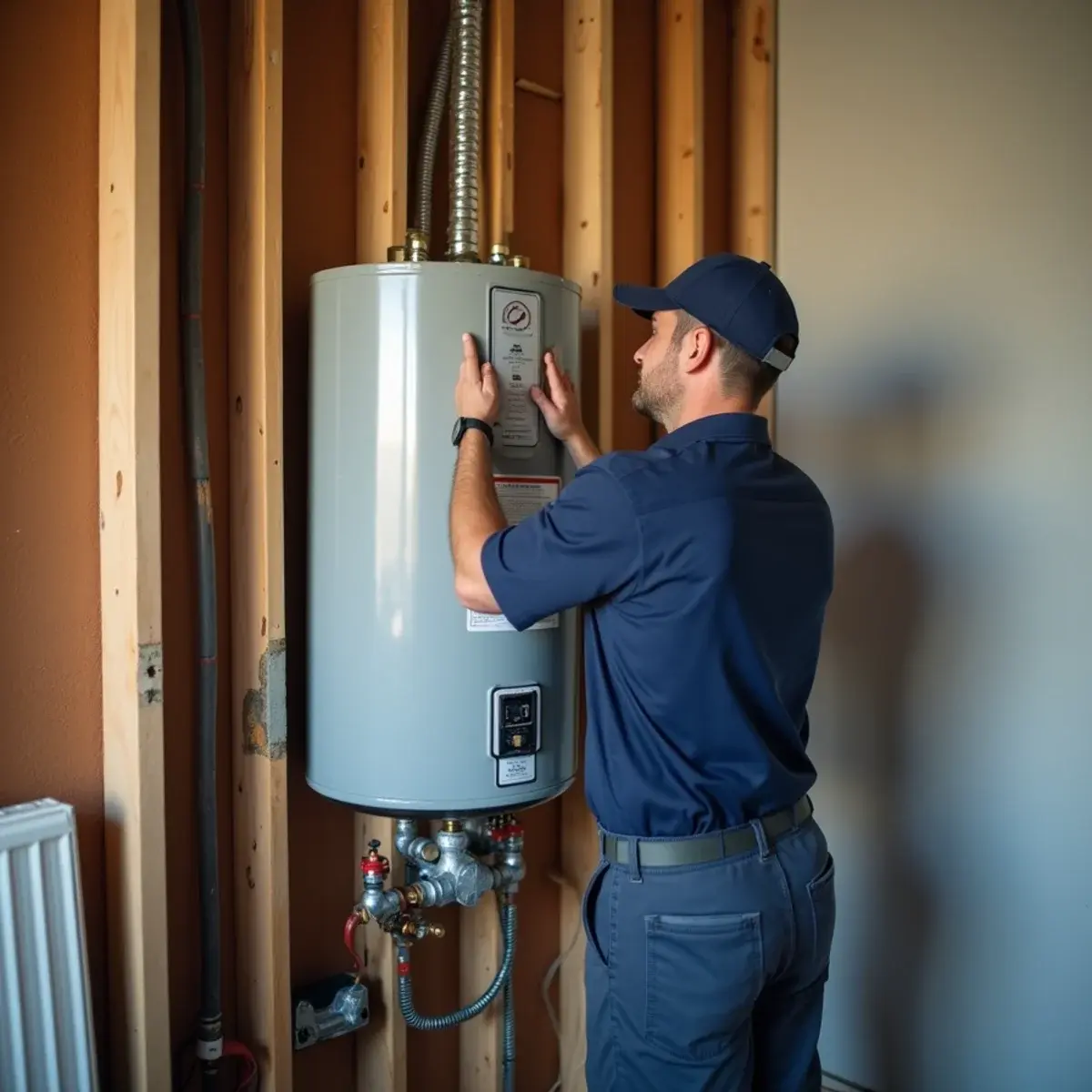
You can narrow it further by closing the cold-water inlet valve on top of your water heater and repeating the test. If the meter stops, the leak is on the hot side — which strongly suggests a slab leak, because hot lines fail first.
Call +1 (201) 277-9344 — 24/7 in Glendale
Free assessment · 60-minute emergency response · We bill your insurance carrier directly
How professionals locate them without guessing
Nobody should be breaking concrete based on where a floor feels warm. Location is done with equipment.
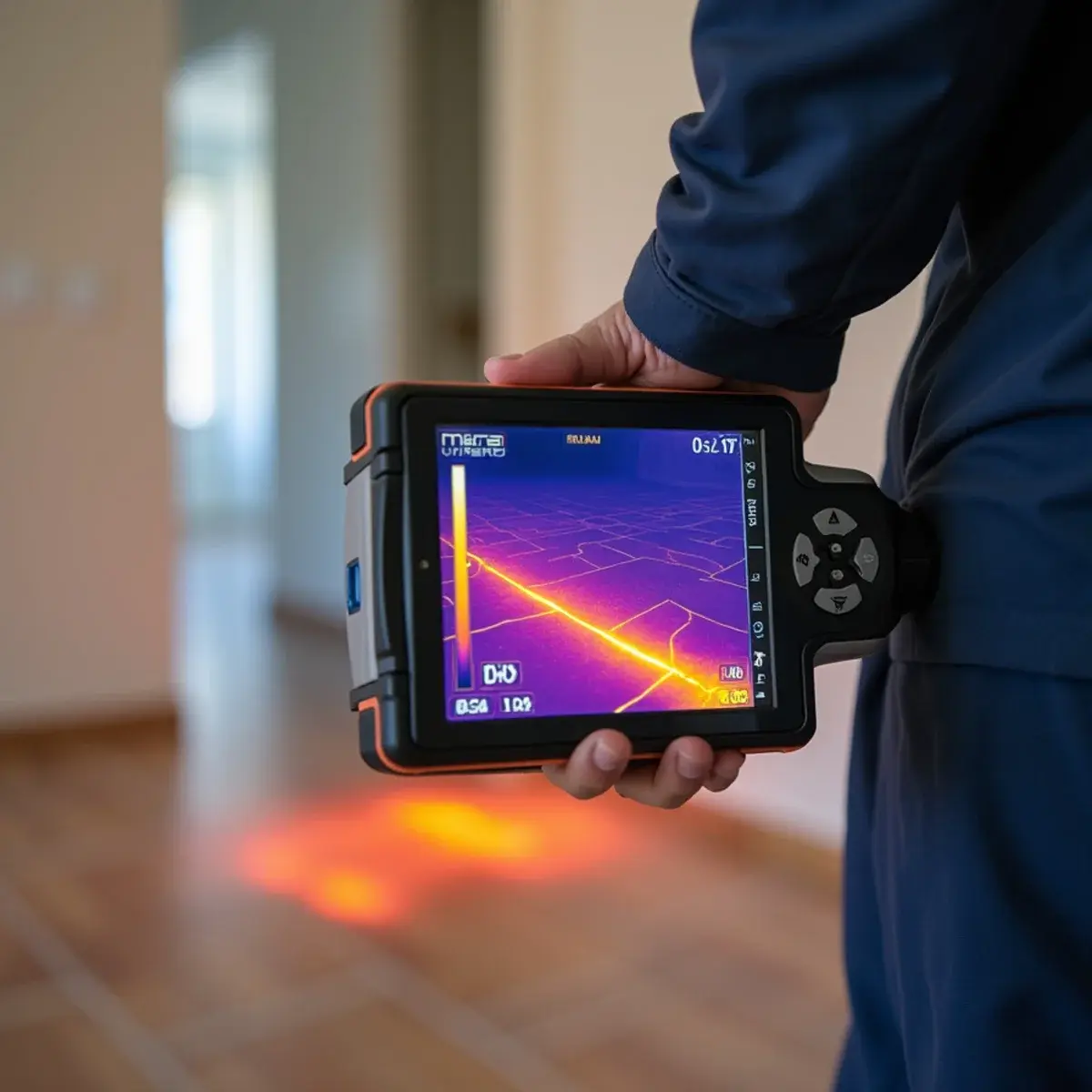
Thermal imaging reads floor surface temperature. A hot-water leak produces a distinctive plume; a cold-water leak shows as a cool, evaporatively-cooled band. It's the fastest way to narrow the search area.
Acoustic listening equipment — ground microphones and correlators — amplifies the sound of pressurized water escaping through concrete. Combined with line tracing to map where pipes actually run, this narrows the location to a small area rather than a room.
Then moisture mapping defines how far water has spread through the slab and into wall assemblies, which is what determines the size of the drying job. Our page on slab leak detection and moisture mapping covers the full process.
Spot repair, reroute or repipe
A spot repair breaks the slab at the located point, fixes the failed section and patches the concrete. Cheapest, and the right call for a first failure in an otherwise sound system.
A reroute abandons the under-slab run entirely and runs new line overhead through walls and attic. Nothing gets broken, the new line is accessible forever, and any future leak would be visible rather than hidden. Costs more than a spot repair, less than a repipe, and is usually the right answer after a second failure on the same line.
A full repipe replaces all supply plumbing. Significant project, and the correct decision when a house on original 1950s copper has now had multiple pinhole failures. The third and fourth are coming.
The decision is yours, but the pattern matters: repeated spot repairs on a system with a demonstrated failure history is throwing good money after bad.
What the leak does to the rest of the house
The leak is a plumbing problem; the damage is a restoration problem, and it's usually larger than people expect. Water under a slab follows the path of least resistance through the sub-base and emerges at room perimeters, under cabinet bases and along expansion joints.
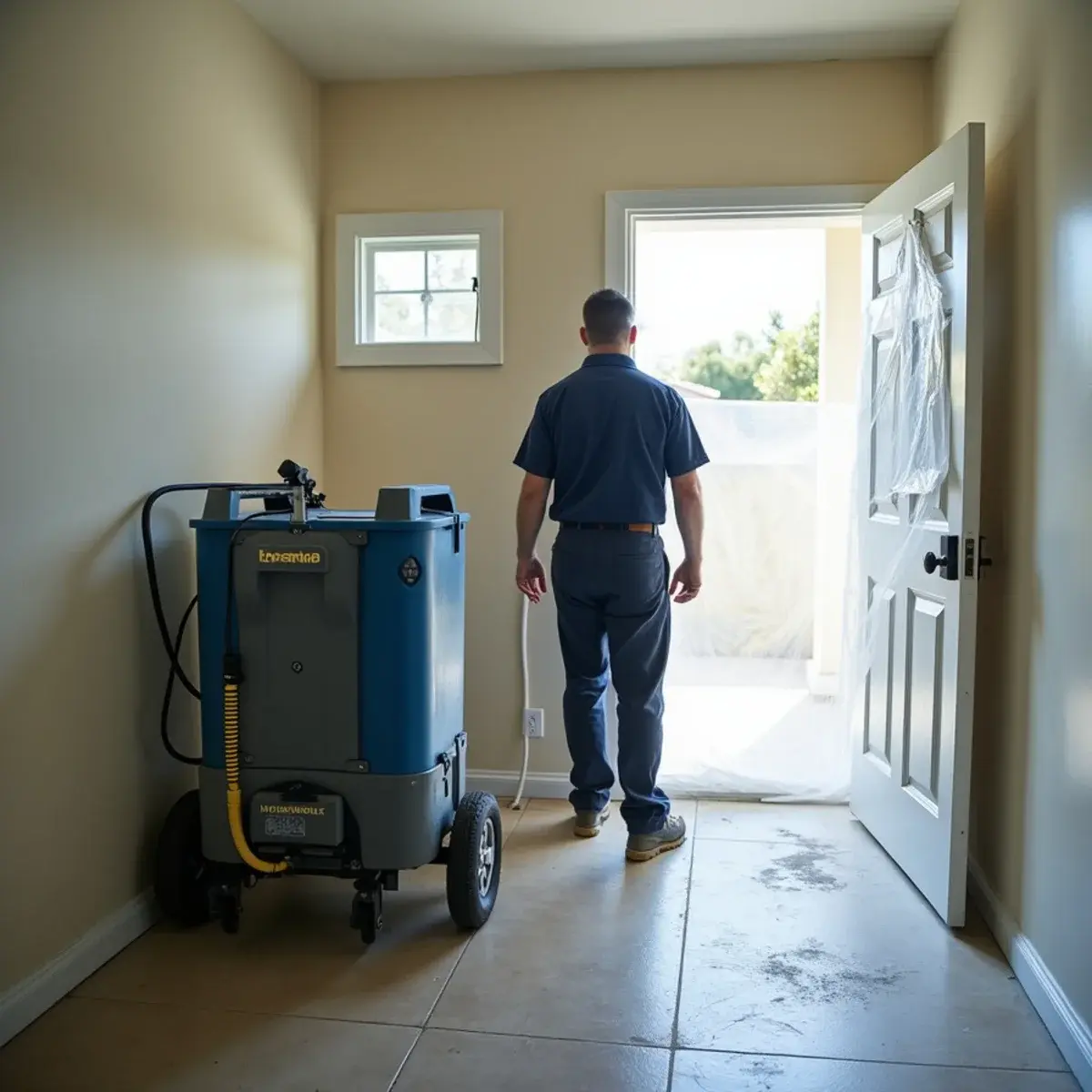
From there it wicks up into the bottom plate of framed walls and into drywall. We routinely find a slab leak in a hallway that produced wet drywall in three adjacent rooms. Drying that means removing baseboard, drilling cavity ports and running directed airflow into wall assemblies — not just aiming fans at the floor.
Concrete is also slow to dry and holds a real reservoir. Before new flooring goes back down, the slab needs a proper moisture test — calcium chloride or in-situ relative humidity — because installing over a slab that's still emitting moisture destroys the new floor and voids most manufacturer warranties.
Why Burbank and Sparr Heights see so many
It's construction era and volume. Burbank built out fast in the postwar years using the standard practice of the day. Sparr Heights and much of Glendale's valley floor did the same. Because the housing population is so uniform in age, the failures cluster — neighbors compare notes and find three slab leaks on one block in two years.
That's not coincidence and it's not a bad neighborhood. It's sixty-year-old copper reaching the end of its life at roughly the same time across an entire tract.
Frequently asked questions
It's urgent rather than instantaneous. It's not going to flood your house in an hour, but it runs continuously and the moisture footprint expands the entire time. Same-week response is appropriate; waiting a month is not.
Most California policies cover the resulting water damage and often the cost of accessing the leak — tear-out and repair of the concrete — while excluding the pipe repair itself. Coverage varies meaningfully between carriers, so review your policy before assuming either way.
Prolonged leaks can erode sub-base soil and, in some soil conditions, contribute to differential settlement. It's uncommon but it's a real reason not to let one run for months once you know about it.
The bottom line
A warm spot on the floor, a jump in your water bill, and damp baseboard with no fixture nearby are the three signs worth acting on immediately. The meter test confirms it in five minutes.
Drycore Restore locates slab leaks with thermal and acoustic equipment before anyone breaks concrete, then handles the drying and repair afterward. Call +1 (201) 277-9344.
Related services
- Slab Leak Detection & Repair Support in Glendale
- Structural Drying & Dehumidification in Glendale
- Water Damage Repair & Reconstruction in Glendale