Your Water Heater Will Fail. Here's How It Tells You First.
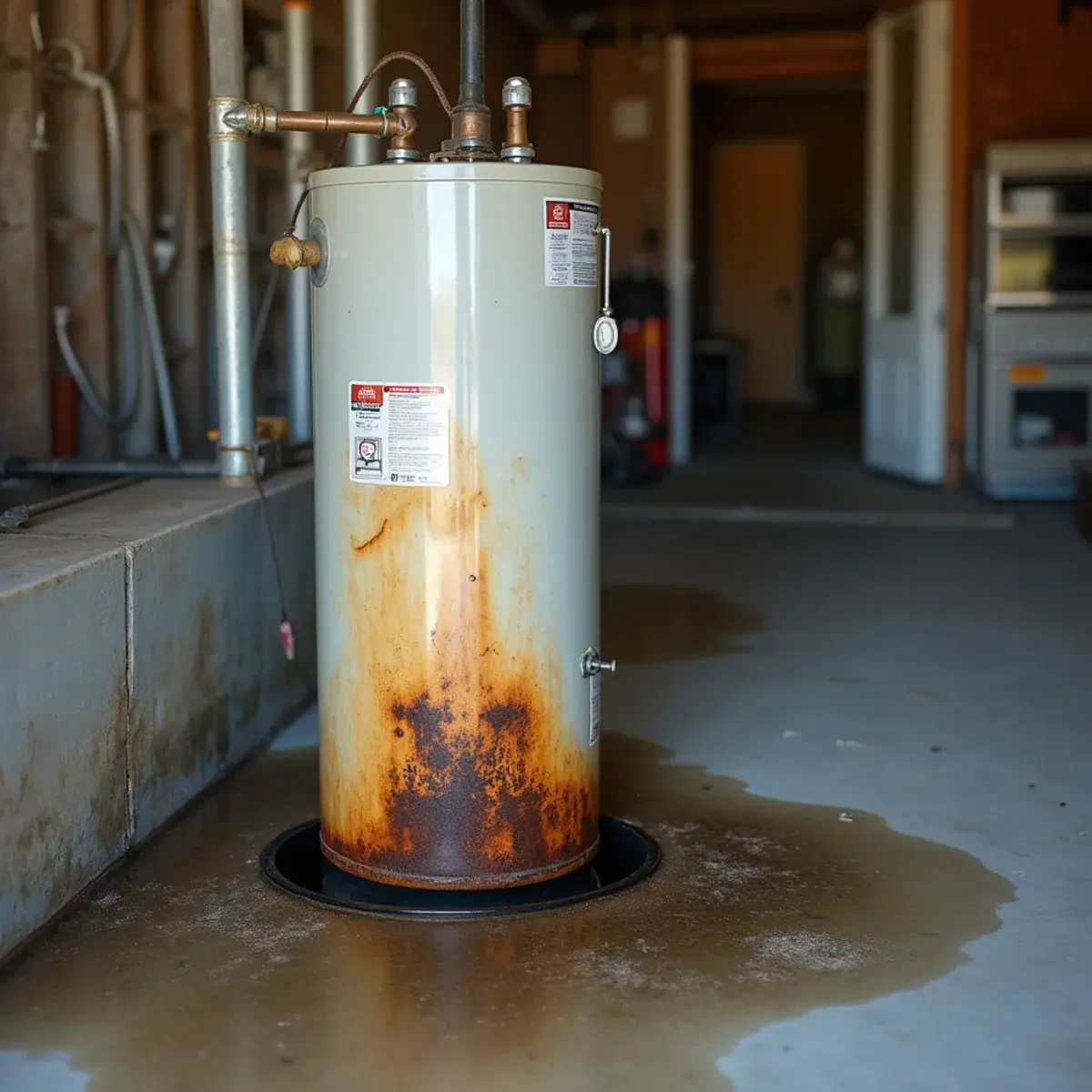
Water in the pan isn't a drip. It's a countdown. Once the glass lining goes, the steel behind it is on its own.
A tank water heater holds forty to seventy-five gallons under mains pressure, and it is the only appliance in your house designed around a consumable sacrificial part.
When it goes, it doesn't drip. It splits, releases its full volume in a few minutes, and then keeps flowing at supply pressure until somebody closes a valve. If it's in a garage, that's a cleanup. If it's in a closet, an attic or above living space — which is common in Glendale condos and townhomes — it's a reconstruction project.
Dealing with this right now? We answer 24/7.
Free assessment · 60-minute emergency response · We bill your insurance carrier directly
How a tank actually fails
The steel tank is protected two ways. The inside is coated in a vitreous glass lining, and suspended in the water is an anode rod — a sacrificial magnesium or aluminium rod that corrodes preferentially so the steel doesn't.
The anode rod is consumable. It's designed to be replaced, and almost nobody does. Once it's spent, corrosion moves to the next available metal, which is the tank itself wherever the glass lining has a flaw — and every lining has flaws around the fittings and welds.
From there it's a slow perforation of the steel from the inside. You get no warning from the outside until the wall thins enough to weep, and weeping means the tank has already failed structurally. The gap between the first visible moisture and a full split is unpredictable — sometimes weeks, sometimes days.
This is why "it's only a small leak" is the most expensive sentence in this subject. A tank that is weeping is finished.
The twelve-year rule
Eight to twelve years is a realistic service life for a tank heater in Southern California water, and hard water shortens it. Some run fifteen. Almost none run twenty without an anode replacement.
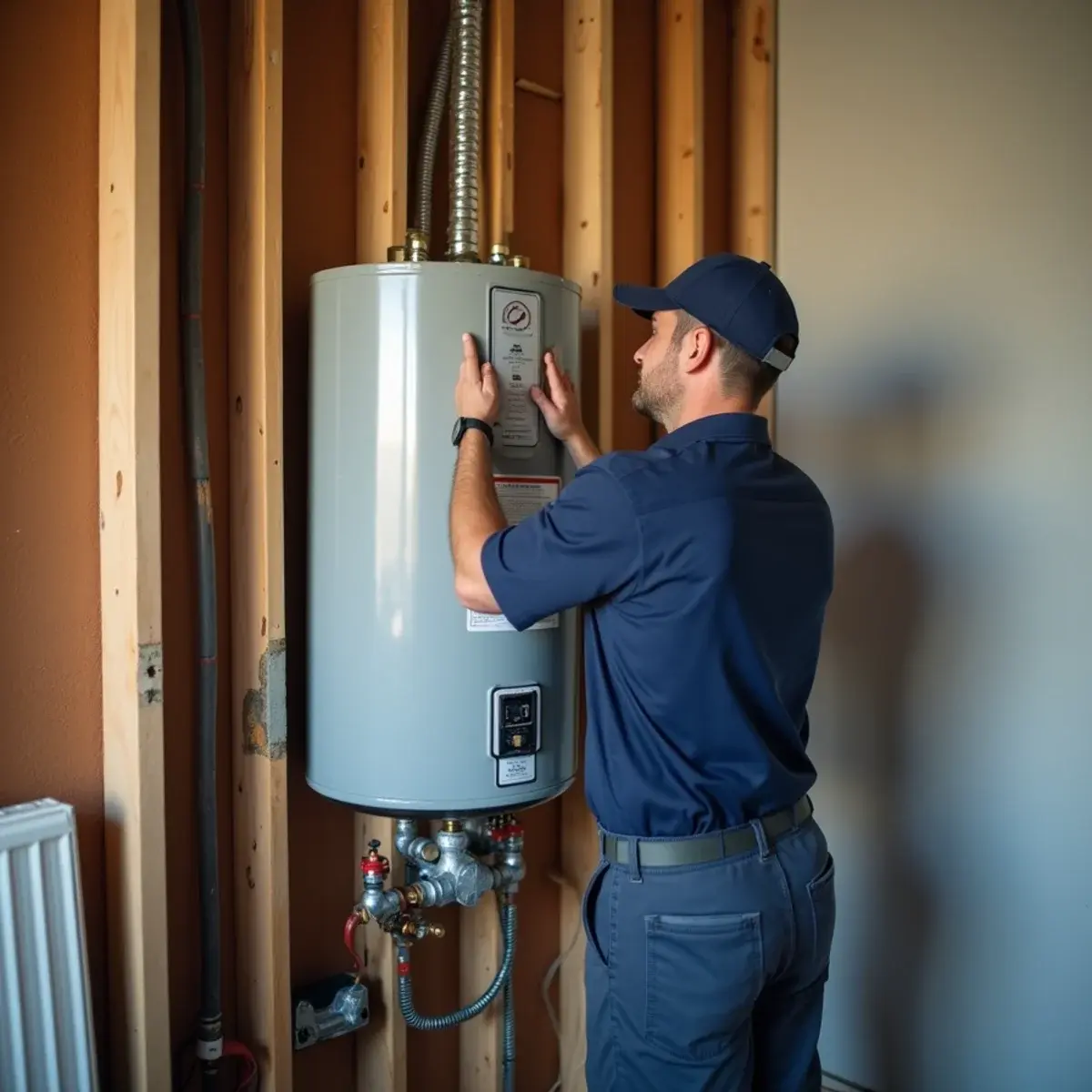
Find out how old yours is — it's on the label, and most manufacturers encode the date in the serial number. Rheem, AO Smith, Bradford White and the rest each use a different scheme, but the first four digits are usually month and year or year and week. If you can't decode it, a plumber can in seconds.
Once you know the age, the decision framework is simple. Under eight years, maintain it. Eight to twelve, budget for replacement and watch it closely. Over twelve, you are running on borrowed time and replacing it proactively costs a fraction of replacing it plus a floor, a wall and the contents of a closet.
Tankless units change this calculation entirely — no stored volume means no catastrophic release — which is one of the better arguments for them beyond efficiency.
Call +1 (201) 277-9344 — 24/7 in Glendale
Free assessment · 60-minute emergency response · We bill your insurance carrier directly
The warning signs, in order
Roughly in the order they appear:
- Rusty or discoloured hot water — but not cold. That's the tank interior, not your supply lines.
- Rumbling or popping during heating — sediment on the bottom of the tank, which both insulates the steel from the water and accelerates corrosion.
- Water in the drain pan. This is not a warning, it's a failure. Act on it the same week.
- Rust or corrosion staining on the tank exterior, particularly around the bottom seam or the fittings.
- Reduced hot water capacity — sediment displacing volume, or a failing dip tube.
- Moisture or staining on the floor around the base with no other explanation.
- A temperature-and-pressure relief valve that weeps — that valve is a safety device and it discharging means either excess pressure or a failing valve. Neither is normal.
The three fittings that limit the damage
You can't stop a tank failing. You can decide what happens when it does, and it costs very little.
A drain pan with a piped drain line. A pan alone just holds a few gallons and overflows. A pan piped to a floor drain, a laundry standpipe or outside turns a catastrophic release into water going where you told it to. If your heater sits in or above finished space and the pan isn't piped anywhere, that's the single most important thing on this page.
A properly piped T&P discharge. The temperature-and-pressure relief valve must discharge downward to within a few inches of the floor or to an approved drain, in rigid pipe, with no valve or reducer in the run. This is a code requirement and it's about scalding safety as much as water damage — but a T&P that discharges into a pan you can see is also an early warning system.
A leak sensor with automatic shut-off. A sensor in the pan connected to a motorised valve on the supply closes it when it detects water. Under a hundred dollars in parts for most installations, and it converts the whole scenario into a service call. Several insurers offer premium credits for automatic shut-off systems — worth asking.
Maintenance that actually extends the life
Flush the tank annually. Attach a hose to the drain valve, run it to a safe discharge point, and drain several gallons until it runs clear. This removes the sediment layer that insulates the bottom of the tank and drives corrosion. It takes twenty minutes.
Check the anode rod every few years. This is the one that genuinely extends life, and the one nobody does. A plumber can pull it and assess it; if it's heavily consumed, replacing it is inexpensive and can add years. On a heater with limited overhead clearance a flexible segmented rod solves the access problem.
Test the T&P valve annually by lifting the lever briefly and confirming it discharges and reseats. If it weeps afterward it needs replacing — and don't leave a weeping T&P, because the alternative failure mode is far worse than a leak.
Set the thermostat sensibly. 120°F is the usual recommendation. Higher accelerates corrosion and scalding risk without much benefit.
Where it sits matters more than anything
A heater in a detached garage with a sloped concrete floor and a roll-up door is close to a best case. The water goes out the door and the cleanup is a slab.
A heater in an interior closet, a hallway alcove, an attic platform or on an upper floor is a different situation entirely. That's where we see the losses that take out flooring across several rooms and a ceiling below. Upstairs installations in townhomes and condos are the worst version, because water has an entire floor assembly to travel through.
If yours is in that category, the pan-and-shut-off combination isn't optional maintenance. Our page on appliance leak and overflow cleanup covers what these losses look like once they happen, and the guide to finding your shut-off valve covers the thing to know before it does.
Frequently asked questions
No. Rule out the obvious first — a leaking fitting, condensation, a T&P discharge — because those are repairable. If the tank itself is weeping, the steel has perforated and a full failure is coming on an unpredictable schedule. Replace it that week.
The resulting water damage is generally covered as a sudden accidental discharge under most California policies. The heater itself usually isn't — that's treated as wear and tear. So you typically get the floor and the drywall but buy the new heater yourself.
It removes the stored-volume failure mode entirely, which is a genuine benefit on top of the efficiency case. Tankless units can still leak at fittings, but there's no forty-gallon release. If your heater is above living space and due for replacement, it's worth pricing.
Check the label for a manufacture date, or decode the serial number — most brands encode year and month or year and week in the first four characters. If it's illegible or missing, assume it's older than you'd like and plan accordingly.
The bottom line
Know the age, flush it yearly, and make sure the pan is piped somewhere and there's a shut-off sensor in it. Those three things turn the worst appliance failure in the house into an inconvenience.
If one has already let go, Drycore Restore responds 24 hours a day across Glendale and Los Angeles. Call +1 (201) 277-9344.
Related services
- Appliance Leak & Overflow Cleanup in Glendale
- Emergency Water Extraction in Glendale
- Water Damage Restoration in Glendale