
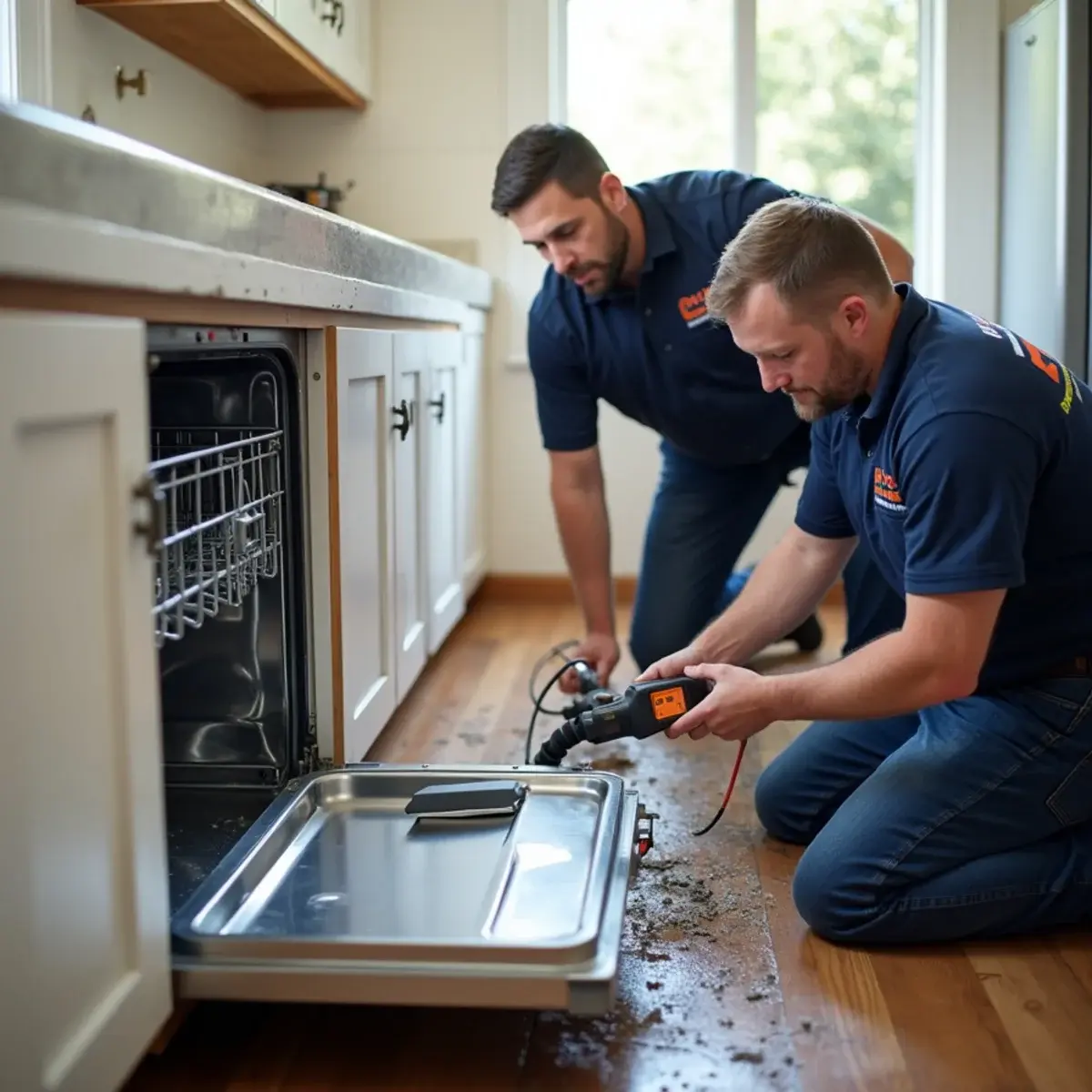
Glendale, CA · 24/7 response
Appliance Leak & Overflow Water Damage in Glendale, CA
Kitchen and laundry losses where the water hides under cabinets — found, dried and saved without gutting the room.
- 5.0 from 3 Google reviews
- Licensed, bonded & insured
- 60-minute emergency response
24/7 emergency response
A real person answers any hour — and you get a real ETA for your address, not a number off a website. 60-minute response in Glendale.
Dry-Verified Guarantee
Equipment stays until moisture meters match your home's dry standard.
Direct insurance billing
Daily moisture logs and carrier-format estimates. Most clients pay only their deductible.
Mitigation & rebuild in-house
One company from the first gallon extracted to the last coat of paint.
Appliance failures are the most common water loss in American homes, and they're deceptive: the visible water is often a small puddle on a kitchen floor while the real damage is spreading under the cabinet run and into the subfloor where nothing is visible at all.
Drycore Restore specializes in the difficult part of these jobs — drying under and behind cabinetry without tearing out a kitchen. Toe-kick removal, cabinet cavity drying, injection systems and floor mat drying let us save cabinet runs and flooring that a demolition-first approach would have thrown away.
The four culprits are consistent: dishwashers, washing machines, refrigerator ice maker lines and water heaters. Each fails in its own way, and each puts water in a place that's hard to see and slow to dry.
Need appliance leak & overflow cleanup in Glendale right now?
Free assessment · 60-minute emergency response · We bill your insurance carrier directly
Free on-site assessment
Tell us what's happening and we'll dispatch a appliance leak & overflow cleanup crew or call you straight back.
What we're looking for
Signs and problems this service solves
Water at the base of a dishwasher or under the sink
Dishwasher door seals, supply lines and drain hose connections all fail slowly. Water runs under the unit and into the cabinet base long before it appears on the floor.
Warped or dark flooring in front of an appliance
Discoloration or cupping directly in front of a dishwasher, refrigerator or washer is a chronic slow leak signature. The subfloor beneath is almost certainly worse.
A swollen or delaminating cabinet toe-kick
Particleboard cabinet bases wick water upward. A soft, swollen toe-kick means the cabinet floor and the subfloor under it are wet.
Musty smell near the kitchen or laundry
Enclosed cabinet cavities with trapped moisture develop growth quickly because there's no airflow at all inside them.
Water behind the refrigerator
Ice maker supply lines — especially the plastic tubing used in older installs — crack and drip against the wall. It's the classic hidden leak because nobody moves the fridge.
Any water around the water heater
Even a small amount of water in the pan is a failing tank. Address it before the tank splits and releases its full volume at once.
Scope of work
What appliance leak & overflow cleanup includes
Appliance isolated and pulled
Water and power shut off to the unit and the appliance moved out, so we can see the actual affected area behind and beneath it rather than guessing from the puddle at the front.
The full footprint mapped, not just the room
We check the cabinet run in both directions, the adjoining room through the shared wall, and the ceiling below on two-storey homes. Appliance leaks almost always extend past the room they happened in.
Toe-kick removal and cabinet cavity drying
The toe-kick comes off and small ports are drilled through cabinet floors and end panels so dry air can be forced through the enclosed cavity. This is the technique that saves cabinet runs — and the ports are hidden when the trim goes back.
Floor assembly drying with mat systems
Where water got under hardwood, laminate or vinyl, mat systems pull moisture up through the material under negative pressure. Where the subfloor is saturated we dry from above and, on raised foundations, from below as well.
Antimicrobial treatment of enclosed cavities
Cabinet interiors and wall cavities get treated before they are closed, because nobody will ever see them again and an untreated damp cavity is where the next problem starts.
Verification, then repair
Meters confirm the cabinet floors, subfloor and framing are dry. Then flooring, toe-kicks, baseboard and any cabinetry that genuinely could not be saved.
How it works
Our appliance leak & overflow cleanup process
- 1
Isolate and remove the appliance
Water and power to the unit get shut off and the appliance is pulled so we can see the actual affected area behind and beneath it.
- 2
Map the full moisture footprint
We check the cabinet run in both directions, the adjoining room on the other side of the wall, and the ceiling below on two-story homes. Appliance leaks almost always extend past the room they happened in.
- 3
Open the cabinet base without destroying it
Toe-kicks come off and small ports are drilled in cabinet floors and side panels so air can be forced into the cavity. This is the technique that saves cabinet runs.
- 4
Extract and dry the flooring assembly
Where water got under hardwood, laminate or vinyl, floor mat systems pull moisture up through the material. Where the subfloor is saturated, we dry it from above and, when accessible, from below.
- 5
Treat enclosed cavities
Cabinet interiors and wall cavities get antimicrobial treatment because they'll never be visible again once we close them.
- 6
Verify, then repair
Meters confirm the cabinet base, subfloor and framing are dry. Then flooring, toe-kicks, baseboard and any cabinetry that couldn't be saved get replaced.
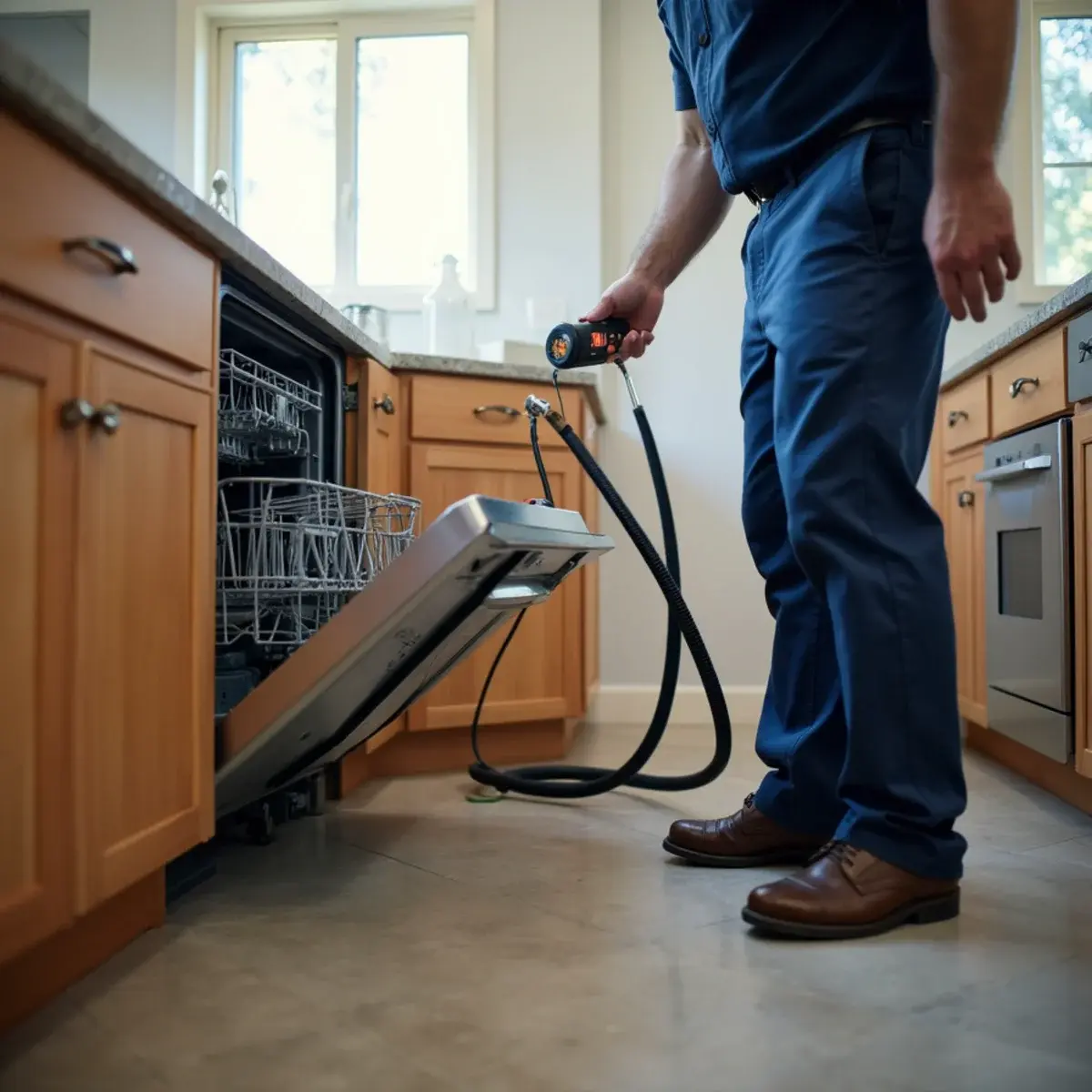
The second-floor laundry problem
Putting a washer on an upper floor is convenient and it's a design decision with consequences. A failed supply hose on a second floor doesn't just damage the laundry room — water runs across the floor, finds the nearest penetration, and pours into the ceiling of whatever room is below. We've seen a single hose failure damage a laundry room, a hallway, a kitchen ceiling and a set of kitchen cabinets in one event.
If you have an upstairs laundry, three things are worth doing. Install a drain pan with a piped drain line, not just a pan. Replace rubber hoses with braided stainless and note the date. And add an inexpensive leak sensor with an automatic shut-off valve — the whole assembly costs less than a deductible and it stops the event rather than reporting it.
The same logic applies to any water-using appliance above living space, including upstairs water heaters, which are common in Glendale condos and townhomes.
Saving cabinets instead of replacing them
The default response to a wet kitchen in this industry is to pull the cabinets. It's faster, and it produces a bigger invoice. But a cabinet run that's been wet for hours rather than weeks can very often be dried in place, and doing so is the difference between a two-week job and a two-month kitchen remodel you didn't want.
The method is straightforward but requires patience: remove the toe-kick to open the base, drill discreet ports through the cabinet floor and end panels, and force conditioned dry air through the cavity with directed airflow while dehumidification handles the load. Countertops stay in place, doors stay on, and the ports are hidden behind the toe-kick when it goes back.
It doesn't always work. Particleboard boxes that have already swollen and delaminated aren't coming back, and cabinetry touched by contaminated water has to go regardless. But we try first, because the alternative is expensive and the odds are good when we're called early.
Honest cost drivers
What determines the price of this work
How long the leak ran
A dishwasher that failed catastrophically during a cycle is a small, well-defined job. One that dripped for six months has damaged the subfloor and possibly the framing.
Whether cabinetry can be saved
Saving a cabinet run is dramatically cheaper than replacing it, and it's the main variable in these estimates. Solid wood boxes have good odds; particleboard boxes that have already swollen do not.
Flooring type
Tile over concrete is easy. Laminate is usually a loss once the core swells. Hardwood is worth attempting to save and takes specialty equipment and time.
Multi-level involvement
A second-floor laundry leak that reaches the ceiling below turns a one-room job into a three-room one.
Appliance replacement
We restore the damage; the appliance itself is usually replaced by you or a covered contents item on your claim. We'll document its condition either way.
Get a free, measured estimate — not a phone guess
Free assessment · 60-minute emergency response · We bill your insurance carrier directly
Why us for this
Why Glendale calls Drycore Restore for appliance leak & overflow cleanup
We try to save the kitchen before we quote a new one
The default in this trade is to pull the cabinets — faster, more certain, much larger invoice. Toe-kick drying keeps the countertop on, the doors hung and the sink plumbed, and it works far more often than it is offered.
We measure before recommending removal
Ask any contractor what the moisture readings on your cabinet floors and subfloor are right now. If they cannot answer, the removal recommendation is a guess wearing a hard hat.
We tell you which failure you actually had
A sudden hose burst is generally covered; a slow drip that ran for months is usually excluded as gradual damage. Knowing which one you are documenting from the first hour changes the claim outcome materially.
Prevention advice worth more than the job
Braided stainless hoses, a pan with a piped drain under anything above living space, and a leak sensor with automatic shut-off. The whole package costs less than most deductibles and we will point at exactly where yours should go.
Questions
Appliance Leak & Overflow Cleanup FAQs
Probably yes. The floor surface dries first; the cabinet base and subfloor underneath hold water far longer. A ten-minute moisture meter check tells you definitively, and it's free. Finding it now is a fraction of the cost of finding it as mold in two months.
Often, if we get to them quickly. We dry cabinet cavities in place through the toe-kick with directed airflow instead of removing the run. Solid wood boxes have good odds; already-swollen particleboard generally doesn't.
A sudden failure — a hose bursting, a tank splitting — is typically covered for the resulting damage, though the appliance itself often isn't. A slow leak that ran for months is usually excluded as gradual damage. The timeline is what determines it, which is why prompt documentation matters.
Braided stainless hoses on the washer, replaced on a schedule. A pan with a drain under any appliance above living space. Leak sensors with automatic shut-off under the sink, behind the fridge and at the water heater. And check behind and under appliances twice a year — it takes ten minutes.
Probably, and it takes ten minutes to settle. The floor surface dries first while the toe-kick cavity, the cabinet floors and the subfloor underneath stay wet — that enclosed void has no airflow at all, which is exactly the condition mould needs. A free moisture check either sets your mind at rest or catches it while the cabinets can still be dried in place.
Related restoration services
Water Damage Restoration
Full-service recovery from the first gallon extracted to the last coat of paint — one crew, one invoice, one point of contact.
Read moreBurst Pipe & Leak Cleanup
The most common call we get in Glendale — and the one where a fast response saves the most drywall.
Read moreStructural Drying & Dehumidification
Metered, logged drying that ends when the meters say dry — not when the calendar says it's been three days.
Read more
Further reading from our crews
The Four Appliance Leaks That Cause the Most Damage
Four appliances account for the majority of residential water losses. All four are preventable for less than the cost of a deductible.
Read moreWater Damaged Kitchen Cabinets: Save Them or Replace Them?
Pulling a kitchen is fast and profitable. Drying one through the toe-kick is slower, cheaper for you, and works more often than most crews admit.
Read more
Appliance Leak & Overflow Cleanup across our full service area
We provide this service throughout Glendale and the surrounding foothill communities. Choose your city or neighborhood for local detail.
- Glendale
- Montrose
- La Crescenta
- Verdugo Woodlands
- Rossmoyne
- Adams Hill
- Chevy Chase Canyon
- Sparr Heights
- Burbank
- Pasadena
- La Cañada Flintridge
- Eagle Rock
- Atwater Village
- Tujunga
- Sunland
- Altadena
- South Pasadena
- Silver Lake
- North Hollywood
- Toluca Lake
- Shadow Hills
- Lake View Terrace
- Sylmar
- San Fernando
- Sierra Madre
- Monrovia
- Duarte
- Azusa
- Glendora
- San Dimas
- La Verne
- Claremont
- Sun Valley
- Studio City
- Valley Village
- Sherman Oaks
- Van Nuys
- Panorama City
- Arleta
- Pacoima
- Mission Hills
- North Hills
- Encino
- Reseda
- Northridge
- Granada Hills
- Tarzana
- Winnetka
- Canoga Park
- Woodland Hills
- Chatsworth
- Glassell Park
- Cypress Park
- Highland Park
- Mount Washington
- Los Feliz
- Echo Park
- Lincoln Heights
- El Sereno
- Boyle Heights
- East Los Angeles
- Hollywood
- Hollywood Hills
- Downtown Los Angeles
- Koreatown
- Westlake
- Pico-Union
- Mid-Wilshire
Need appliance leak & overflow cleanup in Glendale?
Call +1 (201) 277-9344 for 24/7 dispatch, or request a free on-site assessment. Licensed, bonded & insured · We bill your insurance carrier directly.
Licensed, bonded & insured · We bill your insurance carrier directly · 24/7 Emergency Service