Where Is My Water Shut-Off Valve? Find It Before You Need It
The single highest-value ten minutes of home maintenance there is. Most people first look for their shut-off while standing in water.
Almost every large water loss we attend has the same avoidable component: the homeowner didn't know where the shut-off was, or knew and couldn't turn it.
A half-inch supply line under pressure moves several gallons a minute. The difference between stopping it in two minutes and stopping it in forty is the difference between a wet floor and a reconstruction project. This takes ten minutes and you only have to do it once.
Dealing with this right now? We answer 24/7.
Free assessment · 60-minute emergency response · We bill your insurance carrier directly
The main shut-off: three places to look
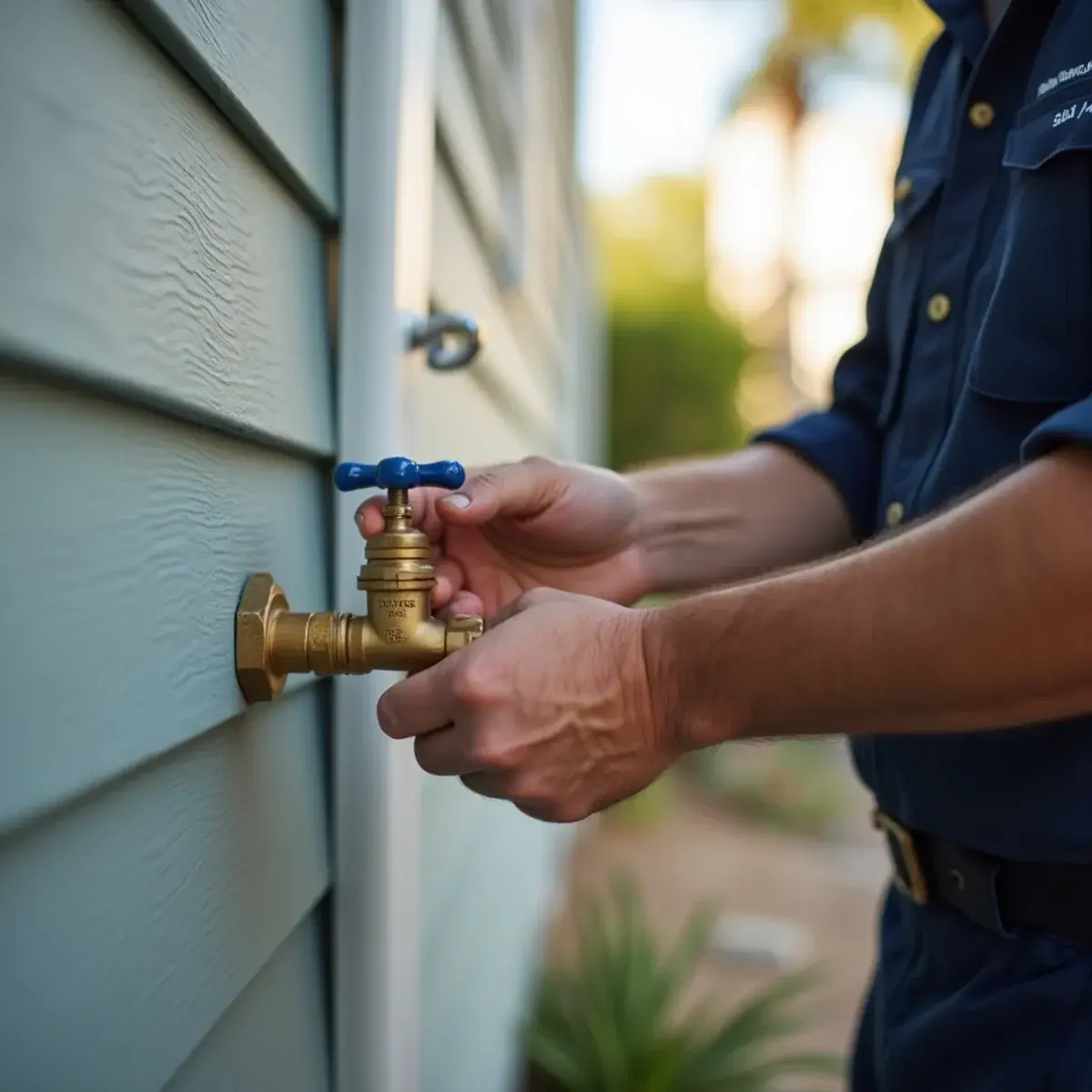
On the house. Most Southern California homes have a main shut-off where the supply enters the structure — typically on an exterior wall, often on the street-facing or side elevation, sometimes inside the garage near where the water heater sits. Look for a valve on a vertical pipe coming out of the ground, usually with either a round handwheel or a lever.
At the meter. Every property has a shut-off at the water meter, generally in a rectangular concrete or plastic box in the parkway or near the sidewalk. Lift the lid — you may need a screwdriver to pry it — and you'll see the meter with a valve on the street side and usually one on the house side. The house-side valve is yours to operate.
In an older or hillside property, it can be less obvious: a crawl space access, a utility closet, or a box set into a retaining wall. If you genuinely can't find it, your water utility can tell you where the meter is, and a plumber can identify the house valve in a few minutes.
Two valve types, two behaviours
Ball valve — a lever handle. Quarter turn from parallel with the pipe (open) to perpendicular (closed). Fast, reliable, and the modern standard. If yours is a lever, you're in good shape.
Gate valve — a round handwheel. Turn clockwise, and keep turning; these take many rotations to close fully. Gate valves are what you'll find on most older homes, and they're the ones that cause problems: the internal gate corrodes onto the stem, so a valve that hasn't moved in twenty years may not move at all, or may break off in your hand.
Meter keys. The valve at the meter often needs a meter key — a long T-handled tool — rather than turning by hand. They're inexpensive and worth having in the garage. A large adjustable wrench will usually do in a pinch.
Call +1 (201) 277-9344 — 24/7 in Glendale
Free assessment · 60-minute emergency response · We bill your insurance carrier directly
Test it, today
Finding the valve isn't enough. Turn it, all the way off, and then back on. This is the step people skip and it's the one that matters.
A gate valve that hasn't been operated in decades frequently won't budge, or turns without closing because the gate has corroded off the stem. Discovering that during an emergency is exactly the wrong moment. Discovering it on a Saturday afternoon means you call a plumber and have it replaced with a ball valve for a modest cost.
When you turn it back on, do it slowly. Opening a main quickly sends a pressure surge through the system that can dislodge scale in old pipes or stress fittings. Open it most of the way, let it settle, then open fully.
Then run a tap to purge air from the lines. A bit of sputtering afterward is normal.
The valves that matter almost as much
The main stops everything. Often you only need to stop one thing, and the fixture valves are faster:
- Under every sink — two angle stops, hot and cold. These are the most-ignored plumbing in the house and a huge share of overnight losses start there.
- Behind every toilet — one angle stop on the supply line.
- Behind the washing machine — two valves, hot and cold. Close these when you travel.
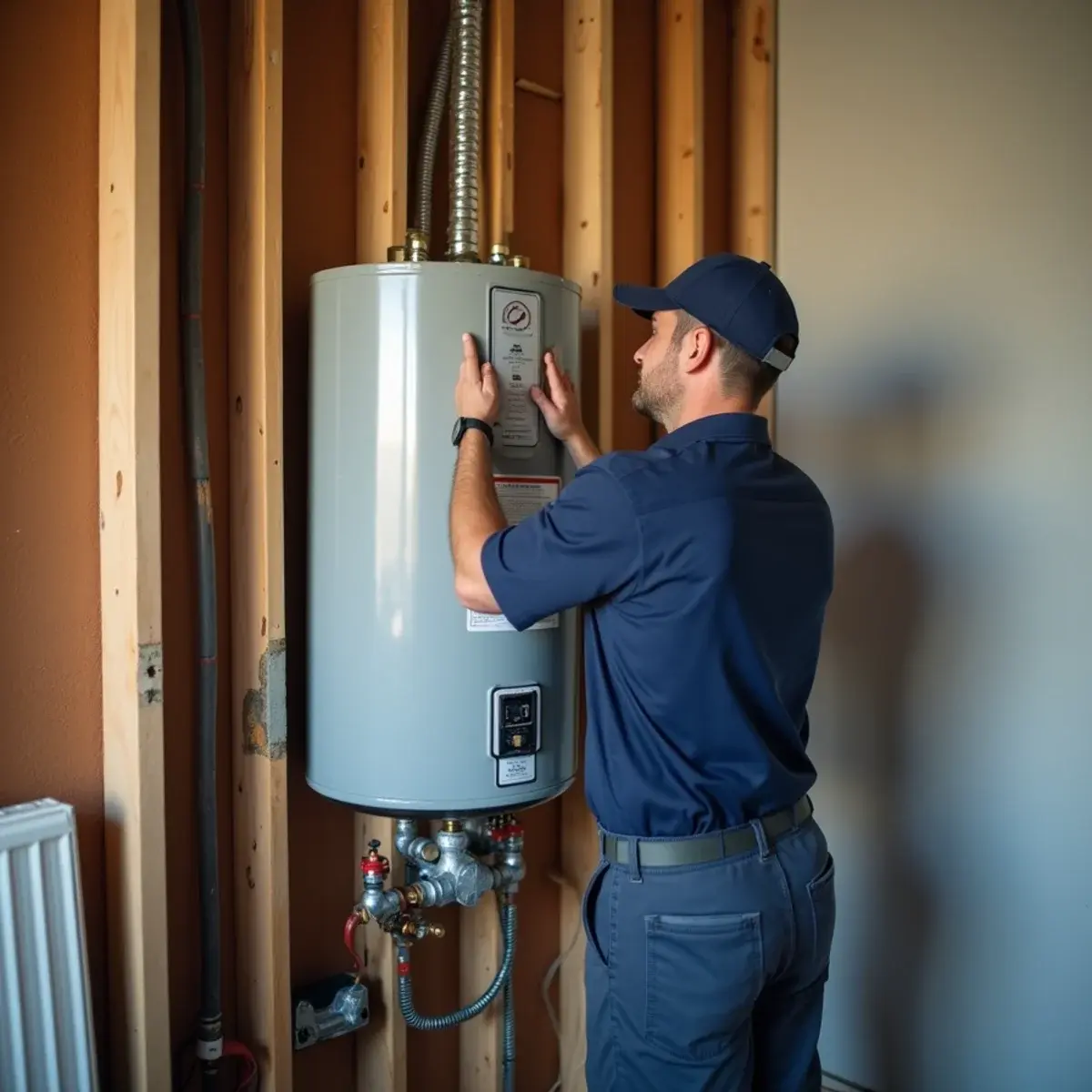
- On top of the water heater — the cold-water inlet valve. This is the one to close if the tank is leaking.
- At the refrigerator — a small valve on the ice maker line, often behind the unit or in an adjacent cabinet.
- Irrigation — a separate valve, often near the backflow preventer at the front of the property.
Label everything and tell the household
Buy a pack of luggage tags or use weatherproof labels. Tag the main shut-off. Tag the water heater inlet. Photograph each one and put the photos in a shared album or note that everyone in the house can reach.
Then actually show people. A teenager who knows where the valve is and closes it in the first minute saves you more money than any piece of equipment we own. A house sitter or an adult child who can be talked through it over the phone is worth almost as much.
If you rent, ask your landlord or manager where the shut-off is and whether you're permitted to operate it. In most multi-unit buildings tenants can access fixture stops but not the building main — knowing which applies to you beforehand is the point.
Automatic shut-off: the upgrade worth making
Everything above depends on somebody being home and awake. Automatic systems don't.
Point leak sensors sit under sinks, behind the fridge, in the water heater pan and in the laundry. They alert your phone when they detect water. Cheap and genuinely useful.
Sensor-linked shut-off valves go a step further — the sensor triggers a motorised valve on the main and closes it. Water stops without anyone doing anything.
Whole-home flow monitors install on the main and learn your household's normal usage pattern, then shut off when they see something abnormal — continuous flow at three in the morning, for instance. The most capable option and the closest thing to genuine prevention available.
Worth asking your insurer about: several carriers offer premium credits for automatic shut-off systems, and over a few years the discount often covers the installation. Our guide to preventing burst pipes in older homes covers the wider maintenance picture.
Frequently asked questions
Don't force it — a seized gate valve can snap at the stem and leave you with an open main you can't close. Use the valve at the meter instead, and have a plumber replace the house valve with a quarter-turn ball valve. That's an inexpensive job and it's the sort of thing that pays for itself once.
For anything more than a few days, yes — it's the simplest protection there is. At minimum close the washing machine valves, which are pressurised constantly and are a leading failure point. Also consider turning the water heater to vacation mode.
That one belongs to the utility and generally shouldn't be operated by customers. The house-side valve in the same box is yours. If only one valve is present and you're unsure, call the utility — most have a 24-hour line and will send someone.
Your water utility can locate the meter for your address. A plumber can identify or install a house-side main valve, which is worth doing regardless — a home without an accessible main shut-off is a home where every plumbing failure becomes a large one.
The bottom line
Find it, turn it, label it, tell everyone. Ten minutes, once, and it changes what a failed supply line costs you by an order of magnitude.
If something has already let go and you can't stop it, call Drycore Restore at +1 (201) 277-9344 — we answer any hour and we'll talk you through it while a crew is on the way.
Related services
- Burst Pipe & Leak Cleanup in Glendale
- Emergency Water Extraction in Glendale
- Appliance Leak & Overflow Cleanup in Glendale