Secondary Damage: What Water Does After It Stops Moving
The water stopped at the hallway. Two weeks later the doors won't close and there's a smell in a bedroom nothing ever reached.
Everyone understands primary damage — the water touched it, so it's damaged. Carpet, drywall, the subfloor under a burst pipe.
Secondary damage is what happens to everything the water never reached, caused by the humidity the loss put into the air. It's less obvious, it's frequently larger, and it's the reason "we mopped it up" is not the same as "we handled it."
Dealing with this right now? We answer 24/7.
Free assessment · 60-minute emergency response · We bill your insurance carrier directly
The mechanism
When water sits in a building, it evaporates. That moisture doesn't disappear — it goes into the air, raising the relative humidity of the whole conditioned space.
Air moves. It carries that moisture into rooms the water never entered, through doorways, HVAC returns, wall cavities and floor assemblies. And every hygroscopic material in the building — wood, paper, textiles, plaster, some plastics — will absorb moisture from the air until it reaches equilibrium with it.
So a hardwood floor two rooms away from the loss starts taking on moisture. A solid-core door swells. Paper on the back of drywall in an unaffected wall gets damp enough to support growth. None of it was ever wet in the sense of having water on it.
This is also why running fans without dehumidification actively makes things worse. You accelerate evaporation from the wet materials into air that nothing is removing moisture from, then distribute that air through the house. You have converted a contained primary loss into a distributed secondary one.
What it looks like
Usually days to weeks after the event, in places nobody associates with it:
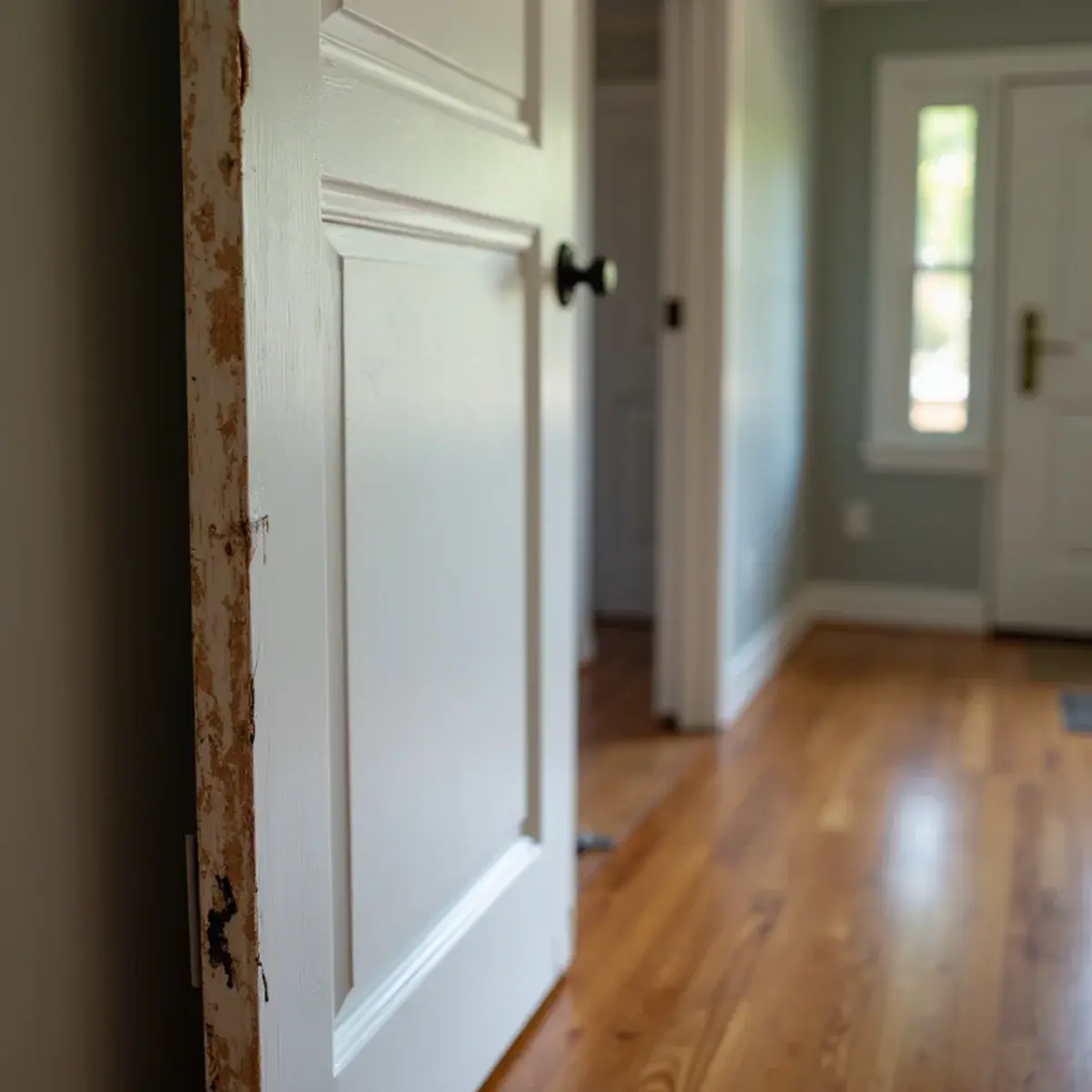
- Doors that stick or won't latch — solid wood and even hollow-core doors swell at the stile.
- Drawers and cabinet doors binding in rooms nowhere near the water.
- Hardwood cupping or gapping across a much wider area than the wet zone.
- Musty odor in a closed room that never got wet.
- Peeling wallpaper or bubbling paint at seams and edges.
- Condensation on windows in a house that never had it.
- Rust on metal — door hardware, hinges, fasteners, HVAC components.
- Delamination of veneers and laminates on furniture.
- Corrosion on electronics and, in a garage or workshop, on tools.
Call +1 (201) 277-9344 — 24/7 in Glendale
Free assessment · 60-minute emergency response · We bill your insurance carrier directly
Why it's an insurance problem too
Secondary damage sits in an awkward place on a claim. It's genuinely caused by the covered event, but it appears later, in places the loss description didn't mention, and it can look like a pre-existing condition or ordinary wear.
The way to avoid an argument is documentation of the atmospheric conditions, not just the materials. A restoration company logging temperature, relative humidity and grains per pound daily across the affected structure has a record of exactly how humid the building was and for how long — which is the evidence that connects a warped door in a distant bedroom to the burst pipe in the hallway.
Without those readings you're asserting a causal link with nothing behind it. With them, it's arithmetic.
This is one more reason the daily log matters, alongside the reasons covered in our guide to documenting a water damage claim.
How proper drying prevents it
The whole point of dehumidification is to keep the air dry enough that secondary damage never starts. Air movers accelerate evaporation from wet materials; dehumidifiers remove that moisture from the air before it can be absorbed by anything else.
That's why the two always work as a pair, and why the dehumidification capacity is sized from room volume rather than from how wet the carpet looks. Our explainer on what all the drying equipment does covers the roles.
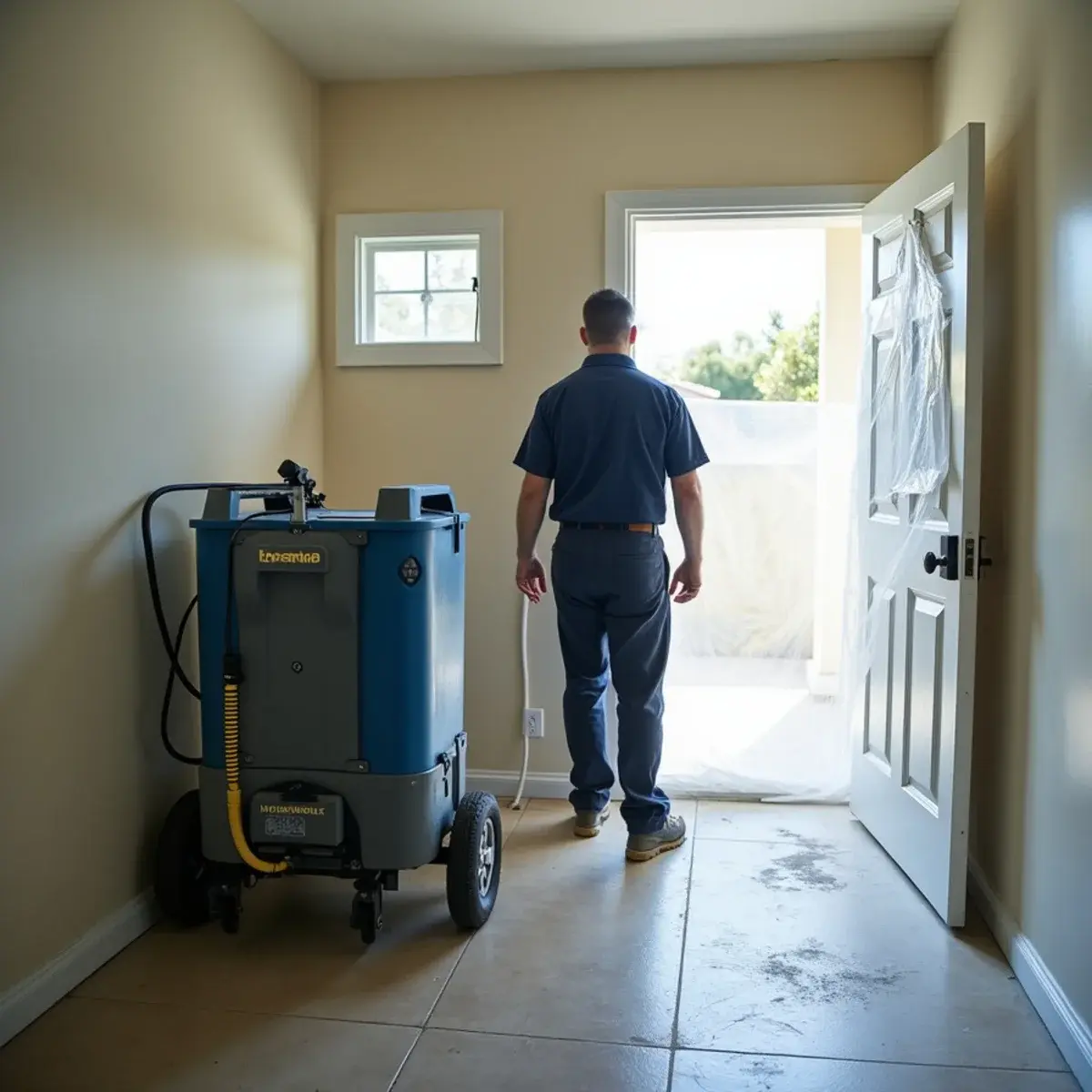
Containment is the other half. Sealing the affected area limits how much of the building the elevated humidity can reach, which both prevents secondary damage and dramatically reduces the equipment needed. A contained loss is a smaller job in every dimension.
And the HVAC system should be off if any part of it was affected, because otherwise it becomes the most efficient possible distributor of humid, potentially contaminated air.
The relationship to mold
Mold is the most consequential form of secondary damage. Microbial growth needs moisture, and elevated relative humidity alone — without any liquid water — is sufficient once it's high enough for long enough.
That's the mechanism behind growth in a room the water never entered. The air was humid, the material absorbed moisture from it, and the material reached a moisture content that supports growth.
It's also why mold can begin within 24 to 48 hours across an area much wider than the visible wet zone, and why a drying plan that only addresses the obviously wet materials leaves the problem intact.
Practically: if a room smells musty after a loss and nothing in it was wet, that isn't a coincidence and it isn't imagination. It's secondary damage doing exactly what it does.
What to do about it
During the loss: get dehumidification running early, contain the affected area, turn off HVAC if the ducts were involved, and make sure someone is measuring atmospheric conditions across the building rather than only in the wet room.
Afterward: if you notice sticking doors, a musty room or unexplained condensation in the weeks following a loss, report it to your restoration company and your carrier promptly rather than assuming it's unrelated. Late reporting is what turns a covered secondary damage item into a disputed one.
If you dried it yourself: this is the most common route to secondary damage, and it's worth a moisture check even if the visible area seems fine. A meter reading in an adjacent room takes minutes and either settles your mind or catches it in the window where it's still cheap.
Frequently asked questions
Generally yes, when it results from a covered event — but it needs to be connected to that event with evidence. Atmospheric readings from the restoration and prompt reporting are what establish the link. Damage reported months later with no supporting data is much harder to attribute.
Anywhere the humid air reached, which in an open-plan or HVAC-connected house is potentially everywhere. That's exactly why containment matters — it defines the boundary rather than leaving it to the building's airflow.
Almost certainly. Doors swelling in rooms that were never wet is the textbook secondary damage symptom. Report it to your restoration company and your adjuster now rather than waiting to see whether it settles.
Often, if it's caught while the material is still just absorbing moisture rather than structurally changed. Bringing humidity back to normal lets many materials release moisture and return to dimension. Delamination, permanent warping and established microbial growth are past that point.
The bottom line
Primary damage is what the water touched. Secondary damage is what the humidity reached — and if nobody is controlling humidity, that's the whole building.
Drycore Restore logs atmospheric conditions across the structure, not just the wet room. Call +1 (201) 277-9344.
Related services
- Structural Drying & Dehumidification in Glendale
- Mold Remediation in Glendale
- Water Damage Restoration in Glendale