What Water Damage Restoration Actually Costs in Glendale, CA
Nobody can quote a water loss over the phone honestly. But you can understand exactly what drives the number — and that's more useful than a fake range.
Every homeowner asks the same question in the first five minutes: what's this going to cost? It's the right question, and the honest answer is that anyone giving you a firm number before taking moisture readings is guessing.
What we can do — and what's more useful than a made-up range — is explain exactly which variables drive the number, so you can look at your own situation and understand where it's likely to land and why.
Dealing with this right now? We answer 24/7.
Free assessment · 60-minute emergency response · We bill your insurance carrier directly
The six things that actually determine the price
Restoration is priced from a standard line-item system that carriers and contractors both use. It's not a flat rate per room; it's a build-up of specific tasks and equipment days. Six variables dominate the total:
- Affected square footage — not the size of the puddle, but how much material took on water, including inside walls.
- Water category — clean supply water, gray water from an appliance, or contaminated black water. This changes what can be dried versus what must be removed.
- Materials involved — tile over concrete dries fast and cheap; plaster, solid hardwood, dense cabinetry and concrete slab need specialty systems and more days.
- Drying duration — equipment is billed per unit per day, so anything that extends the timeline scales the mitigation cost directly.
- Reconstruction scope and finish level — the largest single variable on most jobs, and the one you have the most control over.
- Access — hillside properties, stair access and long hose lays add labor hours before any work starts.
Mitigation versus reconstruction: two different numbers
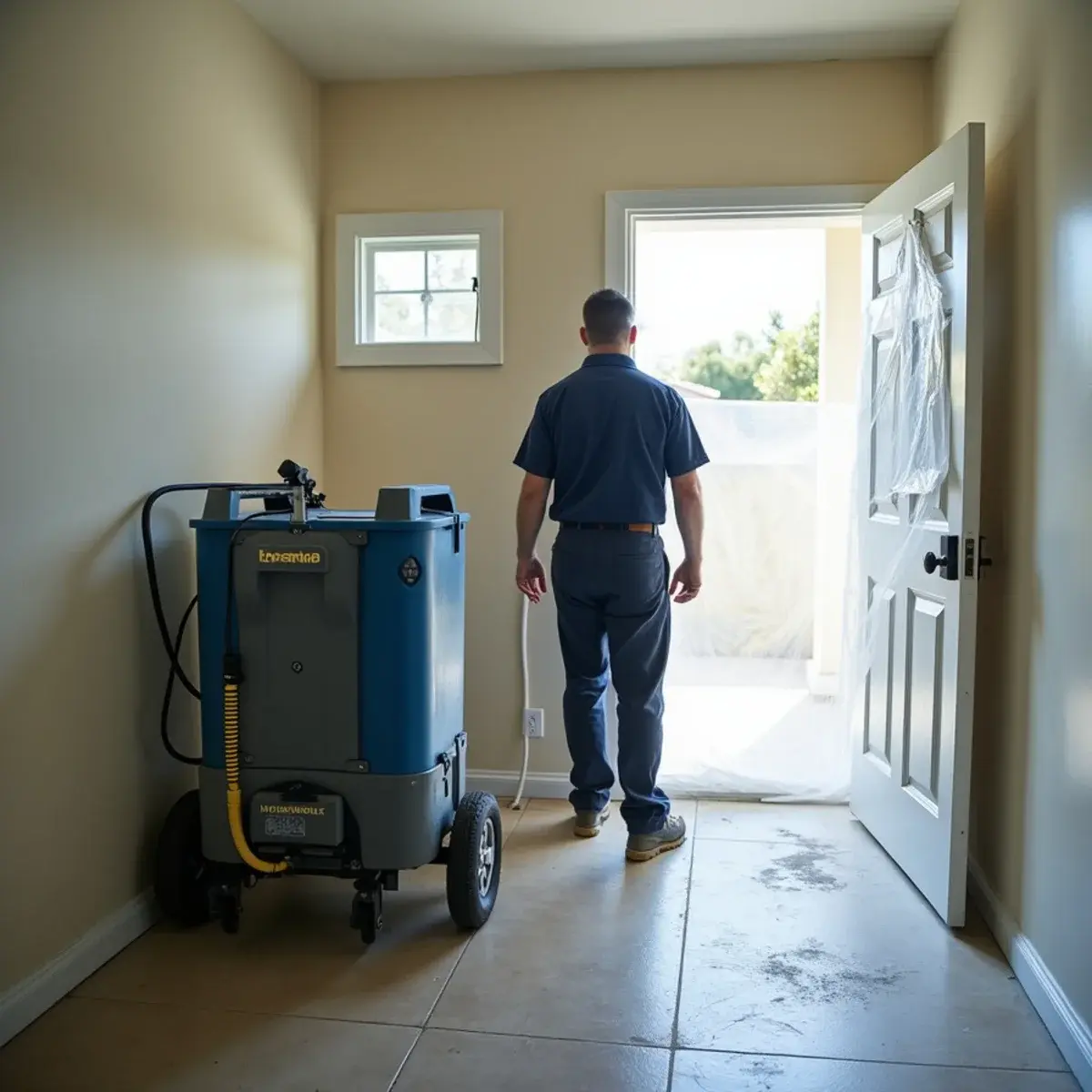
It helps enormously to think of a water loss as two projects with separate budgets. Mitigation is the emergency phase: extraction, containment, drying equipment, antimicrobial treatment, moisture monitoring and any demolition required to reach wet materials. Reconstruction is putting it back: insulation, drywall, texture, paint, flooring, trim, cabinetry.
Mitigation is relatively predictable because it's driven by physics — affected volume, material type and equipment days. Reconstruction is driven by taste and by what was there before. A bedroom with drywall, paint and MDF baseboard rebuilds inexpensively. A kitchen with custom cabinetry and stone counters does not.
This is also why handling both phases with one company matters financially. When the crew that removed the material is the crew that replaces it, the repair estimate matches the demolition scope, which means fewer supplements and less delay between approval and completion.
Call +1 (201) 277-9344 — 24/7 in Glendale
Free assessment · 60-minute emergency response · We bill your insurance carrier directly
Why water category changes everything
Category 1 is clean water from a supply line. Most affected materials can be dried in place, which keeps both mitigation and reconstruction costs down.
Category 2 is gray water — a dishwasher or washing machine discharge, for example. Some porous materials come out, some can be treated and dried.
Category 3 is contaminated: sewage, storm runoff, or any water that has sat long enough to degrade. Every porous material it touched is removed, crews work in PPE, disposal is regulated, and the disinfection scope is substantial. The same volume of water costs several times more as category 3 than as category 1.
This is why the difference between the water damage categories isn't academic. It's frequently the largest single factor in the total, and it's determined on day one by what failed.
The cost driver most people underestimate: time
A supply line that fails at 9 a.m. and is discovered at 6 p.m. has been running for nine hours. It has moved into wall cavities, under cabinets, through the floor assembly, and in a two-story home into the ceiling below. The same failure caught in ten minutes affects one wall.
The escalation isn't linear — it's closer to a step function. Once water crosses from one room into an adjacent assembly, the affected footprint roughly doubles and so does the equipment requirement. Once it's been sitting long enough for microbial growth, you've added a remediation scope on top of a drying scope.
That's the practical argument for calling at 2 a.m. rather than waiting for business hours. After-hours dispatch carries a standard emergency rate that carriers routinely accept, and it is almost always cheaper than the additional day of spread.
What insurance changes about the math
On an approved claim, most homeowners pay their deductible and nothing else. The restoration company bills the carrier directly for the balance. That reframes the question from "what does this cost?" to "is this covered, and what's my deductible?"
Sudden and accidental losses are generally covered in California; gradual seepage and rising floodwater generally are not. Our detailed look at what homeowners insurance covers for water damage in California walks through the distinctions that decide most claims.
One honest caveat: if the total loss is close to or under your deductible, filing may not be in your interest. A claim on your loss history can affect renewal pricing for years. We'll tell you when we think a job is better handled out of pocket — it's a small number of jobs, but it happens.
Where you can genuinely save money
Call early. This is the entire ballgame and it's free. Every hour of delay expands the scope.
Let materials be dried rather than demolished. In-place drying of hardwood, wall cavities and cabinet bases takes longer and costs considerably less than removal and replacement. A company that defaults to demolition is choosing the faster, more profitable path — ask why they're not attempting to dry.
Be decisive on material selection. Reconstruction delays are overwhelmingly caused by waiting on flooring or cabinet decisions, and extended timelines cost money in storage, mobilization and, for businesses, lost revenue.
Don't over-restore. Not every water loss needs to become a remodel. We'll price both if you want the upgrade, but the covered scope is putting it back the way it was.
Frequently asked questions
We can give you a sense of scope and what to expect, but a real number requires moisture readings and a walk-through. Water hides — the affected area is almost always larger than what's visible. Our on-site assessment across Glendale is free and takes under an hour.
Emergency after-hours mobilization carries a standard rate that insurance carriers routinely accept as part of emergency mitigation. In nearly every case, the additional spread from waiting until morning costs more than the after-hours difference.
Not automatically, but ask what's in it. A quote that's dramatically lower usually excludes something: monitoring visits, antimicrobial treatment, the reconstruction phase, or enough equipment to actually dry the space. Compare line items, not totals.
The bottom line
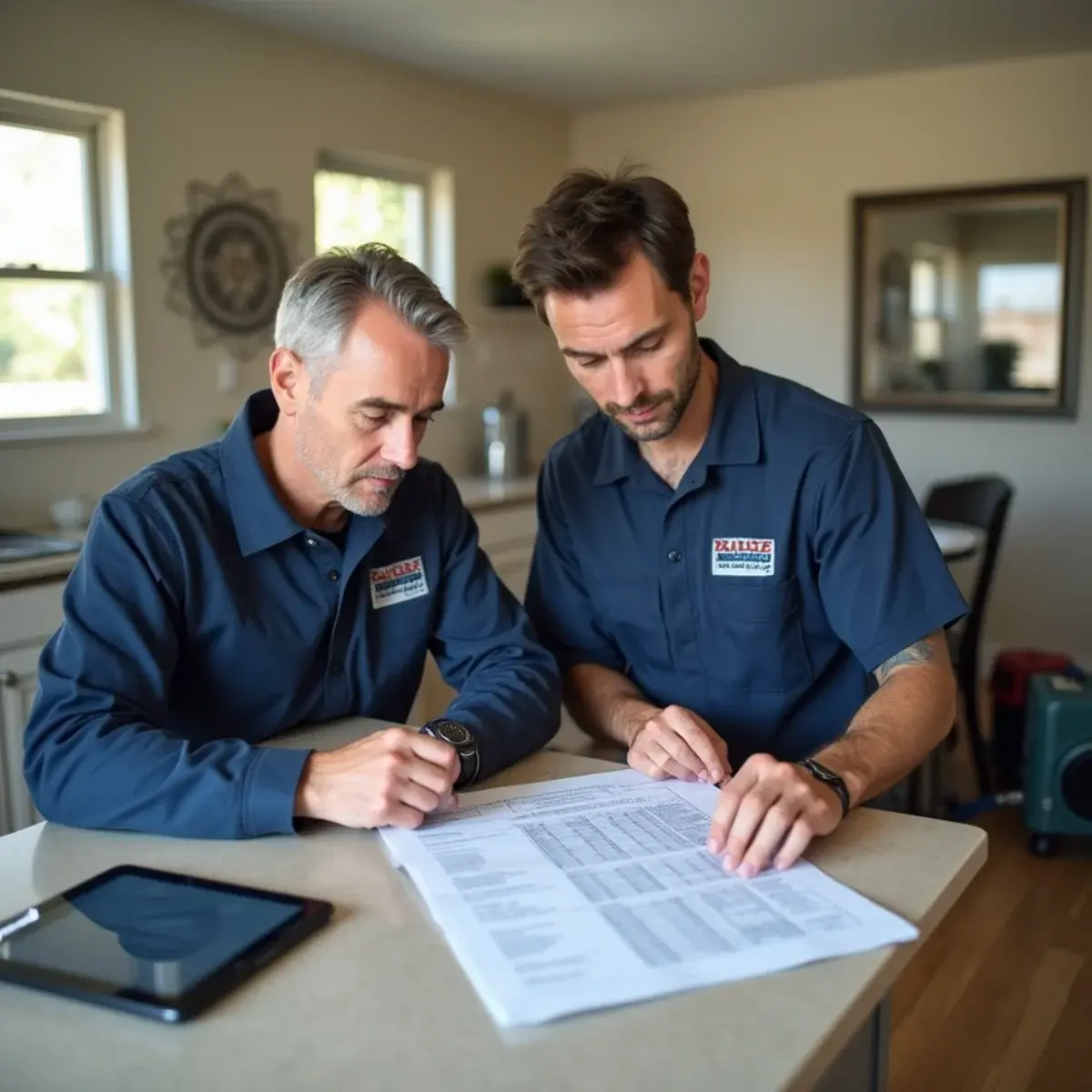
The most useful thing you can do about restoration cost is act fast and insist on a scope you understand. A good estimate lists what's being done, how many pieces of equipment for how many days, and what the reconstruction includes.
Drycore Restore provides free on-site assessments across Glendale and the surrounding communities, and we'll walk you through the scope line by line before anything begins. Call +1 (201) 277-9344.
Related services
- Water Damage Restoration in Glendale
- Water Damage Repair & Reconstruction in Glendale
- Structural Drying & Dehumidification in Glendale