Who Pays When the Unit Above You Floods Yours?
The most common question in a multi-unit loss, and the one nobody can answer without knowing what got documented in the first 24 hours.
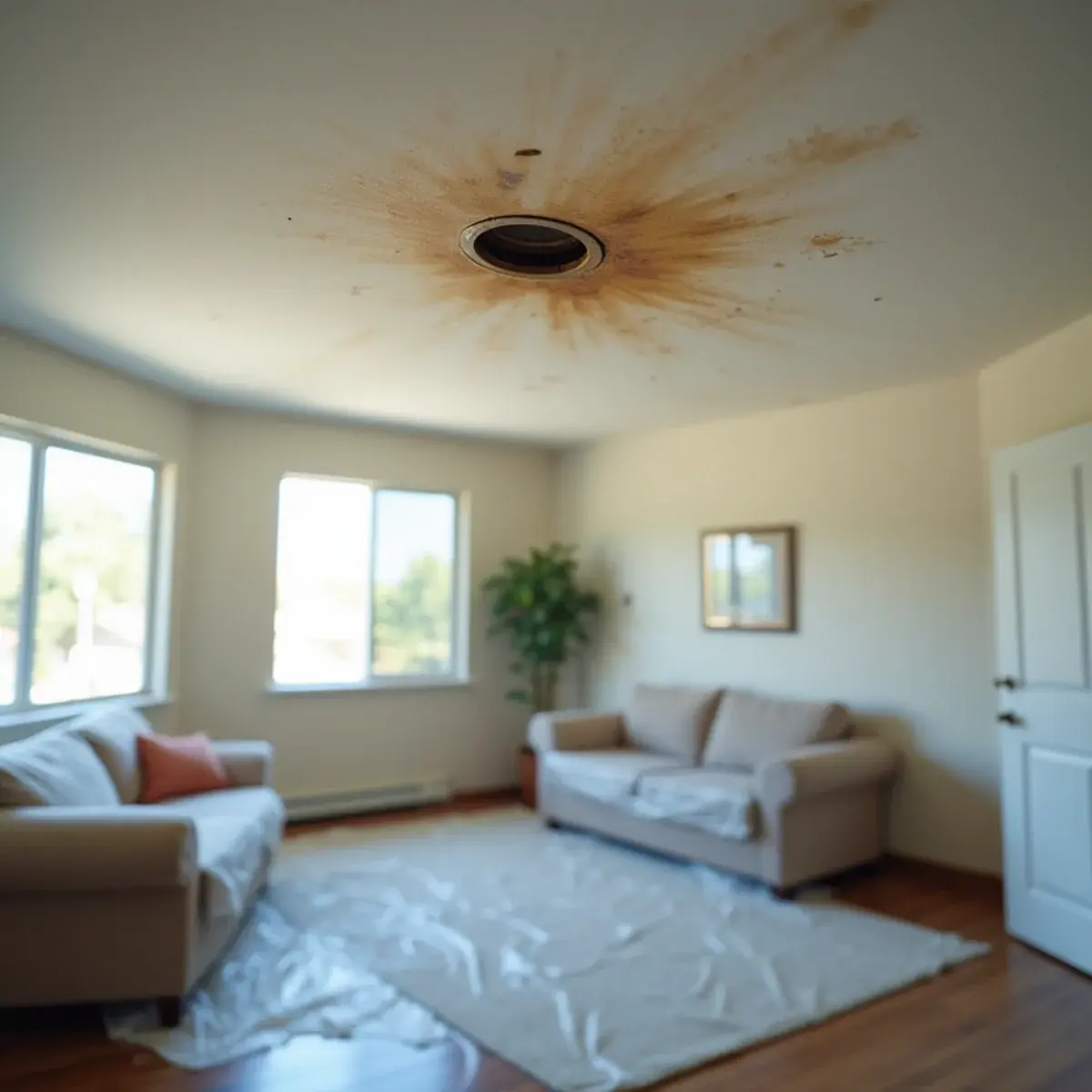
A supply line fails in unit 402. Water goes down. By the time anyone notices, 302 has a ruined ceiling, 202 has damp walls, and the ground-floor retail tenant has closed for the day.
Everyone's first question is the same: who pays? The honest answer is that it depends on four documents and on what got recorded before anyone started cleaning up — and the second half of that is the part you can still control.
Dealing with this right now? We answer 24/7.
Free assessment · 60-minute emergency response · We bill your insurance carrier directly
The four policies in play
The association's master policy (in a condominium) or the owner's property policy (in a rental building) covers the building structure and common elements. What counts as "structure" varies enormously between associations — some master policies cover everything out to the bare studs, others cover original fixtures and finishes too.
The individual owner's HO-6 policy covers the interior of a condominium unit: finishes, improvements, contents, loss of use, and personal liability. It also typically covers the master policy deductible assessment, which matters more than people expect.
The renter's policy covers a tenant's belongings and additional living expenses. It does not cover the building or the unit's finishes.
The liability coverage on whichever policy belongs to the party at fault. This is the one people reach for first — "they flooded me, their insurance pays" — and it's frequently the least useful, because liability requires negligence.
- Association master policy (condo) or owner's property policy (rental) — the building structure and common elements.
- Owner's HO-6 — unit interior, improvements, contents, loss of use, and the loss assessment that covers the master deductible.
- Renter's policy — the tenant's belongings, additional living expenses and personal liability.
- Liability coverage of whoever was at fault — the one people reach for first and the least useful, because it requires negligence.
The negligence problem
This is where most expectations break. In California, your upstairs neighbor is not automatically responsible for damage their plumbing caused. Liability generally requires that they did something careless or failed to act on something they knew about.
A supply line that fails without warning is usually nobody's fault. The owner didn't neglect it, couldn't have predicted it, and their liability coverage may well decline the claim on exactly that basis.
Where negligence does attach: an overflowing bath left running, a known leak reported and ignored, a DIY plumbing repair, an appliance installed incorrectly, or a hose that visibly failed months ago and was never replaced.
So in most multi-unit losses the answer isn't "the neighbor pays." It's that each party claims on their own policy and the deductibles fall where they fall — which feels unfair to the person whose ceiling came down through no fault of their own, and is nonetheless how the system works.
Call +1 (201) 277-9344 — 24/7 in Glendale
Free assessment · 60-minute emergency response · We bill your insurance carrier directly
What decides it: the CC&Rs
In a condominium, the governing documents define where the association's responsibility ends and the owner's begins. Read yours — specifically the sections on maintenance responsibility and insurance.
The critical phrase to look for is how the unit boundary is defined. "Bare walls" associations cover only the structure, leaving drywall, flooring, cabinets and fixtures to the owner's HO-6. "All-in" or "original specification" associations cover finishes as originally built, with only owner improvements falling to the HO-6.
Those two definitions produce completely different answers to the same loss. A homeowner with a bare-walls association and no HO-6 policy is exposed to the entire interior cost, and a surprising number of owners don't know which kind they have until something floods.
The 24-hour documentation window
Here's the part you control. Whatever the policies say, the claim is decided on evidence, and the most valuable evidence exists only before cleanup starts.
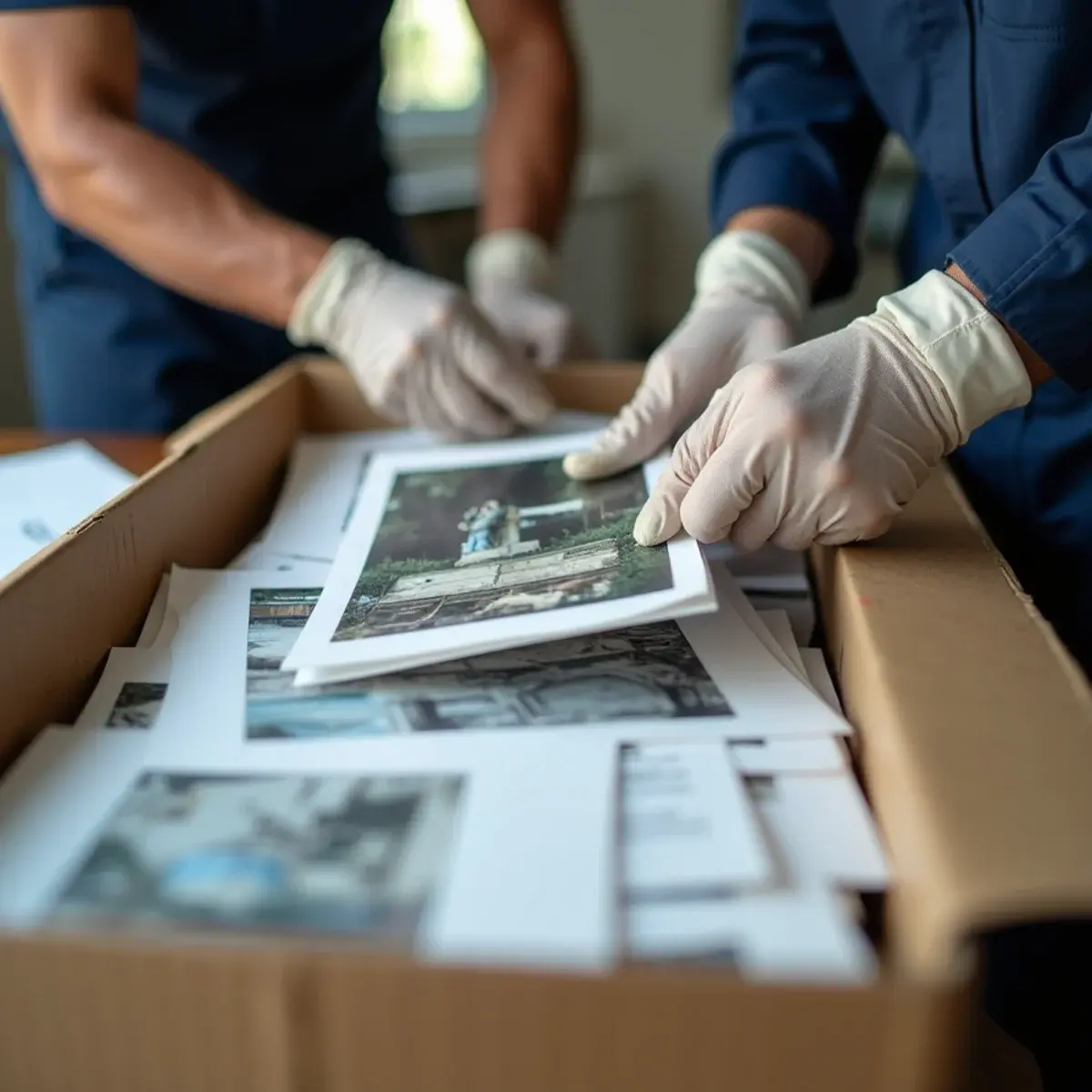
Photograph everything before anything moves — wide shots of each affected room, then close-ups of the damage and the water line. Photograph the source if you can access it. Note the time you discovered it and the last time you know the area was dry.
Then get the scope separated in writing. What's common element, what's inside unit boundaries, what's an owner improvement. This is the single thing that determines whether a multi-unit claim resolves in weeks or drags for a year, and it has to be recorded while the damage is still visible and the demolition is still open.
Our guide to documenting a water damage claim covers the detail. In a multi-unit loss it matters roughly three times as much, because three carriers will each be reading the same file with different interests.
Deductibles, assessments and the trap
Master policy deductibles on multi-unit buildings are often large — five figures is common, and some associations carry deductibles that make small claims pointless to file.
When the association files, that deductible frequently gets passed to owners as a special assessment, either to the whole membership or to the affected units, depending on the CC&Rs. Many HO-6 policies include loss assessment coverage for exactly this, but only up to a stated limit that is often far too low.
Two practical actions. Ask your association what its master policy deductible is — a lot of owners have never been told. Then check your HO-6 loss assessment limit against that number, and raise it if there's a gap. It's typically a very cheap endorsement against a very real exposure.
If you're a tenant
Your landlord is responsible for the habitability of the unit and for repairing the building. They are not responsible for your belongings — that's what renters insurance is for, and if you don't have it, damage to your possessions is generally your loss regardless of whose plumbing failed.
Renters policies are inexpensive and they include additional living expenses, which covers a hotel if the unit becomes uninhabitable. That coverage is worth more than most tenants realize during a loss that takes three weeks to dry and rebuild.
If the unit genuinely can't be lived in, California habitability rules come into play and rent abatement may be appropriate. Document the condition, put requests in writing, and keep copies — and see our article on water damage in a California rental for the fuller picture.
How the restoration side should handle it
A multi-unit loss should be run as one job with multiple work areas, not as separate jobs that happen to be in the same building. Water travels through shared assemblies, and drying a ceiling from one side while the cavity above stays wet accomplishes nothing.
It should also be documented per unit. Each affected unit needs its own photographs, moisture readings and scope, because each will be read by a different carrier answering a different question.
And residents should stay in place wherever containment allows it. Displacement is expensive for owners, miserable for households, and avoidable far more often than it's offered. Our approach to multi-unit and commercial losses is built around that.
Frequently asked questions
Only if they were negligent. A sudden, unforeseeable pipe failure generally isn't negligence, and their liability carrier will usually decline on that basis. If they ignored a known leak or left something running, that's a different conversation — and worth pursuing.
Almost certainly yes. Master policies rarely cover unit interiors fully, and even "all-in" associations exclude owner improvements and all contents. The HO-6 also carries your loss assessment coverage and your loss of use, neither of which the master policy provides you.
For common elements, the association or property manager. For work inside a unit, the owner. In practice one contractor doing the whole building is far more efficient — but you're entitled to your own choice for your unit's interior, and in California that choice can't be dictated by a carrier.
Drying runs its normal three to five days regardless. The claim is what stretches — multi-carrier losses commonly take months, and the single biggest predictor of speed is whether scope separation was documented at the time of loss or reconstructed afterward.
The bottom line
The policies decide who pays. The documentation decides how long it takes and whether anyone gets underpaid. You can't change the first from inside a flooded unit, but you can absolutely change the second.
Drycore Restore runs multi-unit losses as one job with per-unit documentation across Glendale, Burbank and Los Angeles. Call +1 (201) 277-9344.
Related services
- Commercial Water Damage Restoration in Glendale
- Emergency Water Extraction in Glendale
- Water Damage Repair & Reconstruction in Glendale