Buying a Home With a Water Damage History: What To Check
Properly repaired water damage is a non-event. Cosmetically patched water damage is a problem you're about to buy for full price.
In a housing stock as old as Los Angeles County's, a home that has never had a water event is the exception. Disclosure of past water damage shouldn't automatically end your interest.
What matters is whether it was properly dried and repaired, or cosmetically covered. Those two produce identical-looking walls and radically different futures.
Dealing with this right now? We answer 24/7.
Free assessment · 60-minute emergency response · We bill your insurance carrier directly
What the disclosure actually tells you
California sellers complete a Real Estate Transfer Disclosure Statement, and it asks directly about flooding, drainage and grading problems and about known material defects. There are specific questions about water intrusion.
Sellers must disclose what they know. They aren't required to know things they don't — a leak that predates their ownership, or one that ran inside a wall and never surfaced, may genuinely not appear. So a clean disclosure is meaningful but it isn't proof.
What's more useful than the box being ticked is the detail. If water damage is disclosed, ask for the specifics: what failed, when, who did the work, and — the important one — is there documentation?
The single best question to ask
"Do you have the moisture log from the restoration?"
A properly run restoration produces one: a dry standard established from unaffected materials, daily readings of material moisture content, temperature and relative humidity, an equipment log, and a final verification showing affected materials reached the standard.
A seller who produces that document has essentially answered your question. The structure was dried to a measured standard by someone who knew what they were doing, and you can see the numbers.
A seller who says "we had a guy put fans in for a few days" has also answered it. That's the description of a job that may or may not have worked, with no way to tell — and it's the most common origin story behind mold discovered by a buyer's inspector.
Ask the same about mold: was there any, was it remediated, and is there an independent clearance report? Our guide to when mold testing is worth it covers what that report should contain.
Call +1 (201) 277-9344 — 24/7 in Glendale
Free assessment · 60-minute emergency response · We bill your insurance carrier directly
What to look for on a walkthrough
You're looking for evidence of repair rather than evidence of damage — a repaired area is often more visible than a damaged one if you know the signs:
- A section of ceiling or wall painted differently from the rest of the room, or one wall freshly painted in an otherwise older room.
- Texture that doesn't match across a patch — knockdown against orange peel, or a smooth patch in a textured field.
- New baseboard on one wall only, or baseboard that's a different profile from the rest of the house.
- A section of new flooring that doesn't match in width, color or wear.
- Fresh drywall visible in a garage, attic or crawl space where nobody bothered to finish it.
- Cabinet toe-kicks that are newer than the cabinets, which points to a kitchen or bath leak dried through the cavity.
- Staining on the underside of the roof deck or compressed insulation in the attic.
- Efflorescence — white crystalline deposits — on foundation or garage walls, which maps water movement through masonry.
Where to point a moisture meter
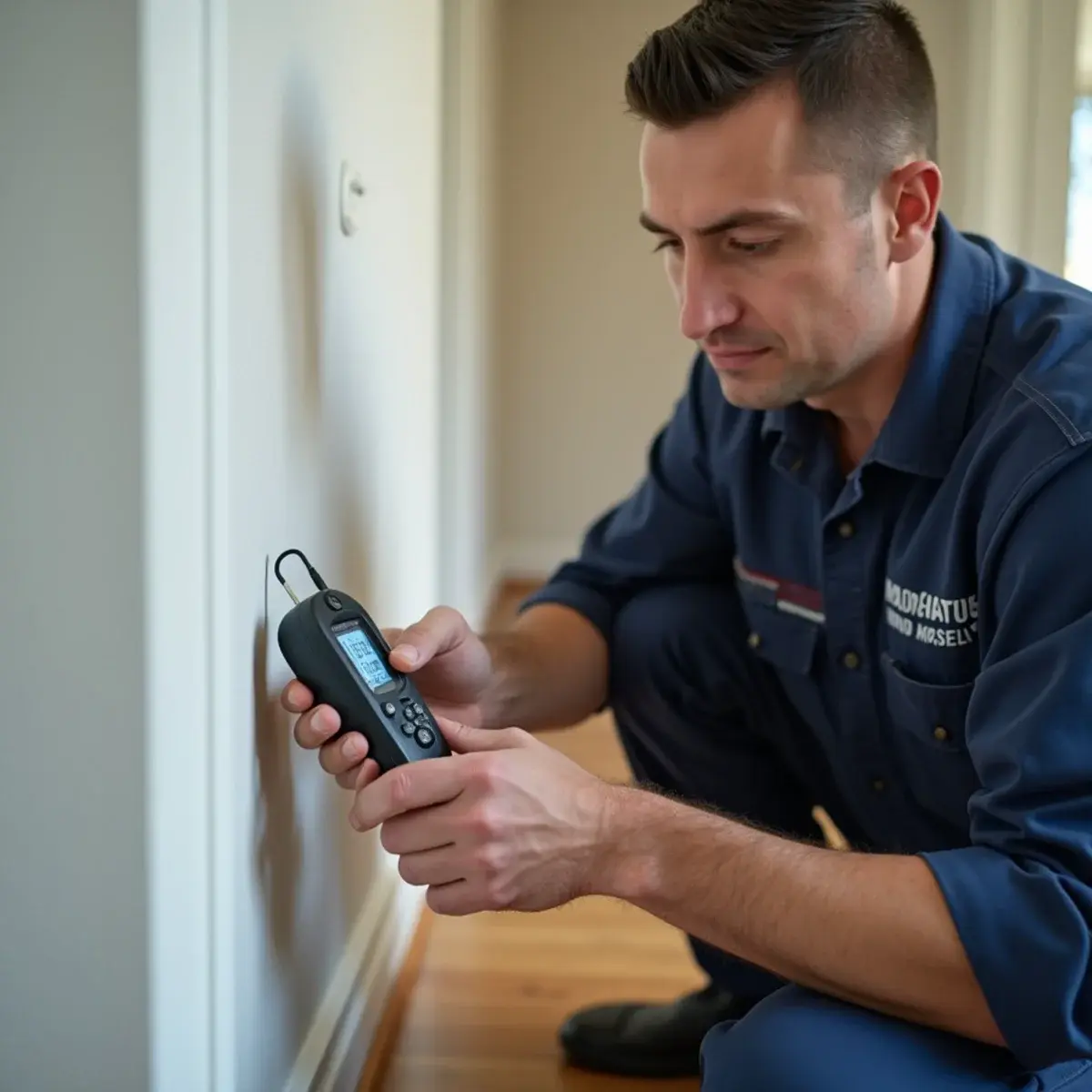
A standard home inspection is visual. Many inspectors carry a moisture meter, but not all use it systematically, and a general inspection is not a moisture survey.
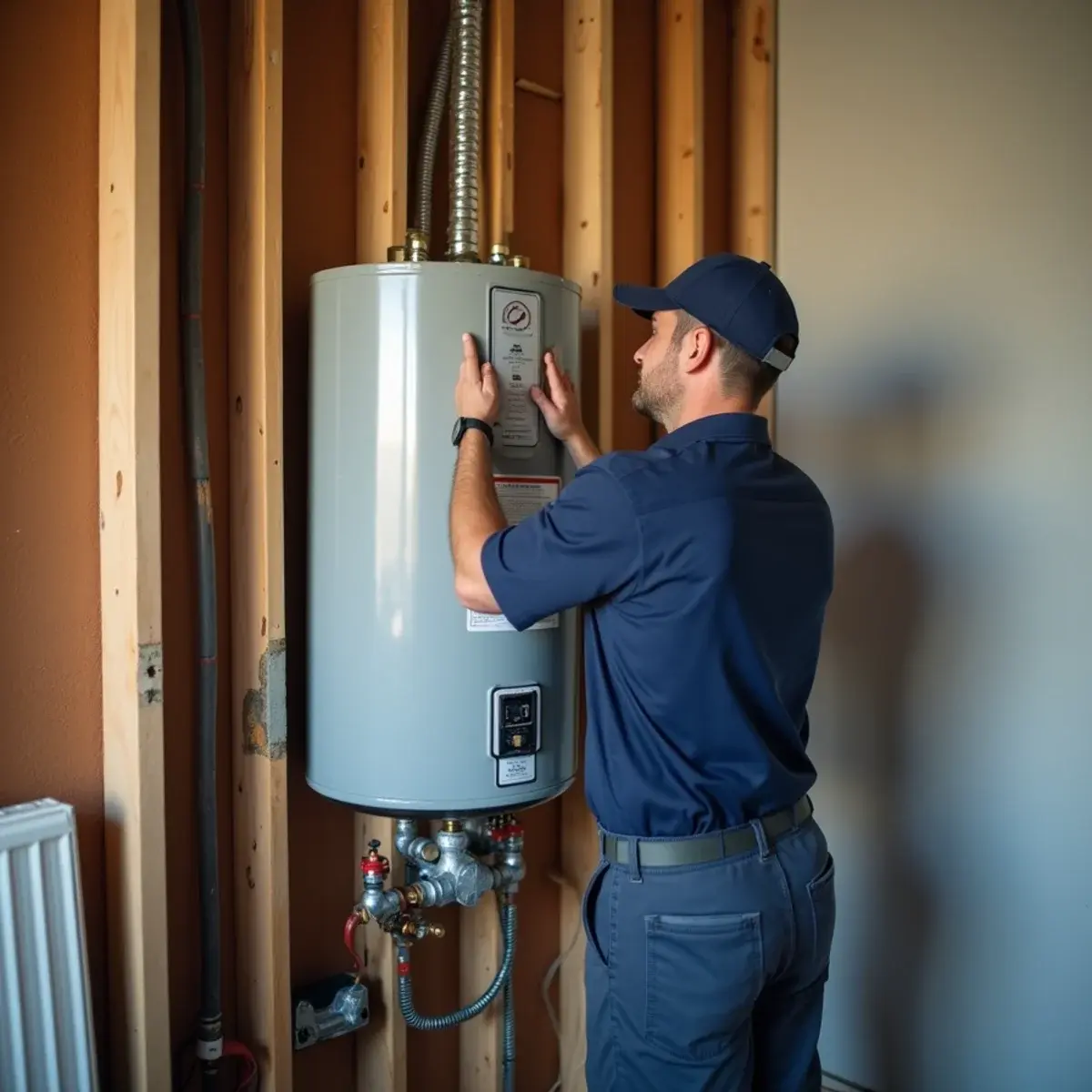
The places worth insisting on, in a house with any water history: the base of every wall in rooms where damage was disclosed, under every sink, around the dishwasher and refrigerator, the base of the water heater, around every toilet, along the perimeter where a slab meets framing, and the subfloor in any crawl space.
Thermal imaging adds a lot here and costs little as an add-on. Evaporating moisture cools a surface, so a thermal camera picks up wet areas behind finishes that a spot meter reading would miss entirely.
On an older or higher-value property, a dedicated moisture survey by a restoration company is worth commissioning separately from the general inspection. It's a modest cost against a purchase price, and it answers a specific question the general inspection isn't designed to answer.
The property-specific risks worth checking
Different housing types carry different exposures, and knowing which applies narrows the inspection considerably.
Pre-1960 homes — galvanized supply lines and cast iron waste stacks, both at or past service life. Ask whether it's been repiped and get the drains camera-inspected.
Postwar slab homes — under-slab copper reaching failure age, often across a whole tract at once. Check the water bill history and ask about slab leaks.
Hillside properties — subsurface drainage, retaining wall condition, and crawl space moisture. Inspect after rain if you possibly can.
Anything with a mature street tree — the sewer lateral. A camera inspection before you buy is one of the highest-value few hundred dollars in the whole process, because a lateral replacement is a five-figure surprise. Our article on recurring sewer backups explains what you're looking for.
Converted garages and ADUs — slabs without vapor barriers, taking on ground moisture permanently.
What to do with what you find
Findings are negotiating information, not necessarily dealbreakers. A house with a documented, properly dried water event and a clear moisture survey is arguably a better bet than one with no history and no documentation.
What genuinely should give you pause: active moisture readings with no explanation, evidence of repeated repair in the same location, a musty smell nobody can source, or a seller who becomes evasive when asked for documentation.
And one practical note for after you close — the insurance angle. Ask the seller whether prior water claims were filed, because claim history attaches to the property through industry loss databases and can affect your ability to get coverage or your premium. That's a genuinely useful question that almost no buyer asks.
Frequently asked questions
Not by itself. In older Los Angeles housing it's close to universal. What should concern you is undocumented repair, active moisture, repeated damage in the same place, or a seller who won't discuss it.
Partially. General inspections are visual and time-limited. They're good at spotting evidence of past repair and obvious active issues, and less good at finding moisture inside assemblies. A dedicated moisture survey with thermal imaging is a different level of assessment.
Usually, though multiple water claims on a property can affect availability and pricing with some carriers. Ask about claim history during due diligence and talk to an insurance agent before you're committed rather than after.
Ask for the paperwork. A genuine remediation produces a moisture log and, where mold was involved, an independent clearance report. "Fully remediated" without documentation is a description of an outcome nobody measured.
The bottom line
Ask for the moisture log. Look for repair rather than damage. Meter the specific places that match the house's era. And camera the sewer lateral if there's a big tree out front.
Drycore Restore does pre-purchase moisture surveys across Glendale and Los Angeles. Call +1 (201) 277-9344.
Related services
- Mold Remediation in Glendale
- Slab Leak Detection & Repair Support in Glendale
- Crawl Space & Basement Water Removal in Glendale